
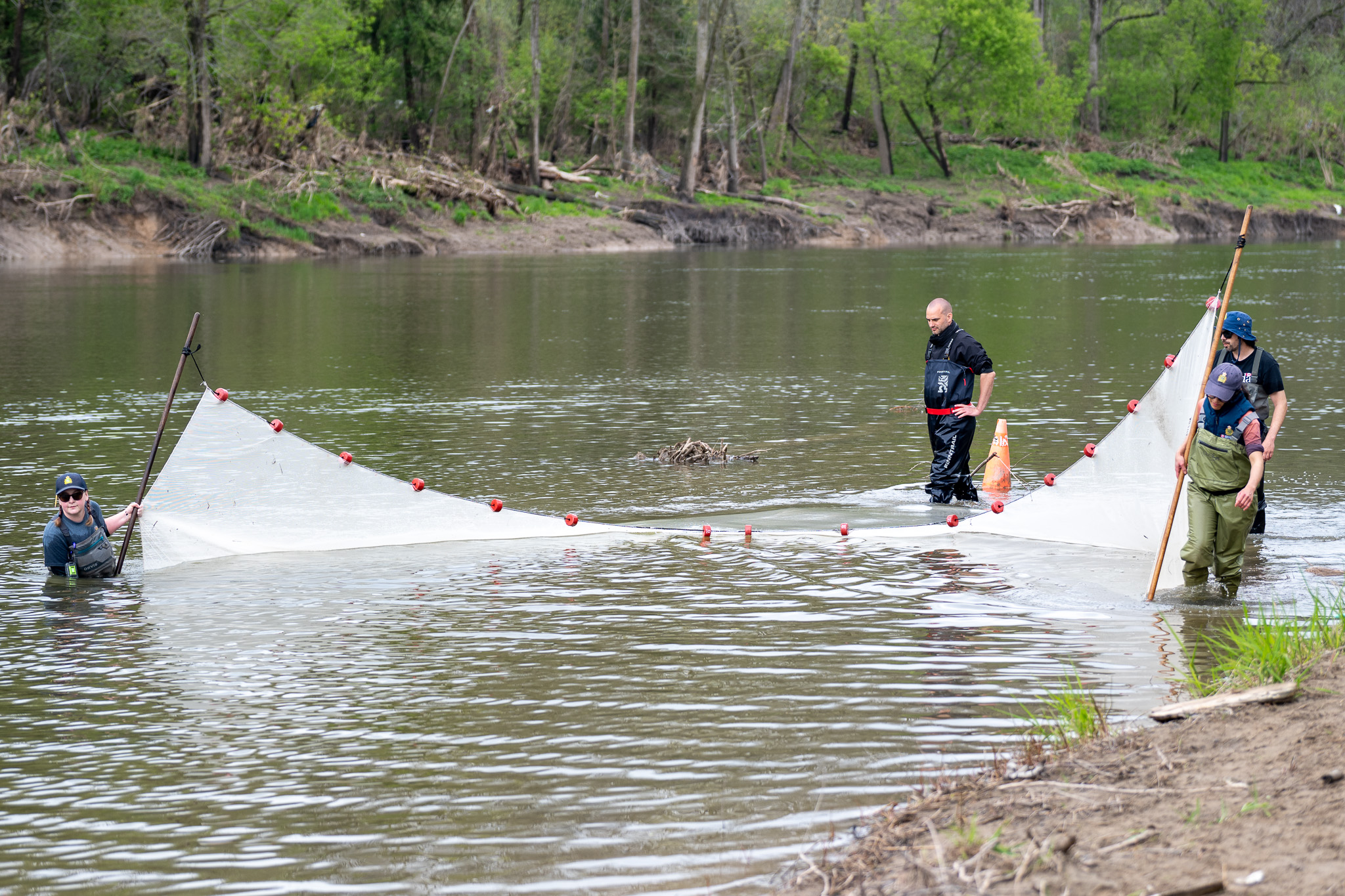
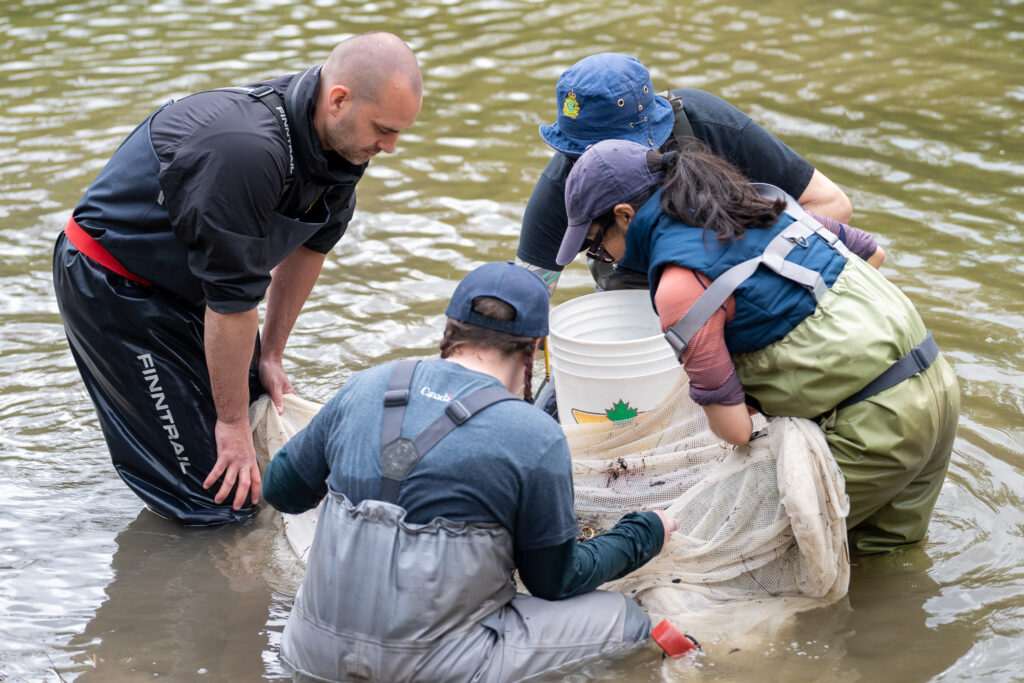
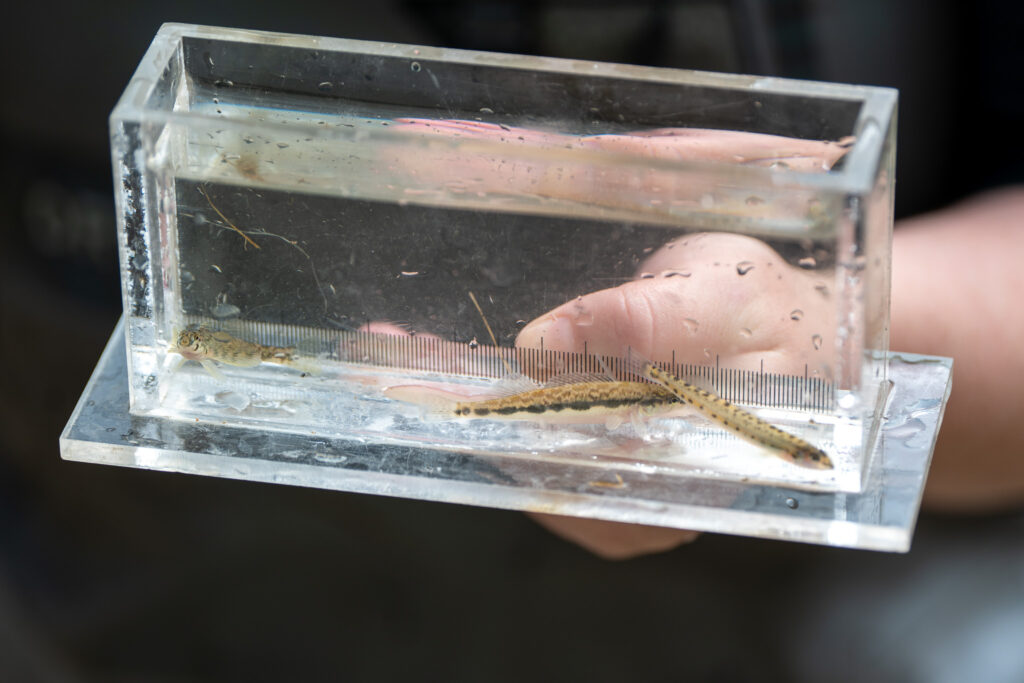
Fisheries and Oceans Canada (DFO) researchers spent their morning catching and re-locating Eastern Sand Darter fish from Brantford to Tillsonburg on Wednesday, May 13, 2026.
After about 15 years of research, the DFO is currently in the midst of a five-year program to see if they can successfully reintroduce the at-risk species to Big Otter Creek.
“The Eastern Sand Darter is federally threatened in Canada because it’s only found in a few locations, all of which are in Ontario. It’s a habitat specialist, meaning it only lives in areas of rivers that have very clean sand,” said Andrew Drake, a research scientist with the DFO’s Great Lake Laboratory for Fisheries and Aquatic Sciences. “There can be no silt, detritus or muck. Because the species actually buries itself within the sand, it does not do well when sand bars start to get silted over; that siltation happens because of different land-use changes such as its urbanization or agriculture.”
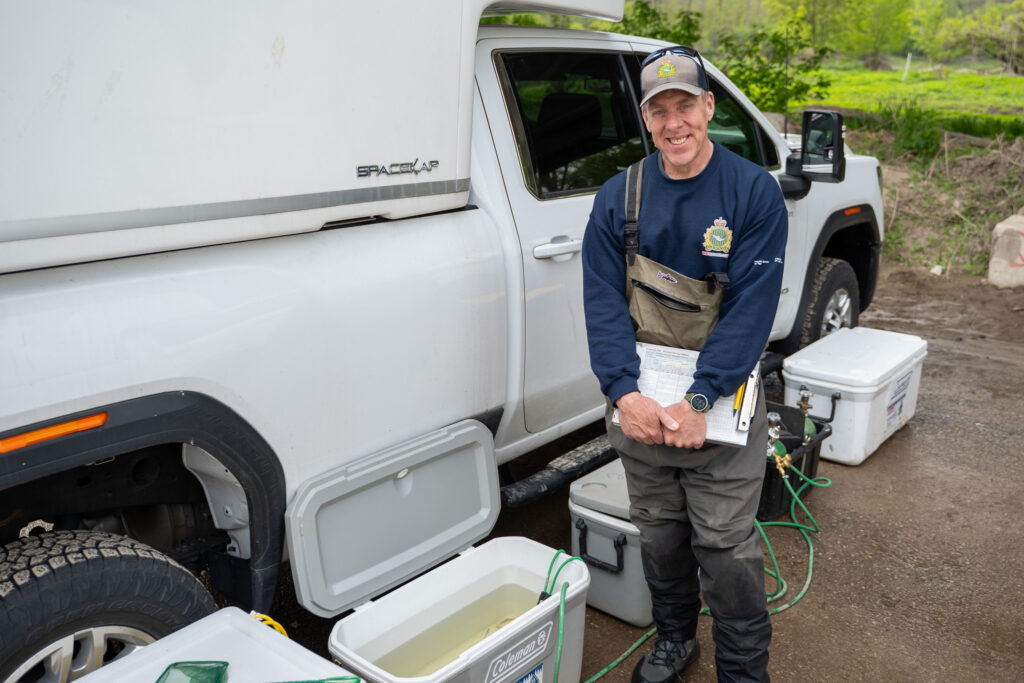
Drake said there are fewer than ten rivers in Ontario where the Eastern Sand Darter is found. There are three locations where the species has been lost entirely over the past 50 years, including Big Otter Creek.
“Fortunately, the Grand River contains what we believe is the most abundant population of this fish in Canada, with an estimated 35,000 to 130,000 adults,” he said. “We think the reason the species was lost from Big Otter Creek is because there was tobacco farming that tended to have pretty negative impacts on water quality, which probably led to the loss of that fish.”
Drake said that, thanks to rehabilitation efforts, they believe the creek’s habitat is now of high enough quality to reintroduce the Eastern Sand Darter.
Noting that the program is in its second year, the goal is to establish a self-sustaining population by moving about 500 adults annually from the Grand River to the new location.
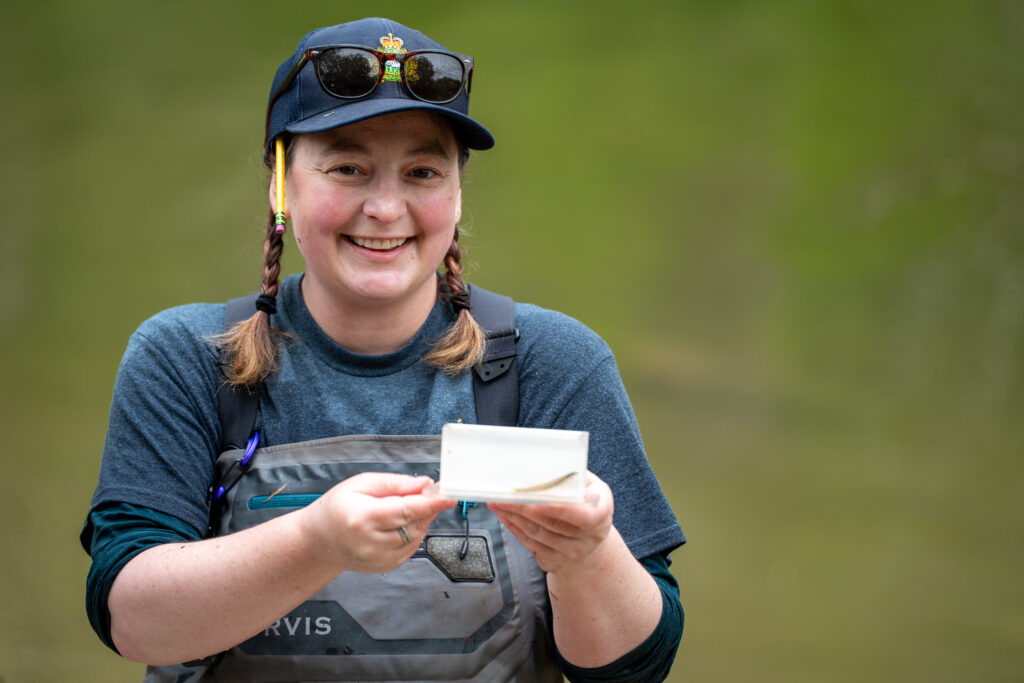
A DFO field team spent the past couple weeks under Brantford’s Cockshutt Bridge, catching the Eastern Sand Darter and later driving the stock to Tillsonburg.
“We’re trying to see if this will work. We’re not sure, but we’ve done so much research and we’re quite confident,” said Jason Barnucz, an aquatic science biologist for DFO’s Species at Risk Science Program. “We have a lot of pride in this work because we’ve spent so much time on it, and it’s really the culmination of almost two decades of research. It’s literally an experiment to see if we can restore a lost population and it’s one of the few times it’s been done in Canada for a species at risk.”
Given that the Eastern Sand Darter is considered rare, Barnucz said the fact that the Grand River is populated with so many is one of the things that makes it unique.
When asked what makes the Grand River home to such a large population of the habitat-specialist species, the biologist said it’s the river’s clean, moving sand.
“If the sand is too fine, they can’t burrow, and if there’s too much flow, it washes the sand away. Now, the sand isn’t continuous, it’s in patches, but that’s where they live. There’s been a lot of influences on the landscape, but the Grand River has managed to maintain a balance that has sustained these species at risk,” said Barnucz. “We get a lot of public interaction at this location and one of things people ask me is, ‘how healthy is the river?’ and the answer is, I wouldn’t drink the water out of it, but it’s quite healthy. There’s over 80 species of fish from the headwaters to Lake Erie, and probably 30 just in this location alone so that’s great news.”
After years of studying the feasibility, benefit and risks of reintroduction of the Eastern Sand Darter, Drake said the project has been going well thus far.
“Last year we did some follow-up sampling at Big Otter Creek one month after we had released them into that new ecosystem, and we recaptured several of our stock fish that looked very healthy. We caught them right where we released them, which is a sign that the habitat we had chosen at these release sites, was in fact, high-quality Eastern Sand Darter habitat,” he said. “What was even more exciting was when we went back after four months, we also recaptured some of those transferred fish, so we know that their initial survival in this new ecosystem is relatively high. We’re still waiting to detect some young fish, and that would be a really exciting milestone, because that would suggest that the fish that we transferred have, in fact, reproduced.”
Kimberly De Jong’s reporting is funded by the Canadian government through its Local Journalism Initiative.The funding allows her to report rural and agricultural stories from Blandford-Blenheim and Brant County. Reach her at kimberly.dejong@brantbeacon.ca.


