
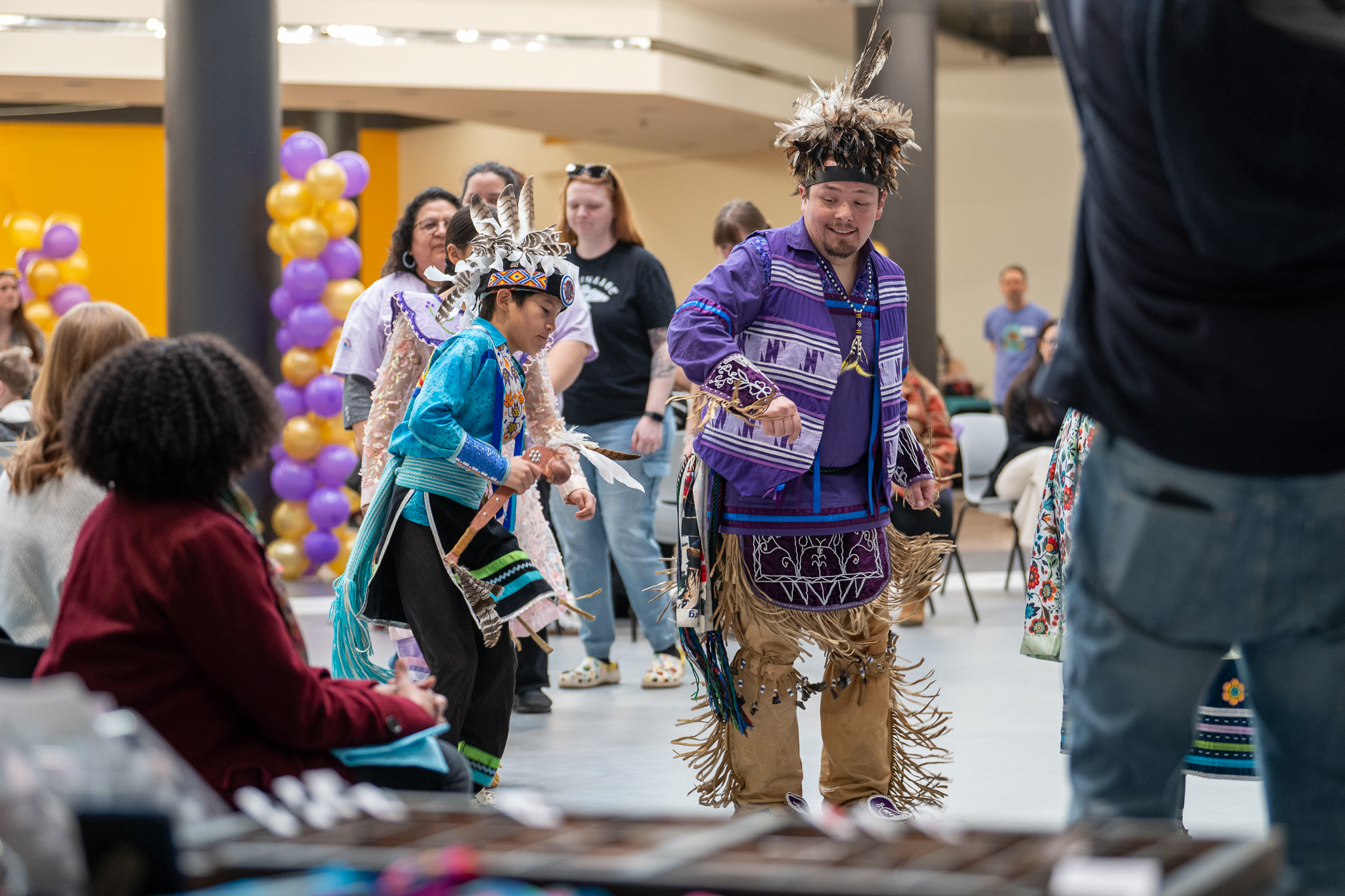
Wilfrid Laurier University’s Brantford campus hosted the second-ever MarketFest: In Peace and Friendship event in the atrium of One Market on Thursday, March 26, 2026.
The event, first held in September 2024, was designed to celebrate Indigenous artists, performers and makers.
Darren Thomas, Laurier’s associate vice-president of Indigenous Initiatives, said that the overall idea for the event came from the contentious history surrounding the One Market building (formerly known as the Eaton Market Square Mall).
“One Market as a facility, for much of the history and lore of Brantford, is known to be cursed and has failed to thrive. The land was originally set aside by the Haudenosaunee Confederacy as a public market. At one point in time, a lot of the Haudenosaunee farmers that came to sell at the market were kicked out and so, quite famously, the lands were ‘cursed’ until such time that mutual benefit was restored to the land,” he said. “At Laurier, part of my role is to look at strategies for how we can ‘Indigenize,’ ‘decolonize’ and ‘reconcile,’ all of which are massive concepts. Across the sector and across the country, most institutions have Indigenous leads that are doing this kind of work, and this was part of the response to the Truth and Reconciliation Commission.”
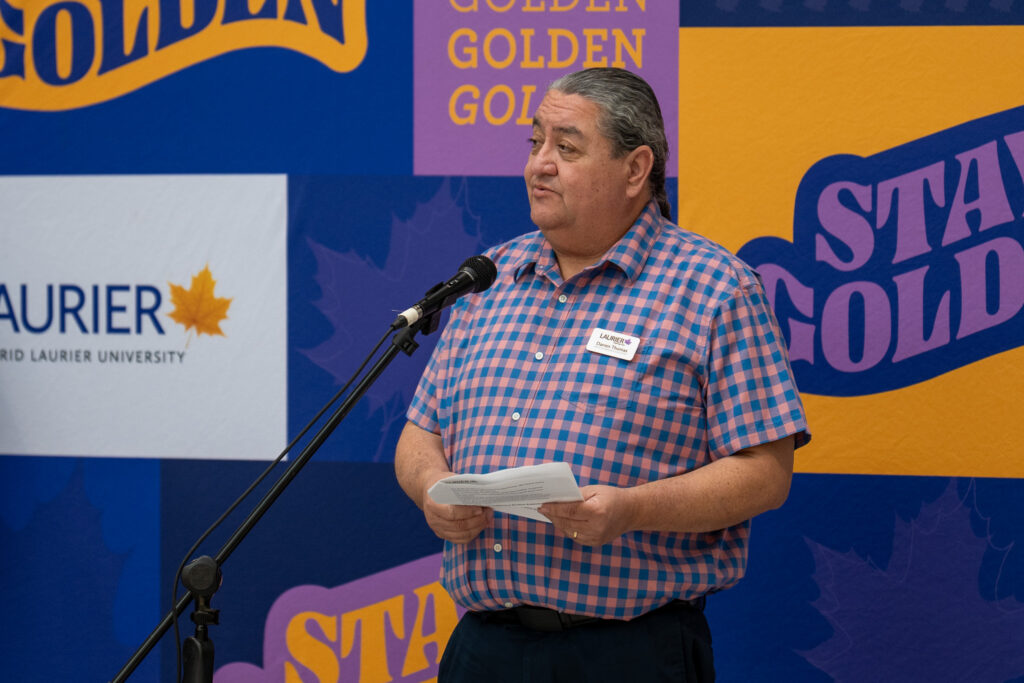
He said that while Laurier may not have caused the issues surrounding settlement and what happened with the land of One Market, the university has the opportunity to help support truth and reconciliation and restore the land to its intended purpose.
“My role is to kind of head different strategies for how we can do that, not only by bringing in Indigenous thought and philosophy into the classrooms, but also in what we do, how we serve, and what we practice. And even though Wilfrid Laurier, per se, as a university, isn’t responsible for some of the social ills that came from settlement, we can play a role to help reconcile,” said Thomas. “I think that’s the biggest challenge of meeting the Calls to Action–many public-sector institutions and people in Canada just don’t know where to start. There’s no doubt that the creation of Canada came at the expense of First Nations peoples. Frankly, it’s an ugly history that people don’t even like to teach, but the reality is, people won’t understand why the Calls to Action exist if you don’t explore the history of the settlement, which has deliberately and intentionally denied the human rights of First Nations peoples.”
“…And so where Laurier plays a role, especially in Brantford as a largely a liberal arts campus, is we teach critical content to help learners understand the history and legacy around the creation of Canada. We ask, ‘how do we serve people better?’ If you look at our social work, education, or our law and society programs, they’re all raising these questions, not just for Indigenous folks, but for everyone,” he continued. “So if you look at what I’m trying to bring in with Indigenous thought and philosophy, it’s the values and principles from those early days of treaty, which were peace and friendship. …If we increase our efforts to Indigenize, it actually makes things better for everyone, not just for Indigenous folks. Because who doesn’t want to go to live and learn, and experience a life where they’re welcomed with love and caring, with kindness, with compassion, and with fairness and justice?I mean, that’s what we all strive for as humanity.”
While the first MarketFest event was held over two days and featured a host of educational sessions, musical performances and a market place for vendors to sell their wares, this year’s iteration looked slightly different. Rather than hosting in-person educational programming, last year’s sessions were available at a listening station.
“The first year definitely had a lot of things going on; we were doing academic lectures and we had artifacts here from the downtown dig, as well as our market,” said Emily Daniels, Laurier’s director of the office of Indigenous Initiatives. This year, we decided to focus on the market because we heard so much positive feedback and so the team decided that those educational sessions and other things could be done at a different time, so we scaled it down to one day and really focused on the market. We’ve nearly doubled our vendors this year, we have about 40 here at the Brantford campus selling their creations, their art and their apparel.”
Following the opening remarks and Thanksgiving Address, Joe Martin and the Grand River Smoke Dancers shared a variety of social dances with attendees, explaining the origins and meanings behind each of them and welcoming those present to join in.
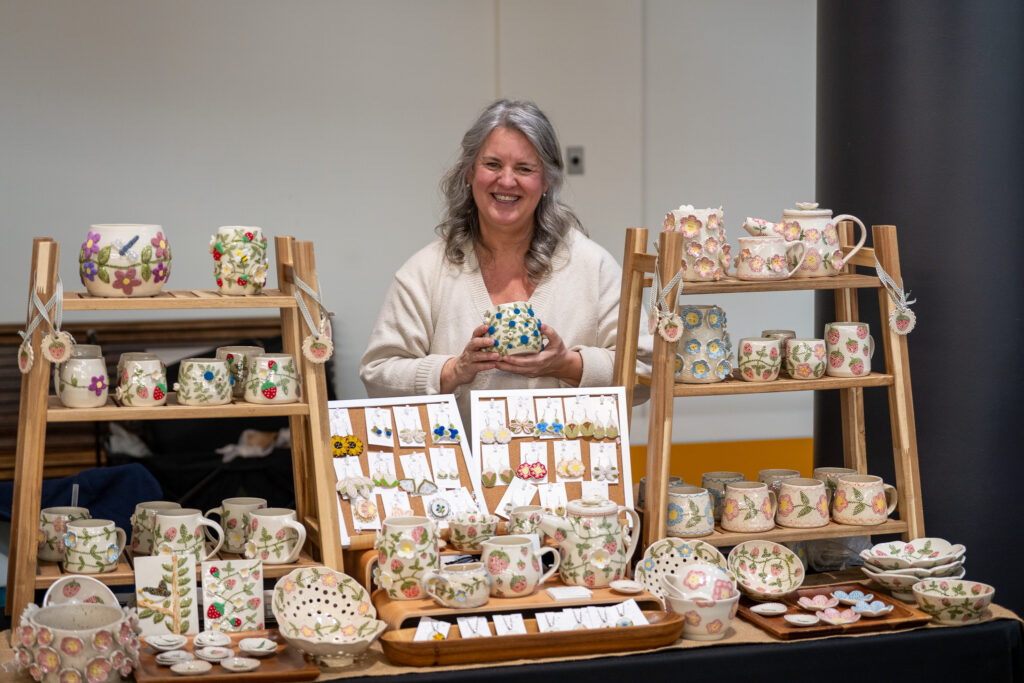
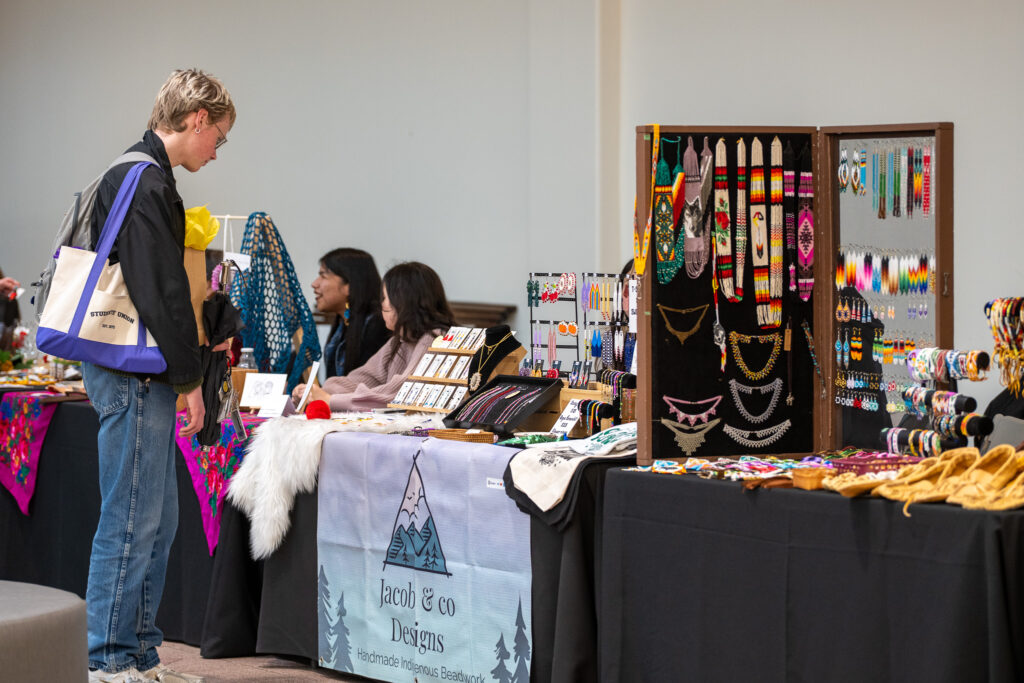
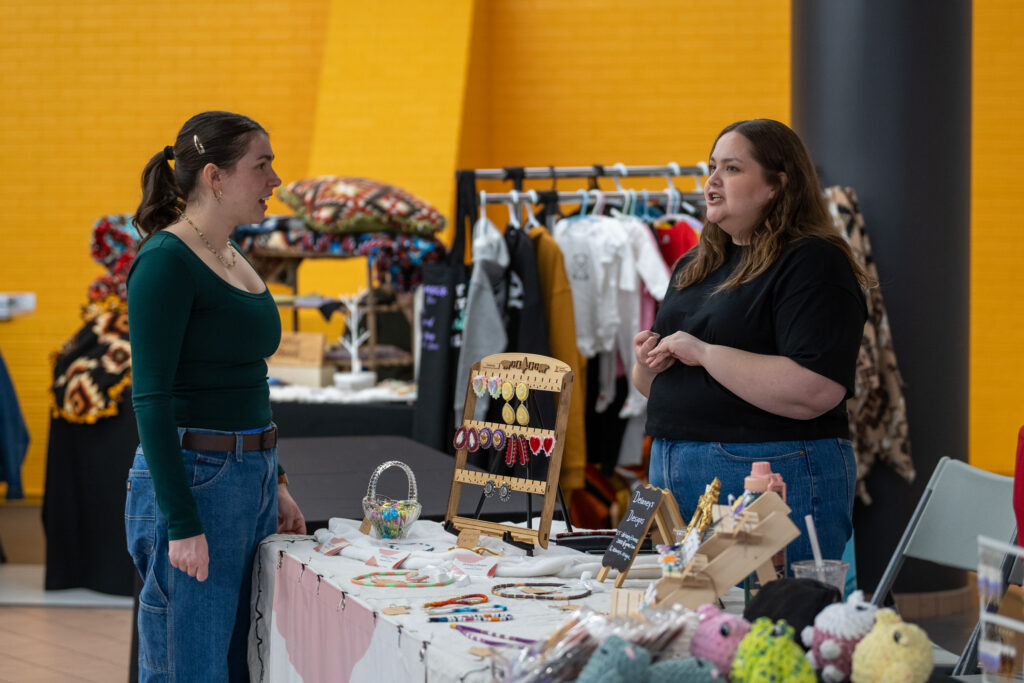
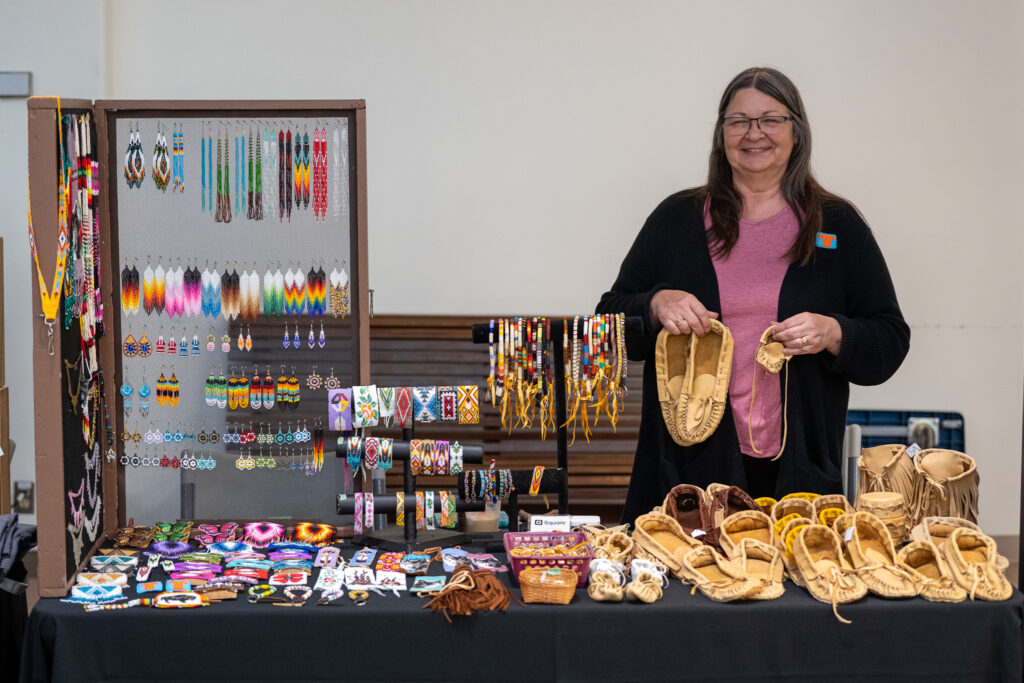
On the market side of things, many spent the afternoon shopping from the various vendors. From pottery to jewellery, crochet creations, beadwork, moccasins and more, there were plenty of items to browse and buy..
Alanah Jewell, MarketFest’s curator and owner of Morningstar Designs, said she was happy with how the event was shaping up.
“It’s been really good. We’ve had a lot of fun programming to start us off that were rooted in ceremony and stories,” she said. “This event is something I think that a lot of people have been looking forward to. It’s such a good time of year to have a market and get people looking forward to the spring and supporting Indigenous artists. Everyone’s really happy to be here, and it’s nice because we’ve had guests come that remember some of the vendors from September 2024, so they’re looking for them and complimenting on how they’ve grown since then so it’s just been really amazing.”
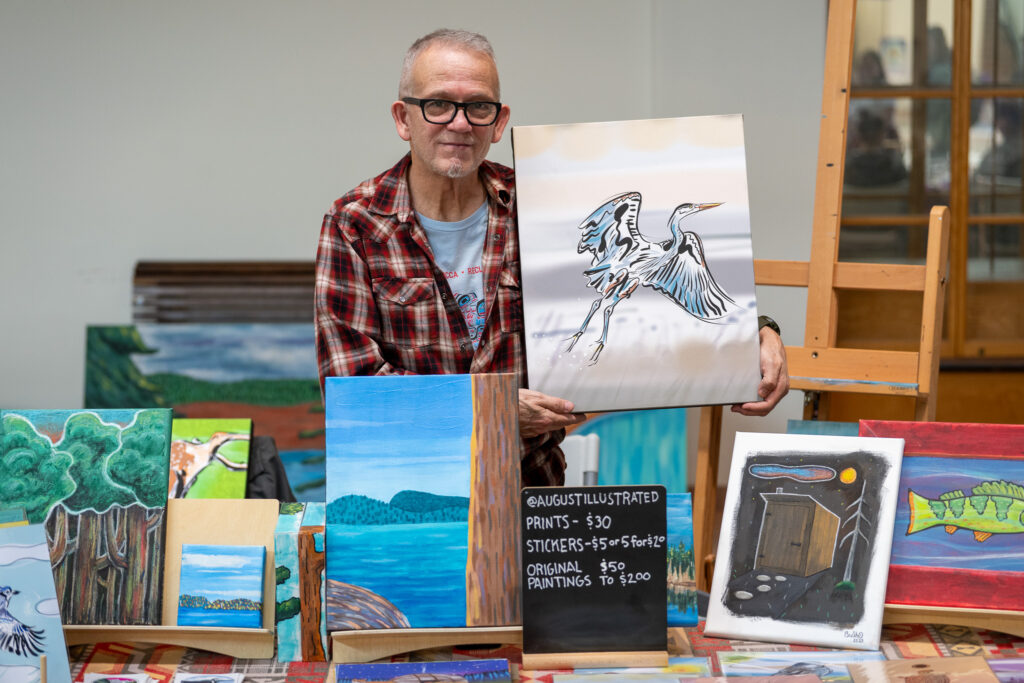
“I want to say we have about 40 vendors this year, we would definitely have more if we could hold more but I feel like this is a good number,” continued Jewell. “It’s the perfect amount for people to be here for an hour, spend time with everyone and do some shopping, and everyone’s unique and has different items for sale so that’s nice.”
Both Thomas and Daniels said they were pleased to, once again, open the space and welcome people in.
”It’s so nice to be able to welcome all these vendors here and demonstrate that Laurier is committed to specifically repurposing this space, our campus community, and letting our Indigenous students, staff and faculty also come here and see that blending of the institution,” said Daniels.
Kimberly De Jong’s reporting is funded by the Canadian government through its Local Journalism Initiative.The funding allows her to report rural and agricultural stories from Blandford-Blenheim and Brant County. Reach her at kimberly.dejong@brantbeacon.ca.


