
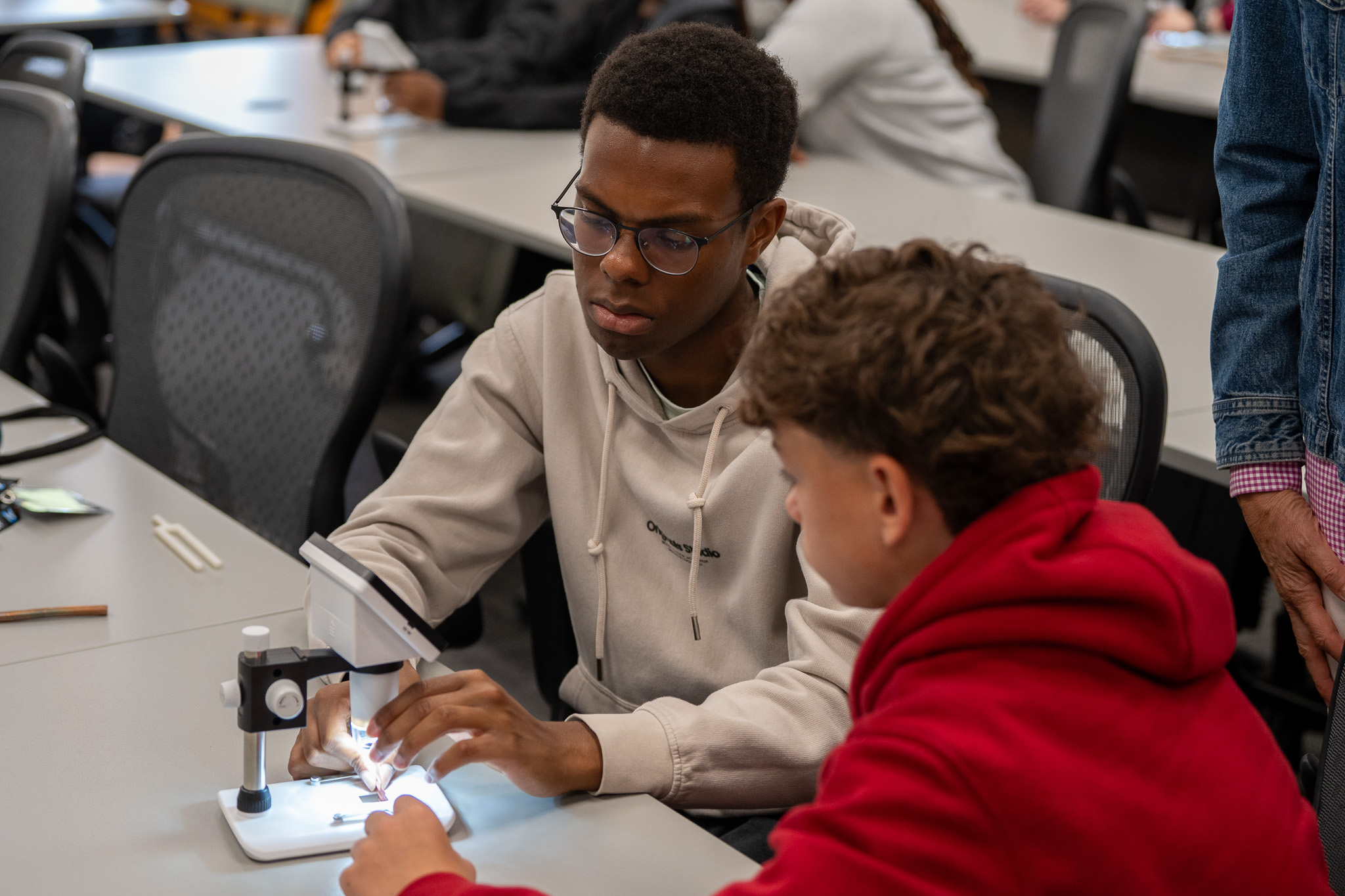
Nearly 900 high school students from Brant, Haldimand, and Norfolk counties attended the 2026 Vision into the Future Conference at Wilfrid Laurier University’s Brantford campus on Wednesday, October 14, 2026.
Made possible by Wilfrid Laurier University’s Brantford Campus, the James Hillier Foundation, Brant Haldimand Norfolk Catholic District School Board, Grand Erie District School Board, Brant Community Foundation and the City of Brantford, the STEAM (science, technology, engineering, arts and mathematics) based event provided secondary school students with a first-hand look at several learning and career pathways.
The event kicked off with keynote speaker Ananya Chadha, an inventor and technology entrepreneur. The Stanford graduate and founder of Quander AI is internationally recognized for her work in biology and machine learning.
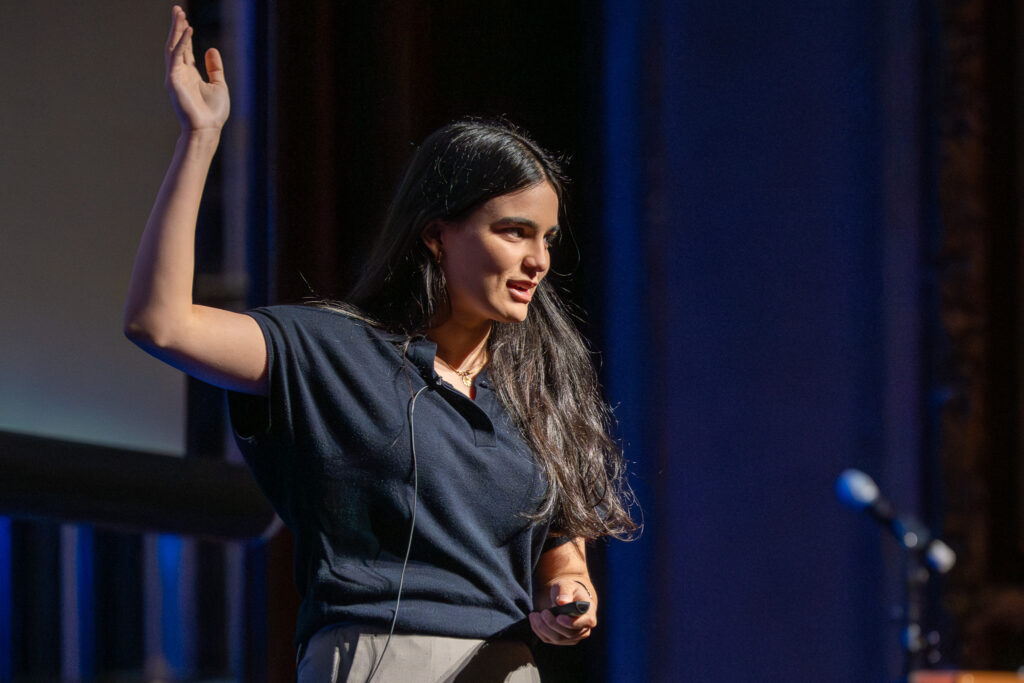
During her talk, Chadha spent her time offering the teens advice on using AI thoughtfully to tackle ambiguous problems, avoiding damaging online habits, learning to collaborate and exploring their interests early.
“Clearly the world is changing and technology is accelerating, and that’s why I think today’s event is really exciting. You’ll get a chance to hear from experts in all the different areas that are moving and changing, and I think it’s a really special time to think about what is of interest to you,” she said. “There’s something about enjoying what you do and finding something that doesn’t feel like you’re forcing yourself to do hard work. You’ll have a much larger capacity to think about problem-solving in your area, consider how you can leverage all these new things that are coming out, and navigate this changing landscape because something in you is genuinely curious, passionate and willing to go the extra mile in uncertain territory.”
Chadha continued, encouraging the teens to use the event as a way to discover something new, and to learn more if it interests them.
“I really do think the ultimate hack to problem-solving is finding an area that you’re willing to problem-solve in and then practising that. Now obviously, this can be hard, because I remember when I was like 16, 17 or 18, and even sometimes today, asking myself, ‘What do I feel passionate about?,” she said. “I think there’s a myth that you have to know immediately what you’re passionate about, or else you’re behind. But how would someone realistically find their passion for data centres or nuclear fusion? These aren’t things you’re exposed to on a daily basis. So I think it’s very much about exploring areas you might have heard about here or on a whim, and building on that interest.”
The talk was followed by a host of workshops and seminars led by employers, educational and community organizations, that explored developing technologies.
Organizer David Page, the retired Department Head of Science for Assumption College School (ACS), said the aim of the event is to inspire young people to learn something new.
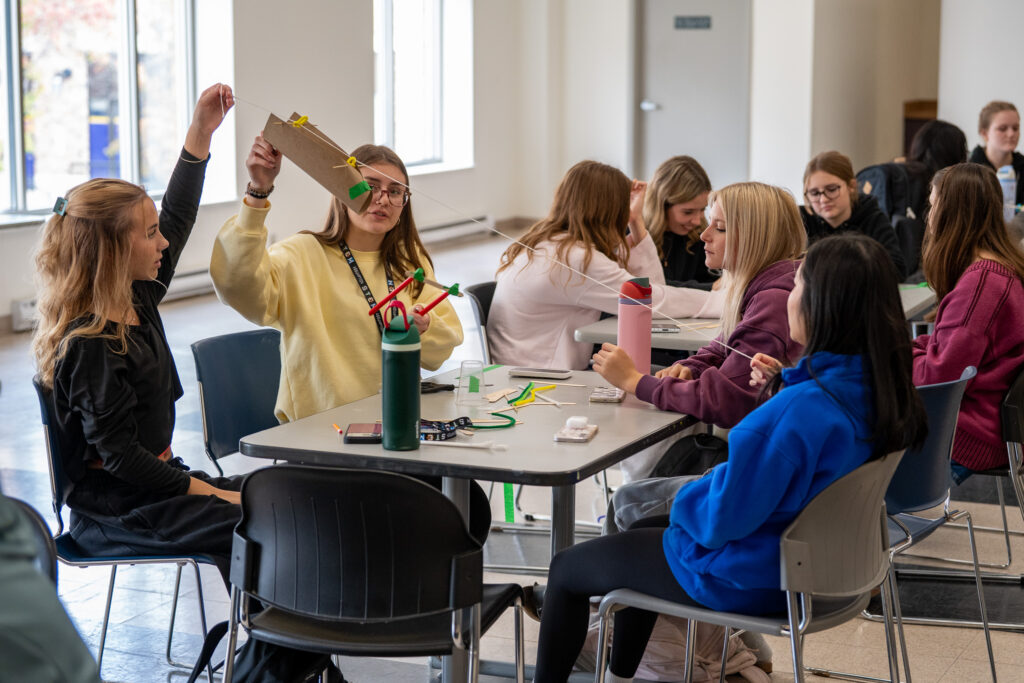
“We want to inspire young people and give them the opportunity to explore different career paths,” he said. “We want them to see these things when they’re young so they can get a better idea of what they want to take in the future. Maybe someone will want to take physics in Grade 11 because they went to a workshop on quantum that was awesome – that kind of thing.”
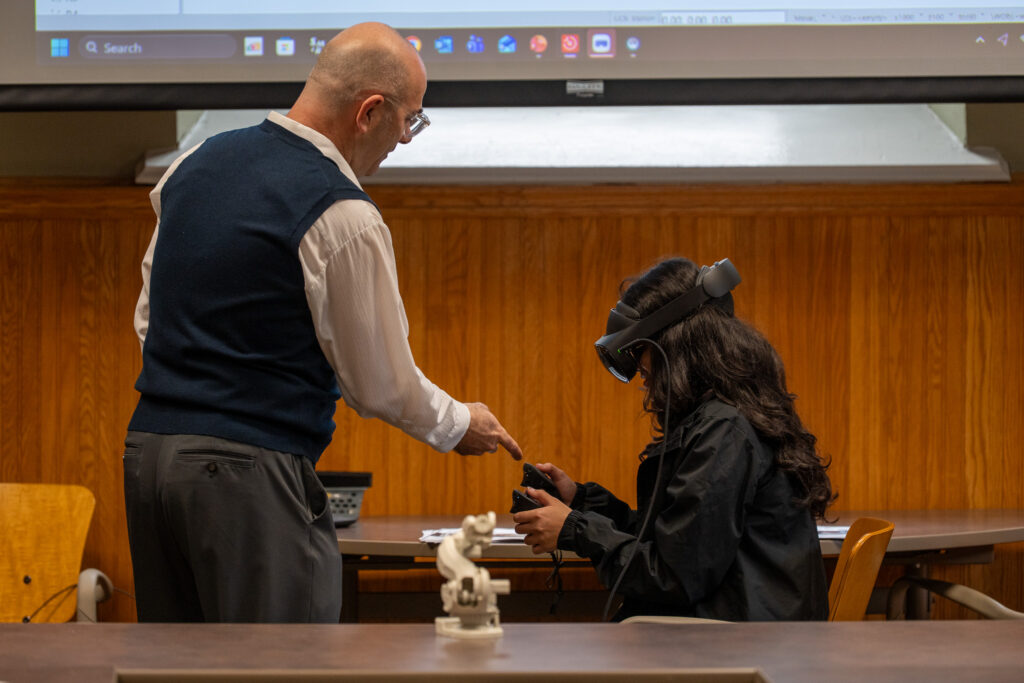
From a zombie apocalypse to forensics, material science, health care, Indigenous holistic health and wellness, quantum biology, space exploration, viral vaccines, digital media and AI, there were plenty of interesting topics for the students to discover throughout the 25 various workshops and 11 seminars.
Many were walked through the basics of coding, instructed to view different materials under a microscope, learning about robotics or how to utilize blood splatter in forensics.
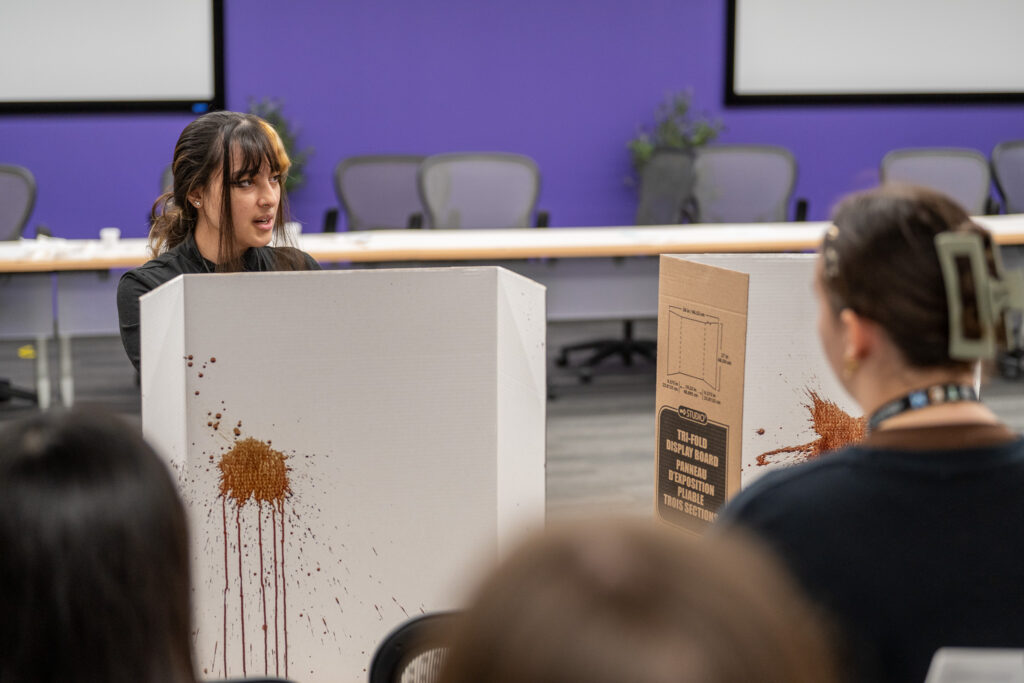
Page said the event just wouldn’t be possible without those who helped fund it, but also those who took time out of their busy schedules to be part of it.
“I’ve built up a number of contacts with people who’ve come since the very beginning. Some I know from my years at Assumption and the STEM program we started there, but some of them I contacted out of the blue,” he said. “I would see a story in the news, take note of who it was about, go to the internet to find a contact, and I would send it out and invite them. And nine times out of ten, they always want to come. It’s unbelievable how the scientific community believes that giving back is a big part of what they do.”
The organizer added that he was looking forward to hearing what youth took from the day.
“They’ll be doing three sessions of workshops and seminars, and then we’ll come back to wrap it all up and ask them what they liked,” he said. “We want to know how the day went, what they learned and if something sparked their interest; we want to see if they saw something that they may not have thought about and if they’re willing to run with it.”
Kimberly De Jong’s reporting is funded by the Canadian government through its Local Journalism Initiative.The funding allows her to report rural and agricultural stories from Blandford-Blenheim and Brant County. Reach her at kimberly.dejong@brantbeacon.ca.


