
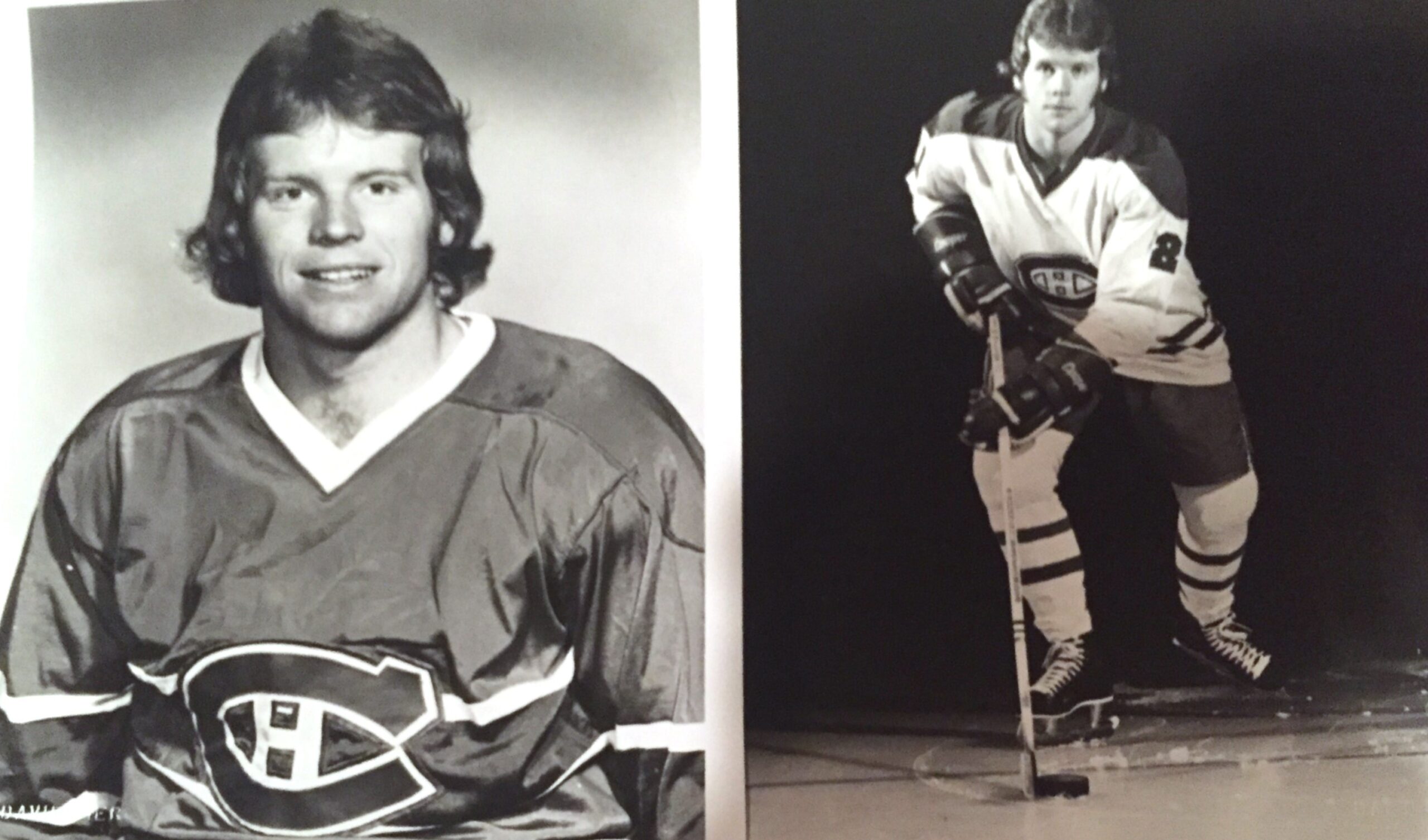
Since lacing up the skates at an early age in Brantford to having a career that saw him win four Stanley Cups as part of the Montreal Canadiens Dynasty to never missing an NHL game and then becoming a respected coach across multiple teams and leagues, Doug Jarvis has relished every minute of his journey.
Jarvis, who grew up in Brantford and played minor league hockey in the community, dove into his early start and also being involved in other sports.
“I started at a pretty early age at Mohawk Park…which was our outdoor rink. Me and my friends spent countless hours there. When school was out, we would grab our skates and sticks and head over there, playing ‘til it got dark. We also played at Lions Park, which is an outdoor rink with natural light, and would play there in an organize the league….where different schools had teams, and we would play against each other….that’s how I got into organized hockey and then moved into peewee, playing at Artic Arena when I was around ten years old. I just really enjoyed it,” he recalled. “The neighborhood revolved around the park and for us kids, sports had timeframes. Hockey would start around the end of November, and go through to the first of March. After that, we would put our sticks and skates away, and we would pick up whatever the next sport was going to be. For me, it started out with minor league baseball, but then it turned into lacrosse. Lacrosse, all of a sudden, became a big sport with the youth in Brantford, when I was growing up, and we used to go and watch the Brantford Warriors play in the senior league a lot, and they were kind of our inspiration to play the game.”
The young hockey player would progress through the minor league hockey system in Brantford going Pee Wee, Bantam, Midget, and Juvenile until and eventually getting drafted into the OHA.
“The next step for me was junior B…which we played out of Waterford at that time. And there Brantford had a major team in that it was kind of an outlaw Junior league. The team was mainly made up of Brantford area boys, and Walter Gretzky was our coach, and we had a good team. So that was a year that would have been right after midget hockey for me…when I was around 16. I ended up getting drafted by the Peterborough Petes,” he noted. “That was the next step, and it was a big decision as there was a lot of discussion with my parents as far as schooling versus going to the OHA. They just told me if I was drafted to a city that had a university, then it would be fine. And that’s what happened when I was drafted by Peterborough as Trent University was there. I was then off to Peterborough to do grade 13, leaving Pauline Johnson…and then going to Trent, when I played for the Petes.”
During his time with the Petes, Jarvis had a chance to be coached and mentored by one of the most respected bench bosses in junior hockey at that time, Roger Neilson.
“Peterborough was a great program. And obviously it started at the top, with Roger. He was very disciplined and was a strong mentor in our development. He certainly cared about us as hockey players….but he really cared just as much about us flourishing as people. So, I ended up going there…and we had some really strong teams in Peterborough. We were in the finals both of my two years there, but we didn’t win it,” Jarvis said. “But Roger ran a pretty tight ship. We either had to be in school or have a job as a junior player there, and that was a requirement….they kept track of your grades, and if you were struggling…they would get you set up with a tutor. But overall, I found his coaching and instruction beneficial to my development…he wanted to develop players that could play the whole 180 feet of the ice…and not just the offensive part of the game. His program was really structured on the defensive part of the game, which was valuable to me, moving on from junior hockey into the pros.”
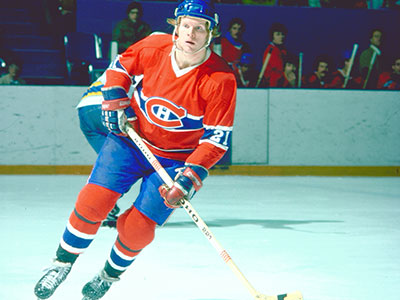
And while playing with the Petes, Jarvis had a chance to represent Canada overseas.
“During the second year we represented Canada at the first World Junior tournament. It wasn’t under the auspices of the IIHF yet, so….it was unsanctioned, and in the sense, we represented Canada as the Peterborough Pete’s…going to Leningrad…which is St. Petersburg now…but when we went to Leningrad in 1973 along with the United States, Russia, Sweden and Finland. And going there was definitely a highlight in my time in junior hockey,” he said.
After a stellar career in the OHA, Jarvis was selected by two teams in 1975 which were the Houston Aeros of the WHA and the Toronto Maple Leafs of the NHL.
“In those days, you didn’t go to the draft. You just waited by the phone…[and] that call came from Toronto pretty early in the morning. And getting drafted by Toronto was ideal as Brantford was in close proximity…and another thing was that they were losing two centermen through retirement, Dave Keon and Norm Ullman. And I thought that was a really good opportunity for me to fill one of those spots and I was pretty excited about that,” he said. “And I was also selected by the Aeros. That team won Avro Cup and the Howes were playing there too. That looked like a good situation for me. But almost a month after the NHL draft, my rights were traded to the Montreal Canadiens. And I had to choose between either Montreal or Houston. Montreal had a deep team with a farm team that was as strong as a few of the NHL teams at that time. I would then talk with the Sam Pollack; Montreal’s general manager and he was very forthright saying that he had one or two spots open and discussed the names that could fill that position, and I was one of those players. But it all came to how I performed in training camp and it was left at that. After that I went and met with Roger to see what his thoughts were [as] I valued his opinion so much. I knew he cared about his players and those around him, and I got talking to him about the decision that I had to make between Montreal and Houston. And he was pretty frank, and told me that if I didn’t choose Montreal, I was going to regret it. I came home from that meeting and ended up going to the Canadiens training camp.”
Jarvis quickly came to the realization he made the right decision, becoming immersed with Montreal’s rich hockey culture and winning tradition.
“Whenever you have a chance to play for an original six team, especially a team like Montreal with their history, its very special. I can remember that first training camp, walking into the Montreal Forum..and looking up at the banners and all those Stanley Cups. It was overwhelming and I was a bit nervous…thinking to myself…’do I belong here?’ Especially with the caliber of players on the team. But they were looking for a particular type of player in mind and that’s why they traded for me. Henry Richard had just retired so that was an opening….and I know that Scotty Bowman was after a specific type of player who was defensive. They were big on roles. In terms of players…each one did certain things, and they wanted a mixture of those kinds of player that knew their roles on the team…players that could score and players that could defend and so on. So that is where really the training I had under Roger became valuable, because most players, when they would get to Montreal would spend time in their farm team in Nova Scotia learning the defensive side of the game…. how to play in their own end and have the checking aspect down. But I had already had playing for Roger in Peterborough for three years with Roger.”
However, Jarvis would team up with Bob Gainey, a teammate from Peterborough, in Montreal.
“My first year in Peterborough was Bob’s last, and so he got drafted into Montreal two years before I ended up there. Bob and I played together in Peterborough…and now we would be linemates in Montreal. We would be teamed together with a fellow by the name of Jim Roberts…[and] we were a defensive line. We had checking assignments every night. We would be told who we would play against, and that was our job to check that line. And in those days, lines stayed together…it wasn’t like today…with so many line combinations and changes. Lines would stay together for three, four or five years. But Bob, Jim and I would stay together for about two years until Jim went to the St. Louis Blues. Rejean Houle would join us on the line and then Mark Napier would fill in on the right side,” he stated.
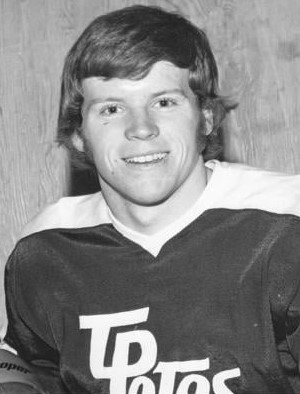
The Montreal Canadiens would then sip from Lord Stanley’s Cup in 1975-76 season, and in that time, be surrounded by the winning tradition.
“It was special to make it to the NHL and then get a chance to win the Stanley Cup that first year. I learned a lot in Montreal that served me well….through the rest of my playing career and even my coaching career. I can remember my first year there with Toe Blake, and that was the thing that I really enjoyed about being there…and getting to be part of that culture. Toe would come around the team and at times would talk with the players. Or Jean Béliveau being there too. It was such a great atmosphere [and] I would listen and want to learn from these people when they would speak to us,” Jarvis reminisced. “I remember the first series we played in the playoffs, and I think it was against St Louis. We had beat them to move on to the second round. And I can remember….taking my equipment off and putting it in my stall. As I’m doing that, I look over my shoulder, and here’s Toe with his fedora and his overcoat over his arm. He looked at me and said, ‘That was a good series. I know you’re excited about winning this series, but just remember that this is Montreal, and you haven’t won anything yet.’ I think that was my first introduction to understanding that the only thing that mattered in Montreal was winning the Stanley Cup.”
However, the team would go on to win three more Stanley Cups from 1976-77 to 1978-79, with Jarvis being a part of a total of four championships
“Having success like that in Montreal was a real privilege. As a player there, you’d win the cup and then start to prepare very quickly for next year and another chance to win the Stanley Cup. The expectation was that we would win every season. And that was a good motivation. I found it healthy [and] enjoyed that kind of atmosphere,” he said.
During his time with the Montreal Canadiens, Jarvis would start to string together a career in the NHL that saw him not miss a game which would be the foundation of his ironman streak of 964 games.
“I wasn’t really conscious of doing that. I just really loved playing the game and I wanted to be in the lineup. You would walk into the dressing room at night…. hoping your sweater was hanging up there. You play every game, one at a time, and before you know it, the numbers started to add up. I wouldn’t really think much about it until, every once in a while….you would start to pass somebody at a certain number, and the media might pick it up for a little bit. But I wasn’t really thinking about it. I just wanted to play the game,” he reflected.
After seven solid seasons with the Canadiens, the defensive star would find himself traded to the Washington Capitals along with Rod Langway, Brian Engblom, and Craig Laughlin for Ryan Walter and Rick Green.
“In those seven years, we had a fair amount of success. Although we still had a strong team, we weren’t winning the cup then, then at that point…I started to get the feeling that maybe changes were around the corner. We had some little changes like Ken Dryden and Jacques Lemaire retiring and Yvon Lambert going to the Buffalo Sabres. But we had gone out early in the playoffs during my seventh season there…so four of us were traded to the Capitals [and it] was dramatically different than being in Montreal. The Capitals at that time were running a campaign when we got there….it was a ‘Save the Caps’ because the team wasn’t drawing fans and it wasn’t doing well in the standings. I don’t think the team had ever made the playoffs at that point So it was a different atmosphere than the one I was [accustomed to] in Montreal,” Jarvis recalled. “New leadership had just gone in there. David Coyle had come from Calgary, and he had just taken the team over….and Brian Murray had also come on board there as coach. So, there were two excellent hockey people. David was making a team that players wanted to be part of….the four of us that were traded to Washington were more defensive and I think that’s the way that David was building the team. And it really paid off for us. It gave us something to rally around as a team. People were starting to come back and crowds were growing. And by the second year we made it to the playoffs.”
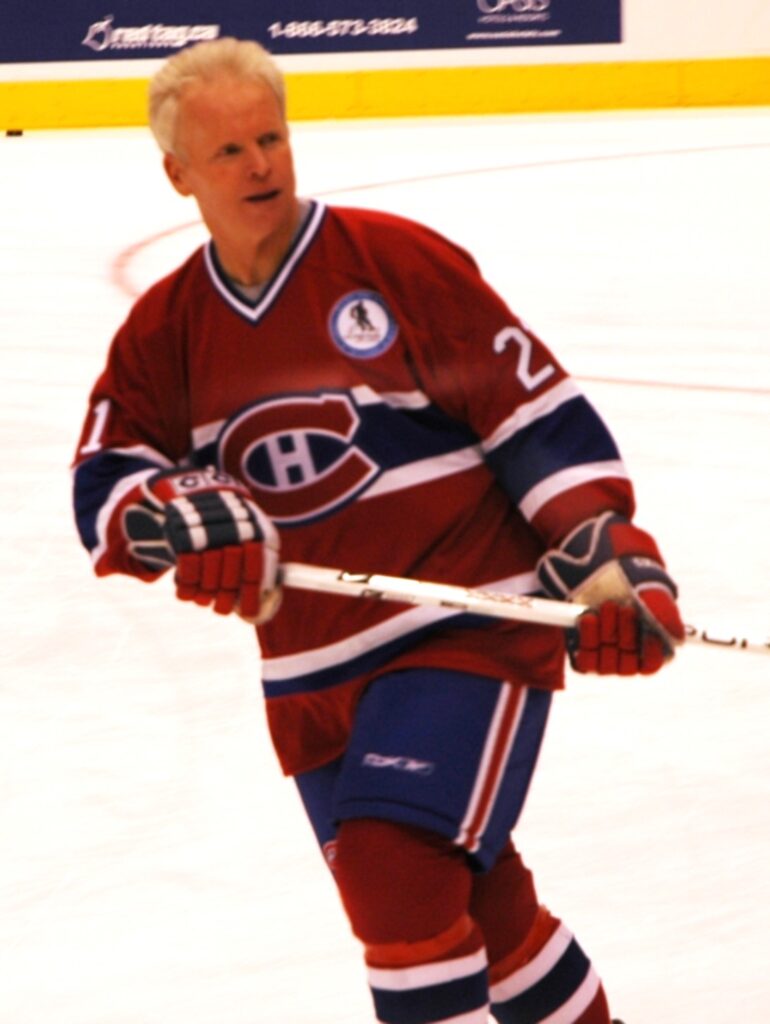
While, the defensive forward enjoyed team success with the Canadiens in the 1970s, personal accolades would follow in the 1980s. He would earn the Frank J. Selke Trophy in 1983-84, for being the leagues top defensive forward.
“I was able to really fit into the defense first system in Washington…and follow the ‘offense comes from good defense’ philosophy. That suited me well. I had strong line mates…[and] we were given challenges every night….who we were going to check, defend against and kill penalties with, and all of that,” he noted. “It was, was special to win that award…it was nice to be recognized for playing my game. But it all about doing it as a team and that’s what was important.”
Nevertheless, Jarvis would be traded again, this time to the Hartford Whalers during the 1985-86 season while attaining an important record.
“That was unexpected. But, like the Capitals, I was going to a team that wasn’t having a lot of success…they were trying to build a good team there and we actually won the division there. It became a positive move in a good, competitive environment. I enjoyed being part of the franchise with a growing fan base,“ Jarvis said. “In the 1987 season, I passed Gary Unger at 915 for the consecutive game record and in that same year I won the [Bill Masterton Memorial Trophy]. The following season I played three games. And then that was it. The streak ended and my career in the NHL came to a close. I ended up going to the farm team in Binghamton, and shared with Hartford and Washington. So, I was kind of familiar with both teams….but went there as a player/assistant coach. Shortly, after I got there, the head coach there got called up to Hartford and had a chance to coach the team.”
After 13 seasons in the NHL, Jarvis decided to hang up his skates and started another chapter of his hockey career as an assistant coach with the Minnesota North Stars which would become the Dallas Stars.
“I always enjoyed watching the game and studying it. When I was playing in Washington…I was asked to handle the penalty killing aspect of the team….so I would study video…and found that coaching was very appealing to me. And after retiring, the opportunity came up with the Minnesota North Stars. Pierre Pagé was the coach and Jack Ferrara was going to be general manager…and they were looking to fill out their staff. So, I got a call from Pierre asking if I would be interested in coming on board with the coaching staff. And so that’s how that started..” he stated. “We had a good, strong core of players. In 1991, we went to the finals, losing to the Pittsburgh Penguins. [After] five year…there was a split when part of the team went to San Jose. The Gund brothers owned the team and one brother stayed connected in Minnesota, the other one went to San Jose with the Sharks. We still had a very good nucleus of players despite losing some young players. And of course, we would then move to Dallas. It was a challenge as we were coming from a hockey hotbed, to a place where we needed to educate the fans. But the good thing was we were a good team that was moving to Dallas. It wasn’t like an expansion team. It wasn’t a team that had to go through a lot of growing pains. We were a good team to begin with when we went there, and they did a great job there developing minor hockey with the kids. The team built a number of rinks around the city. They got kids playing and many of them got their parents interested in hockey. A lot of things were really done well there…. In order to build interest in the game. And that being said, eventually leading to our Stanley Cup in 1999.”
However, Jarvis had an opportunity to be with Team Canada as also an assistant coach and even be part of the Spengler Cup, which then led to other coaching opportunities.
“That came about when my time with Dallas was up. I had a year between finding another NHL job, and then I had a call there, would I be interested in helping out as an assistant with Team Canada. It was a very unique experience which I really enjoyed…representing Canada again, and competing in the Spengler Cup, with its rich history in Europe,” Jarvis said. “Then the following year, the opportunity came to get coaching again…with Montreal’s farm team in Hamilton. And then that progressed to becoming an assistant coach with the Canadians after that. It was special to go back to Montreal. I was very happy when that came to spend two years with the Hamilton Bulldogs….and then the next four years with the Canadians, before going on to Boston,” Jarvis said.
And then, from there, Jarvis had a chance to compete for another Stanley Cup with the Boston Bruins and then headed west to become an assistant coach with the Vancouver Canucks.
“That came about when my time finished up in Montreal. I coached with Claude Julien there in Montreal for a bit, and then he went on to other teams, and then he ended up in Boston….where I joined the staff with Claude the next year. I jumped at that quickly, just because the original six teams have a lot of pride [and] the Bruins have a lot of history. It was really an enjoyable experience to be able to jump in with that group and win a Stanley Cup,” he stated. “After six years in Boston, there were changes in the coaching staff. That happens in that coaching carousel. And the opportunity came in Vancouver there to come out there as an assistant coach and so we went out and part of that to the Canucks.”
Although he enjoyed another opportunity to coach in the NHL, Jarvis started to reflect on personal aspects.
“At that point, we’ve never been in the West…it was a long way from our family and our kids and that kind of thing and it was just traveling with, you know, was much more extensive. It was 28 years as a coach…and I had discussions with my wife Linda that maybe it was time to step away from coaching. The 24/7, treadmill is all consuming. And we thought about our kids and our grandkids. So, I spoke with the management in Vancouver and told them that I was finishing coaching,” the veteran coach said. “And the opportunity came along to stay on as a consulting senior advisor role with them, which allowed me to live back in the east….in Ontario, while staying in touch with, y, the coaching staff and the manager there over the next four years. That was a nice transition and gave me a very flexible schedule to be with our kids and grandkids, who live in North Carolina. We just wanted to be able to go and see them, and spend time with them…and that was a priority for us.”
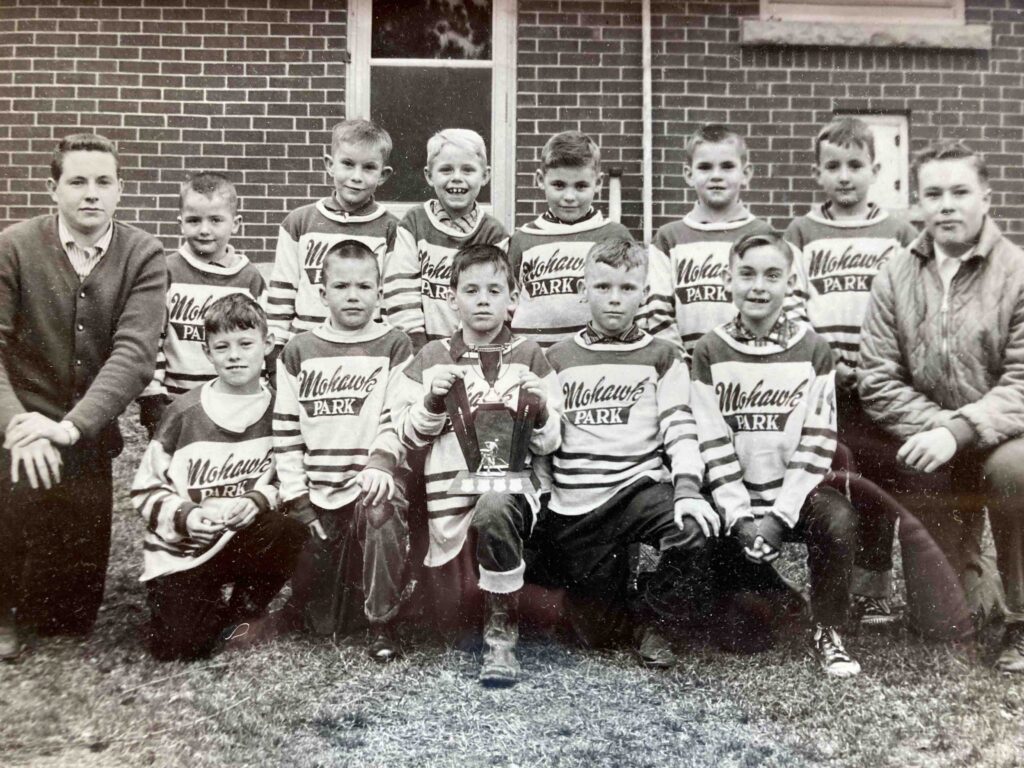
Jarvis continued, “I really feel very blessed… playing at Mohawk Park, just enjoying the game and then going through the Brantford minor system, and then heading out to play for the Petes. Probably in my last year as a junior in Peterborough, I started to realize that some of the guys I was playing with were on TV and playing in the NHL…I thought if they were doing it…this could be a career for me too. And then to go and play with Montreal, and stay around the game I loved after I retired…being a coach and enjoy the game even more. I was very fortunate and blessed to be 48 years in the business, and finding that the competition was fun and the wins and losses were important, it was, at the end of the day, it was all about the people that I’ve met along the way that has really enriched my life, our life as a family and in the world of hockey. Whether it’s my beginnings in Branford, the coaches I had in minor, in the minor system here, and moving on to Peterborough, or playing Junior B there…even getting to know Walter Gretzky and Roger Neilson and then all the different moves we’ve had between playing and coaching in the NHL, the people we’ve met along the way. It’s just been such an enriching experience in our lives.”


