
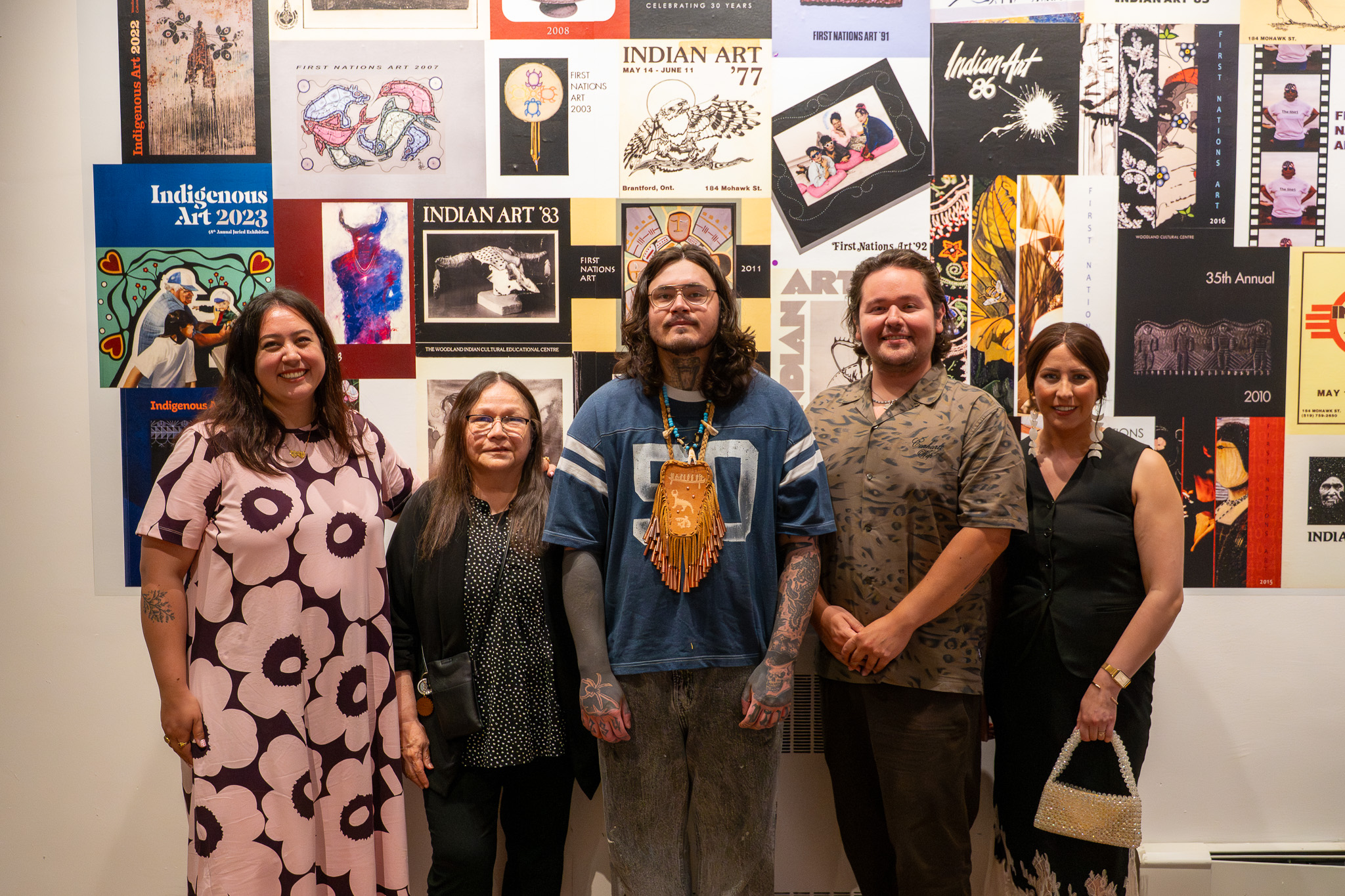
Indigenous Art 2026, the Woodland Cultural Centre’s 51st annual juried exhibition, opened with a reception on Saturday, June 27, 2026.
Established in 1975, it’s known as the longest-running juried Indigenous art exhibitions in the country. The display is an opportunity for artists to exhibit and sell their work in a gallery setting.
Alex Jacobs-Blum, a Gayogo̱hó꞉nǫʼ (Cayuga) and German visual artist who returned as guest curator for the second year in a row, said this year’s installment exhibition features nearly 60 works of art from 34 artists across Turtle Island.
“We had 80 artists enter their work this year, and they were each able to submit up to three works, so we had almost 200 submissions,” she said. “There was a lot to go through, and it really came down to splitting hairs because the works were just incredible. We could have accepted all of them, and it would have been a spectacular show, but we’re bound by the space that we have available.”
To help choose which pieces would be showcased, Woodland brought on three guest jurors to help with the process including Jeff Thomas, Shayde Sandy and Erin Szikora.
“I love having the jury because they have all of these different, generational perspectives,” said Jacobs-Blum. “We brought in a younger generation artist, a mid-career curator and a late-career artist, and they all brought this really interesting, unique voice to the work, as well as their own curatorial vision. It was really nice to be a sort of fly on all the wall during the process and listen to the conversations, it’s one of my favourite parts.”
The selected artworks reflect the strength, innovation, and diversity of contemporary Indigenous artistic practices while engaging with themes of identity, community, land, memory, and future-making.
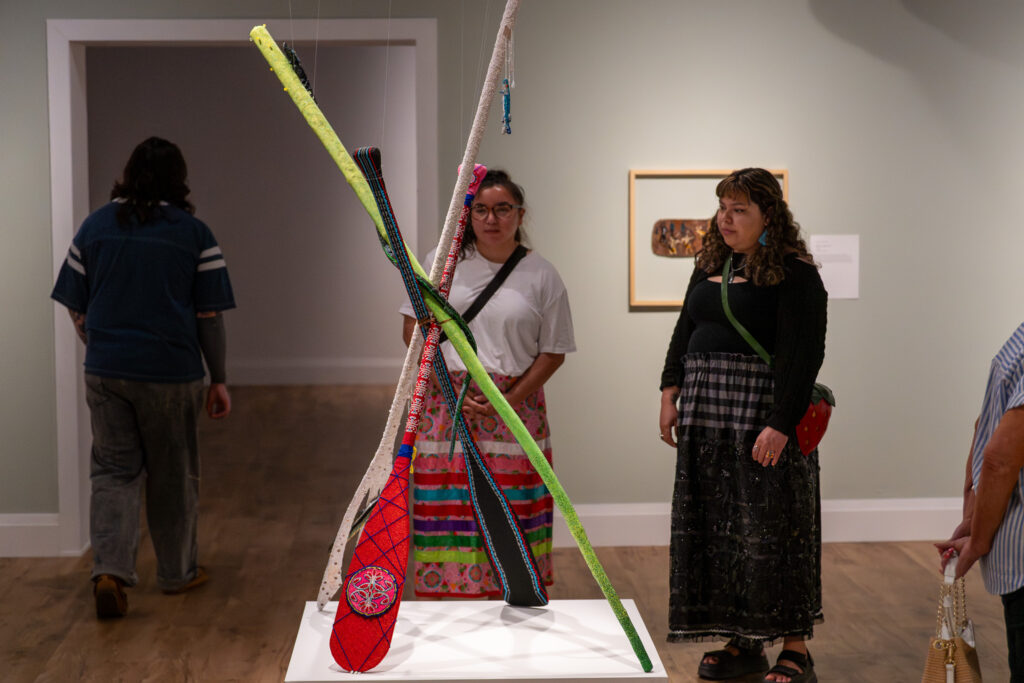
From paintings to photography, mixed media pieces, pen and ink, audio, digital art, beadwork, clay, and pyrography, there were plenty of examples of contemporary works mixed with traditional elements for guests to discover.
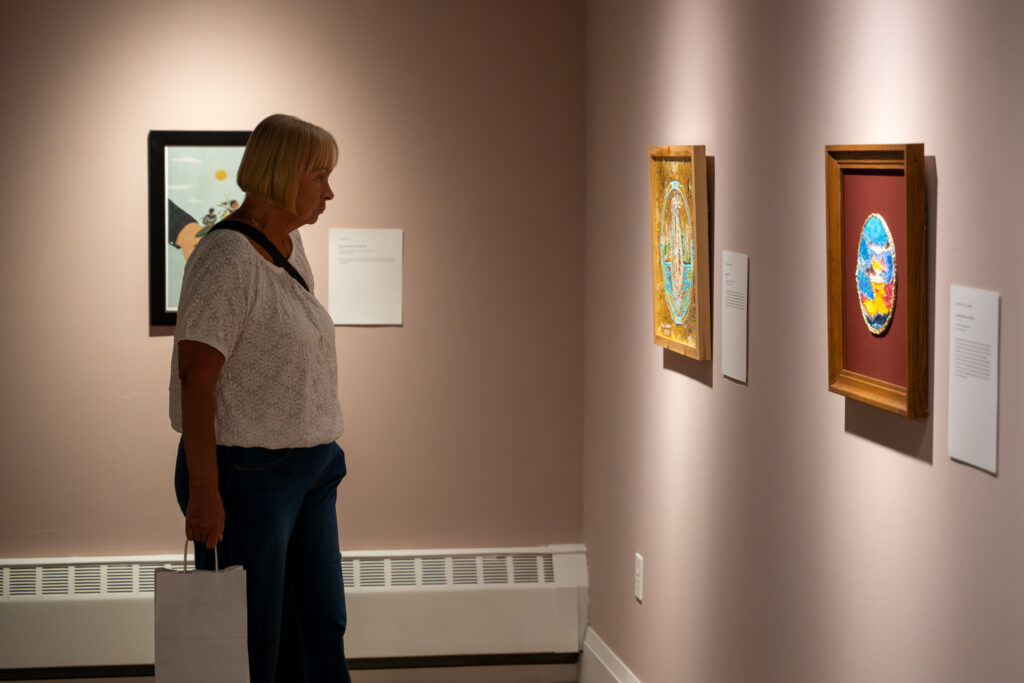
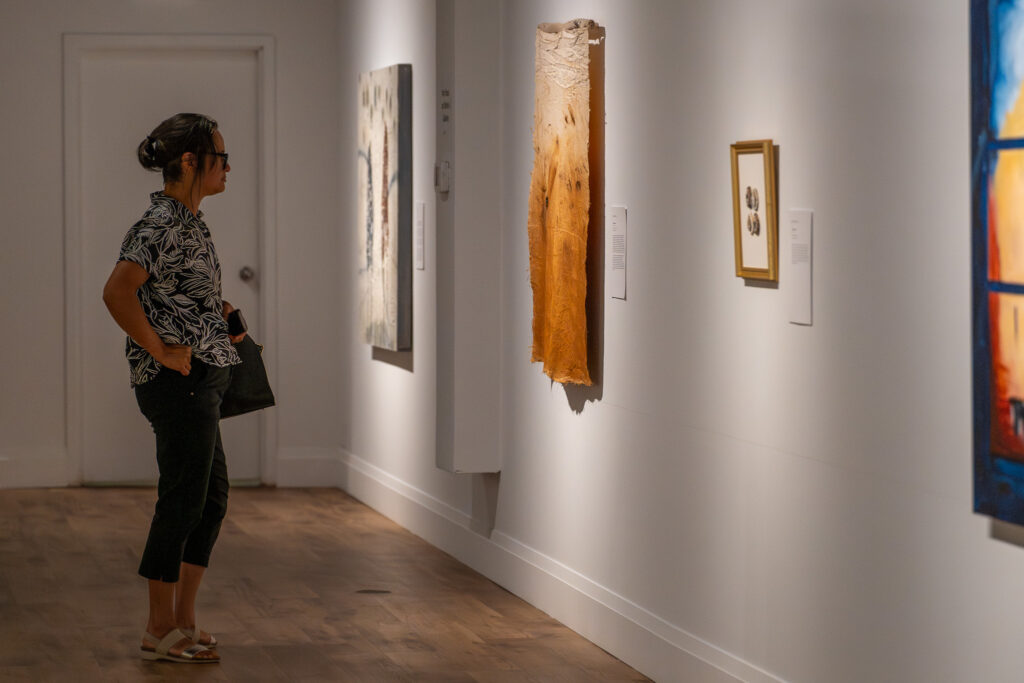
During the event, visitors took their time making their way through the different galleries, admiring the work and discussing different aspects with each other.
Two awards were later presented during the remarks portion of the evening. Drake Williams received the Patricia Deadman Emerging Artist Award, while Elizabeth Doxtator was honoured with the Thomas V. Hill Legacy Award for established and late-career artists.
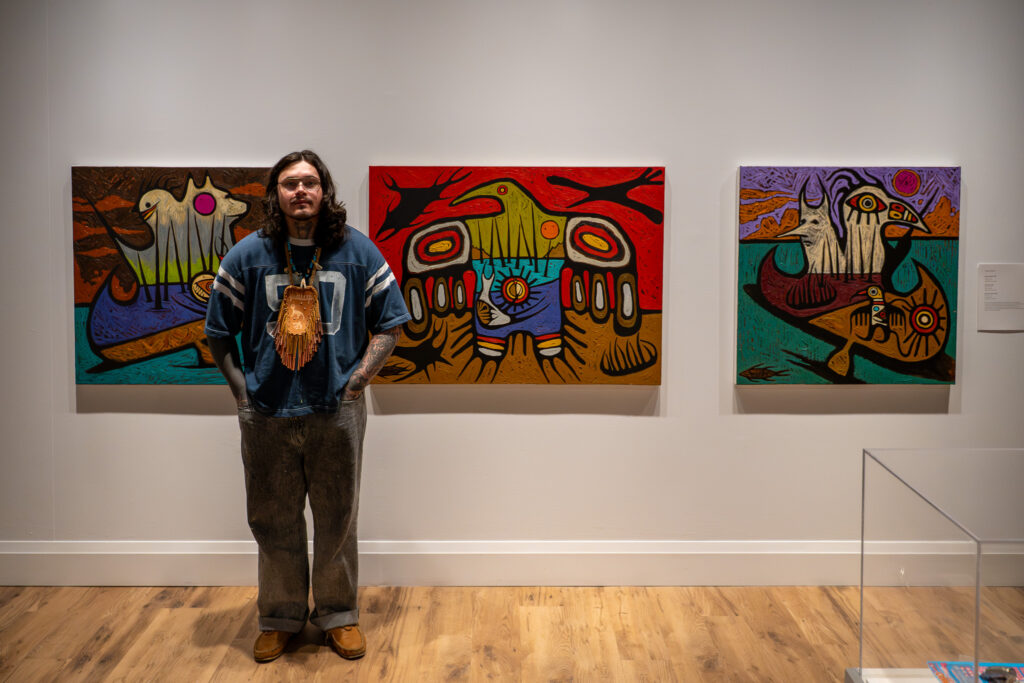
Williams, an emerging Anishinaabe oil painter and member of Rama First Nation who is based in Toronto, also exhibited work in Indigenous Art 2025.
This year, he has three paintings on display: “Between Worlds,” “Water Song” and “Woodland Legend.”
“My Indigenous art journey began about three years ago now,” he said. “I would describe my style as impressionism mixed with Woodland art, and I take a lot of inspiration in particular from the first and second generation of Woodland artists. Arthur Shilling has also been a great influence.”
Williams went on to say that being able to exhibit art at the Woodland Cultural Centre meant coming together with different communities and uplifting Indigenous voices as one.
“The idea of breaking boundaries for future generations, so that other people are inspired, gets me excited and I think that’s really the purpose of the Indigenous Art exhibition,” he explained. “I think that if my art can inspire people to go deeper into the culture, whether they want to be an artist or a drummer, a dancer, or someone who learns the language, that would be meaningful because there’s no borders between those art forms or communities. I think we’re all in this together.”
Jacobs-Blum later said that she was happy with the overall outcome of this year’s exhibition.
“I think art has the power to change people and resonate with us in really deep ways, to inspire us to change,” she said. “I’m proud of everyone. I’m proud of every single artist and every single person that chooses to create as a mode of healing, as a mode of expression, and as a mode of storytelling. That is what changes minds and inspires other people. People connect to art in so many different ways, and I love seeing artists of all generations working, and I feel really hopeful for our future because of that.”
Kimberly De Jong’s reporting is funded by the Canadian government through its Local Journalism Initiative.The funding allows her to report rural and agricultural stories from Blandford-Blenheim and Brant County. Reach her at kimberly.dejong@brantbeacon.ca.


