
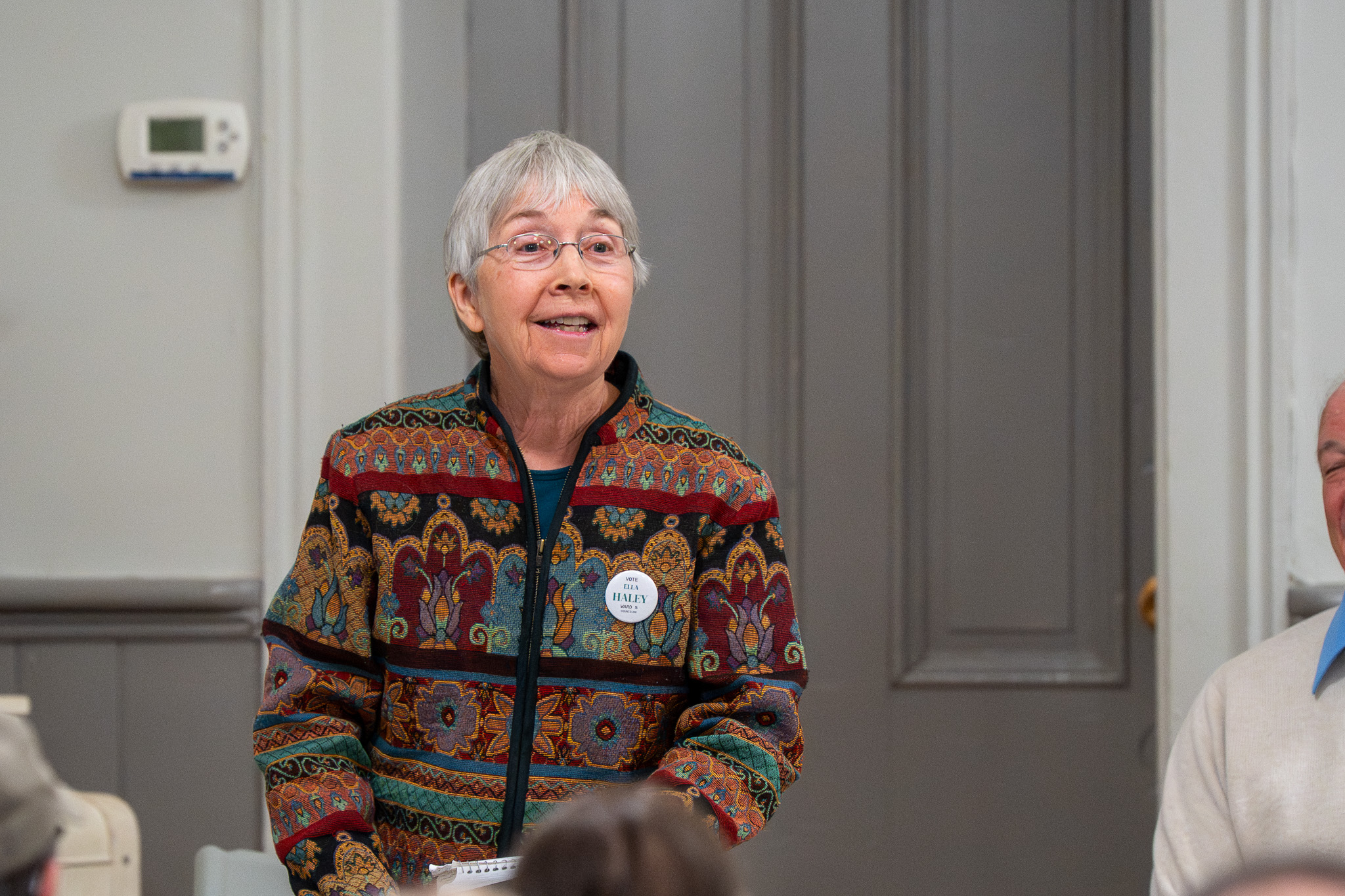
Ella Haley defeated four other candidates to become the newest Councillor for the County of Brant in the by-election, which was held on Monday, March 16, 2026.
Haley won her seat with 568 votes while Gatopoulos received 424, Dorr received 247, Anderson received 199 and Johnston received eight votes. A total of 1,447 Ward 5 residents participated in the vote.
She will now join Ward 5 Councillor Brian Coleman in representing the communities of Cainsville, Langford, Onondaga, Middleport, Mount Pleasant, Scotland, Oakland and Oakhill. The new councillor is expected to be sworn in during the March 24 Council meeting and will serve out the remainder of the term until the next municipal election, scheduled for Monday, October 26, 2026.
Prior to the election, the five candidates who were running to fill the vacant seat took part in an all candidates forum hosted by the Brant County Federation of Agriculture (BCFA) in Onondaga on Wednesday, March 11, 2026.
The event was held ahead of the Ward 5 by-election, which was called after former Councillor Christine Garneau resigned from her position on Monday, October 20, 2025.
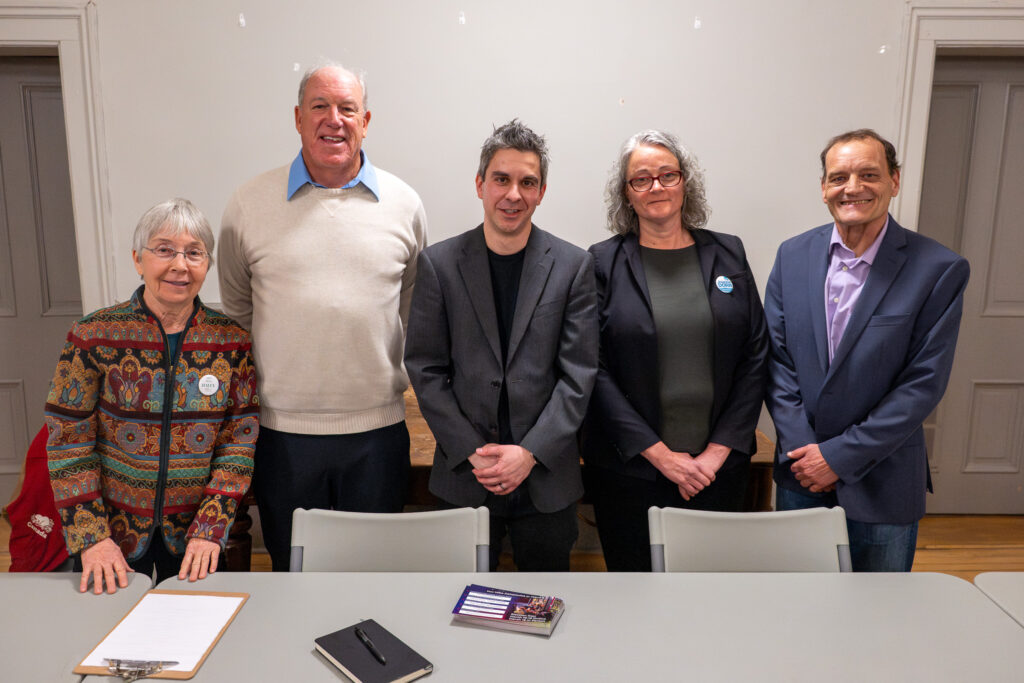
Participating in last week’s forum were all five candidates including Haley, Greg Anderson, Mike Gatopoulos, Joanne Dorr and Jeff Johnston.
During the event, moderator Larry Davis, Zone 3 director with the Ontario Federation of Agriculture, gave each candidate a chance to introduce themselves and two minutes to answer a series of six questions in regards to several agriculture and land-use concerns.
Mark Eddy, past president of the BCFA, developed the questions in consultation with the organization’s board of directors using material from the Ontario Federation of Agriculture.
After giving their answers to the first question, being why they were each running, the candidates went on to answer the following questions.
Editor’s Note: Brant Beacon highlighted only one candidate’s answer for each of the questions.
- How would you balance decisions between urban expansion and preserving farmland? Will you commit to protecting agricultural land in your municipality from non-agricultural uses and urban expansion.
Dorr stressed that she was on board with protecting farmland and believed there are three ways to do it.
“The reality is simple, you can’t unpave a field can you? Across Ontario, farmland is disappearing at a rapid rate. According to the 2021 Census of Agriculture, the province of Ontario is losing about 319 acres of farmland every day to development for non-agricultural uses,” she said. “That matters because farmland is not an unlimited resource; in fact, only about five per cent of Ontario’s land is suitable for agriculture, which makes protecting the soil important. At the same time our communities are growing. People need homes and businesses need space. The real question isn’t whether growth will happen, it’s how responsible you can manage it.
“To me, responsible growth will need three things. First, we should prioritize development within existing settlement areas where infrastructure already exists. Second, we need strong planning policies that protect prime agricultural land and require careful review before expanding the settlement boundaries,” continued Dorr. “And third, farmers must have a real voice in planning decisions. There are no trade offs here. Urban expansion cannot come at the cost of farmland, because Ward 5’s strength is its blend of rural and non-rural communities. At the end of the day, it’s about making sure we grow wisely and instead of growing recklessly. It’s about making sure our growth is sustainable so this community can thrive for decades to come.”
- Are you willing to support reducing the farm property tax ratio to prevent further increases in the tax burden paid by farmers?
Anderson said that the answer was simple; yes.
“All you have to do is look at highway 403 where you see all the commercial and industrial properties going in there–you can adjust the tax rate for some of those industries who could afford it and let the farmers farm without any more expense,” he said. “I realize how expensive things are right now; if you look at the Chicago exchange the pricing of all the crops are going up and down. Tariffs are changing everything and you don’t know what’s going to happen. The cost of machinery is not getting cheaper and all those things are on your plate. You do not need to have a heavy tax bill as well, so, yes, I fully support that. And I think it’s really important to say protecting the land requires somebody to stand up and say something. I have no problem standing up, whether it’s in Council or in a public hall in front of you. I speak with the heart. I speak clearly, and I will support you at any Council meeting to defend your rights to have your property.”
- Will you advocate the design of local roads, bridges and traffic circles to allow fair, safe passage of farm equipment.
Gatopoulos told the crowd that good planning means considering the agriculture sector from the start.
“Agriculture is dependent on being able to move equipment and our road design should consider this from the start throughout the County. As a volunteer firefighter I respond to collisions on rural roads, and this is a very easy way to clearly see how important good road design is for the safety of everyone in that farm equipment, as well as the competing interests of people who are driving down the road. In a rural municipality like ours, there are a lot of those competing pressures, so we need infrastructure that can work with all of those so we don’t create safety risks, which will create an expense later. Good planning means agriculture traffic will be considered from the start, and that’s in consultation with our Agricultural Advisory Committee and in consultation with the farmers. That is what we need to take into consideration first and foremost when we’re doing roads in Ward 5.
- What should the municipality do to reduce its dependency on the landfill?
Haley said that there are other options than solely relying on landfill.
“I’ve talked to people that live around the Biggars Lane Landfill and they’re quite worried because it used to be a small dump and now that the Paris landfill is closed, the landfill gets all that trash. So people are worried because they see all the trash and they see it [the landfill] expanding. And they’re worried because they hear the word amalgamation and then they worry, ‘Will Brantford’s Trash come here as well?’” she said. “Others have raised points about diversion. Forty to 60 per cent of all municipal waste is organic, so if we could reduce the waste that basically saves the lifetime of a landfill. We do have toxic waste depots where you go once a month to Brantford’s landfill, but we need more frequent toxic waste days so that we’re not throwing that into the landfill. We need repair stations so we can fix things and can keep on using and reusing them.”
She also added that if something can’t be properly recycled or composted, it shouldn’t be produced. As well, she noted that incineration, no matter how good the technology, leads to contaminants in the air, meaning that isn’t the best option either.
- What efforts would you undertake to bring natural gas service to, or expand natural gas service to rural parts of the County.
Johnston said that while he was an advocate for natural gas, he also believed there are other alternatives that require thinking out of the box.
“I’m an advocate for natural gas, but I’m also an advocate for alternative options for producing energy. I know natural gas is a pricey thing to undertake, but let’s start somewhere.,” he said. “You have to begin somewhere. I’m at least exploring the option of exploring different alternatives and getting better feedback from the people, and even from our own Council other than the obvious, which is natural gas.”
Following the prepared question and answer period, many residents in the room took the opportunity to ask their own questions about the hospital, traffic from West Brant, cleaning litter and garbage from ditches, and more.
Kimberly De Jong’s reporting is funded by the Canadian government through its Local Journalism Initiative.The funding allows her to report rural and agricultural stories from Blandford-Blenheim and Brant County. Reach her at kimberly.dejong@brantbeacon.ca.


