
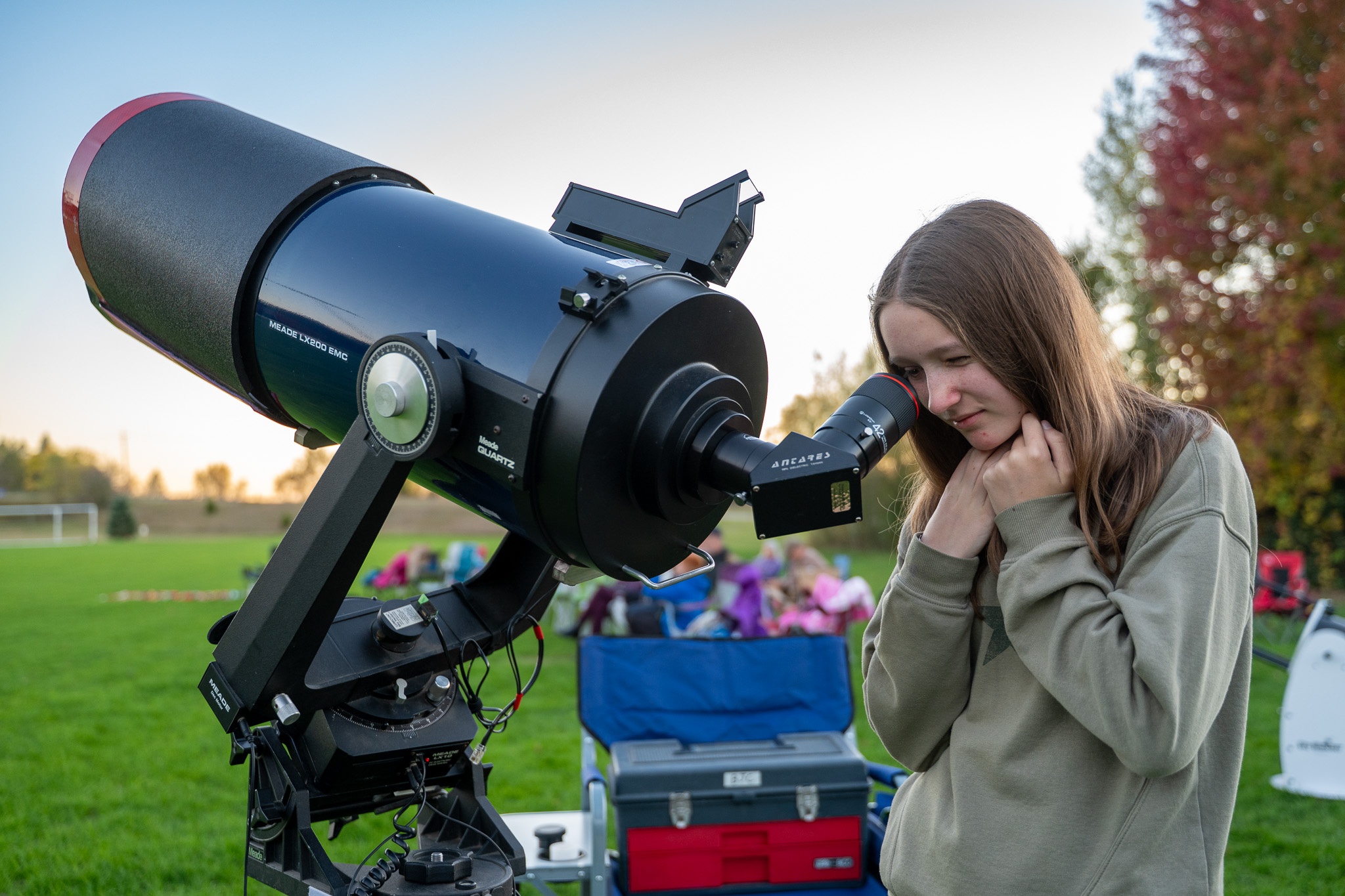
Over 40 people attended the County of Brant and the Royal Astronomical Society of Canada Hamilton Centre club’s Astronomy: The Sky Tonight event on Monday, October 19, 2026.
Typically held in Scotland, this was the first time the event was taking place in Paris.
“We did the event once pre-pandemic, and then slowly brought it back,” said Djordje Petrovic, recreation coordinator for the County of Brant. “We usually have it in Scotland, but there was some interest in bringing it here to Paris. We’ve done it four or five times now and it’s always had a great turnout.”
The event drew in a selection of astronomy enthusiasts to Green Lane Sports Complex for a night of exploring beyond Earth.
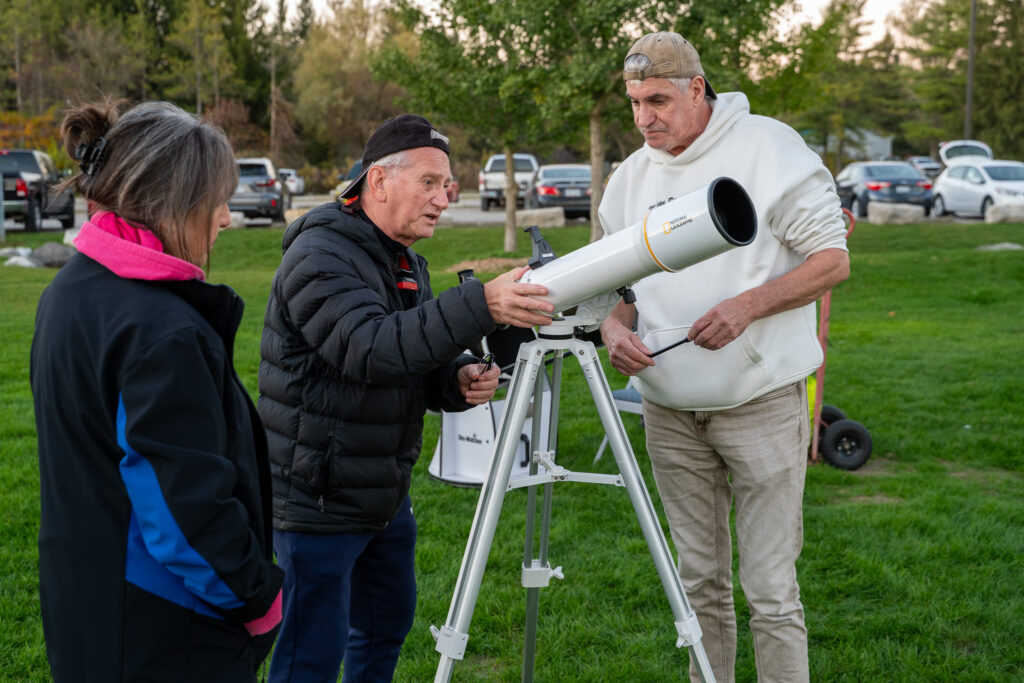
Jane Tumbin, President of the Royal Astronomical Society of Canada Hamilton Centre club, said part of what attracts people to astrology is the unknown of it all.
“It’s just the wonder of the night sky, it’s beautiful to look at and I think we all have some curiosity about what lies beyond our planet,” she said. “People know the basics, they know where to find the moon and they can typically find the Big Dipper, but there’s always that question of, ‘What should I learn next about the sky? What’s the next amazing thing I can see?’ There’s a real human desire to explore and keep going further.”
With four amateur astronomers from the club on hand with their telescopes, Tumbin said the event offered attendees an opportunity to connect with others who share their interest and learn from their experience.
“Especially for the people that have telescopes, this is a great opportunity to get some help and guidance about what to look for next and how to use the equipment,” said Tumbin. “It’s exciting to have a good turnout too because we love to share our knowledge and help people along their own journey in discovering the night sky.”
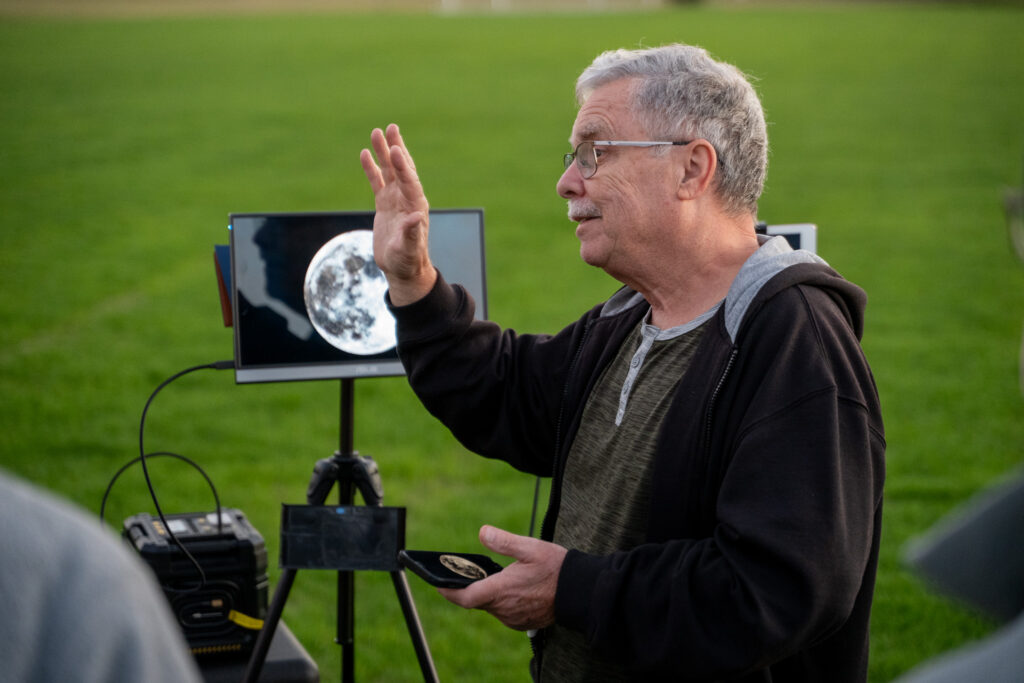
During the event, longtime club member Ed Mizzi shared his knowledge of space with visitors, explaining Earth’s size in relation to other planets, stars and galaxies, how light travels through space and time, and which planets are visible at different times of the year, noting that the moon and Saturn were the primary viewing points for the evening.
“Saturn’s light takes about 70 minutes to get to our eyes,” said Mizzi. “That means that if something hit Saturn and made a big explosion, we wouldn’t see it for 70 minutes even though light travels so fast. What I’m getting at here is that everything you see in the night sky is in the past and telescopes are like time machines. They can bring you closer to more distant objects, and that to me is just amazing.”
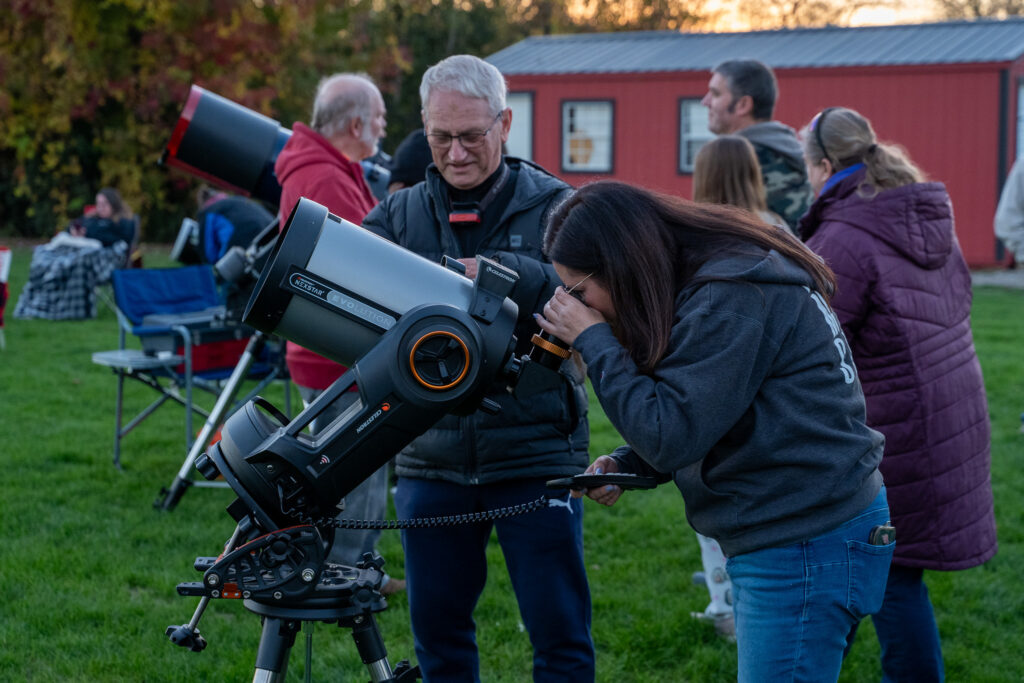
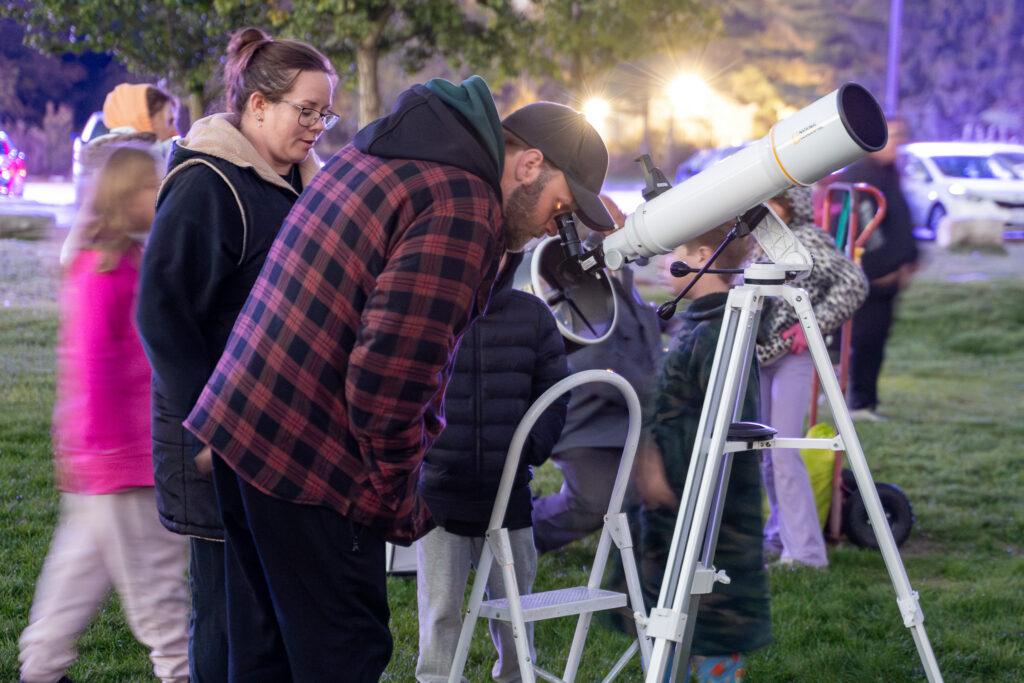
From Dobsonian to Schmidt-Cassegrain telescopes, smart scopes and refractors, there were all sorts of different types of equipment for people to peek through.
While many spent their time looking at the different shadows, mountain ranges and craters on the moon, others were truly wowed by the sight of Saturn and the moons surrounding it. Youngsters on site spent their time excitedly racing from telescope to telescope, while even the adults were heard whispering, “Wow, it’s just incredible” to themselves.
Paris residents Parker Williams, 12, and his father were one of the many in attendance at the event. The two brought along their own Dobsonian telescope and were happy to let others use it to see the rings of Saturn and its surrounding moons.
“I’ve had it for like, two years, and we like to bring it with us when we go camping,” said Williams.
Noting it was their first time attending one of the County’s local astronomy events, the youngster thought it was cool, and enjoyed getting to look through the other telescopes on-site.
When asked what he liked about astronomy, Williams said there were a few things that caught his interest.
“I forget how I fell in love with it, but it’s something I’ve really liked since I was eight or nine,” he said. “I like that space is mysterious. There’s a lot unknown out there and it’s cool to see things that a lot of people don’t get to see everyday.”
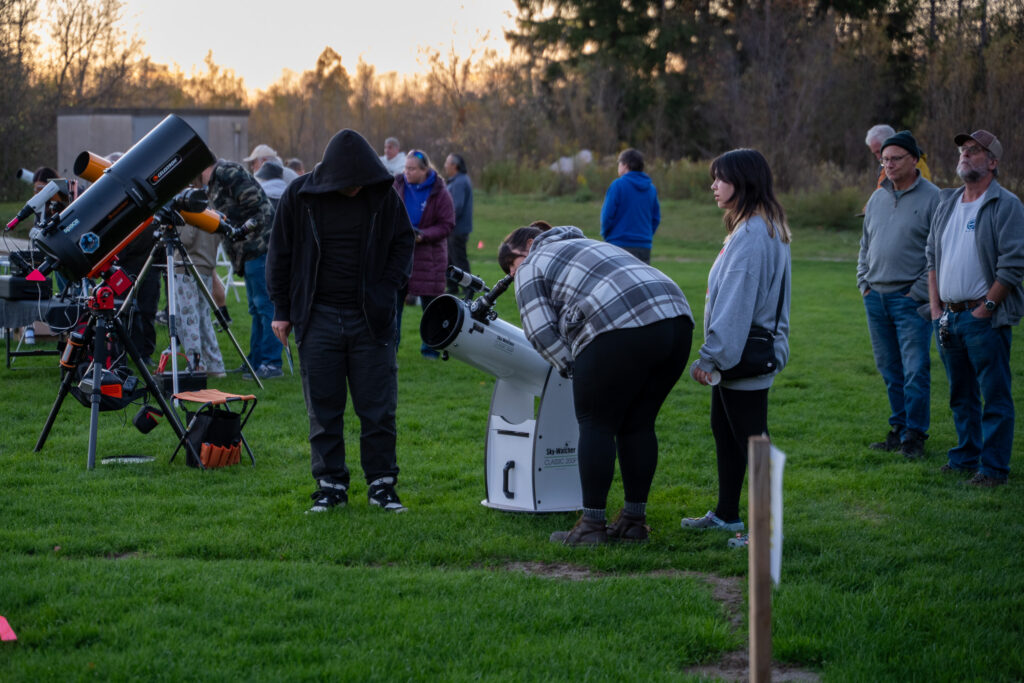
One of 30 centres across Canada, the Hamilton Centre astronomy club offers regular, you and family memberships.
“If people are interested they can join our club and come to some of our events, but we also have a lending program. That’s always great because if someone is in the market for a telescope but doesn’t know what to buy, if they’re part of the club, then they can borrow a whole variety of telescopes to try them out first,” said Tumbin. “There are different aspects to astronomy, you could do visual or astrophotography, so depending on what route they’re interested in going in, or what they want to look at, we can give them guidance and let them test out different equipment before they sink all their money into something that isn’t right for them. We also have an observatory just north of Waterdown that is open to the public on Saturday nights for people to come and look through the scopes.”
Kimberly De Jong’s reporting is funded by the Canadian government through its Local Journalism Initiative.The funding allows her to report rural and agricultural stories from Blandford-Blenheim and Brant County. Reach her at kimberly.dejong@brantbeacon.ca.


