
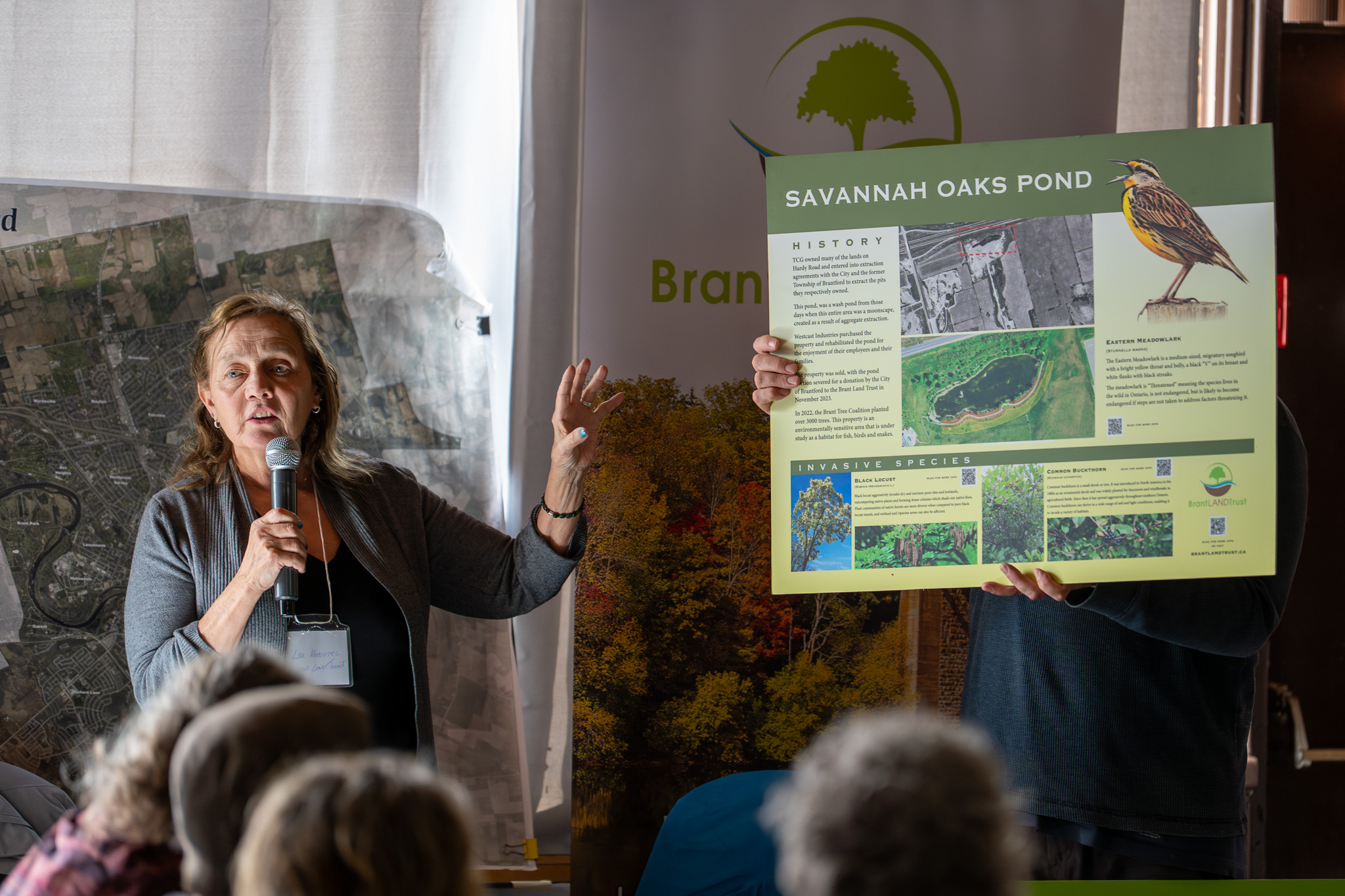
Brant Rod and Gun Club hosted its 11th annual Eco Conference at its clubhouse near Burford on Saturday, February 28, 2026.
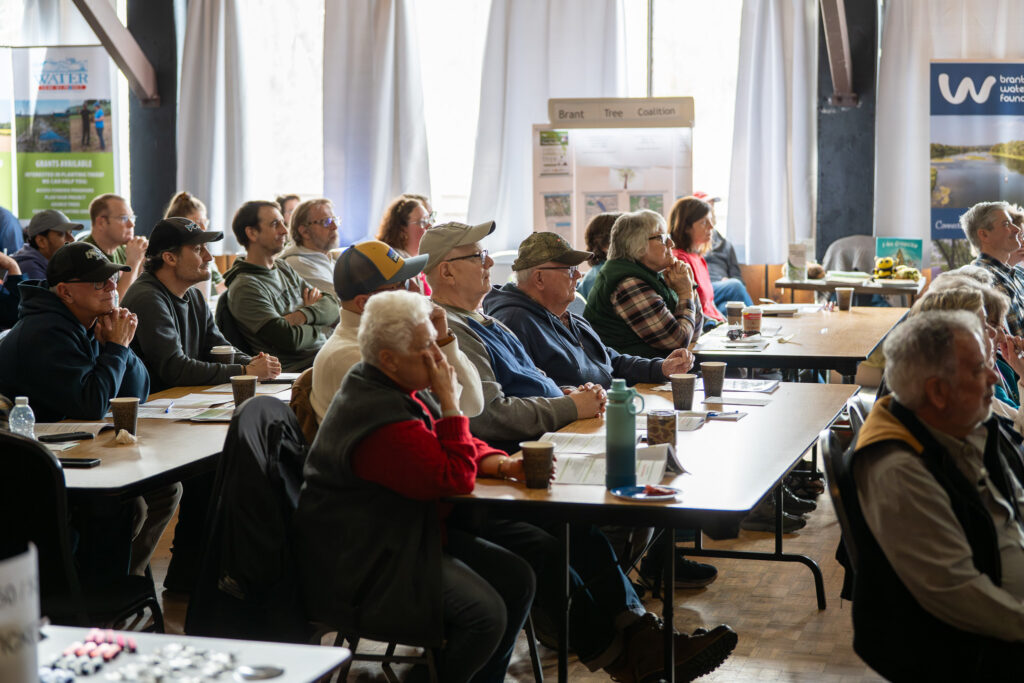
Nearly 100 people attended the free, six-hour long environment and conservation awareness seminar, focused on Brantford, the County of Brant and the Grand River watershed.
Doris Myke, past president of the Brant Rod and Gun Club and founder of the Eco Conference, said she was inspired to start the event years ago.
“I myself have always been interested in conservation, and so I would go here and there to listen to different talks and things,” she recalled. “So I thought, ‘I don’t know what this group or this person is doing exactly, but I know they’re all doing work for conservation. Why don’t we start a little eco conference and invite different speakers to hear about them?’ So that’s how it started.”
Given that the Brant Rod and Gun Club is the County’s oldest conservation club and is actively involved with stream bank rehabilitation, woodlot management, tree planting and much more, the conference was a perfect fit.
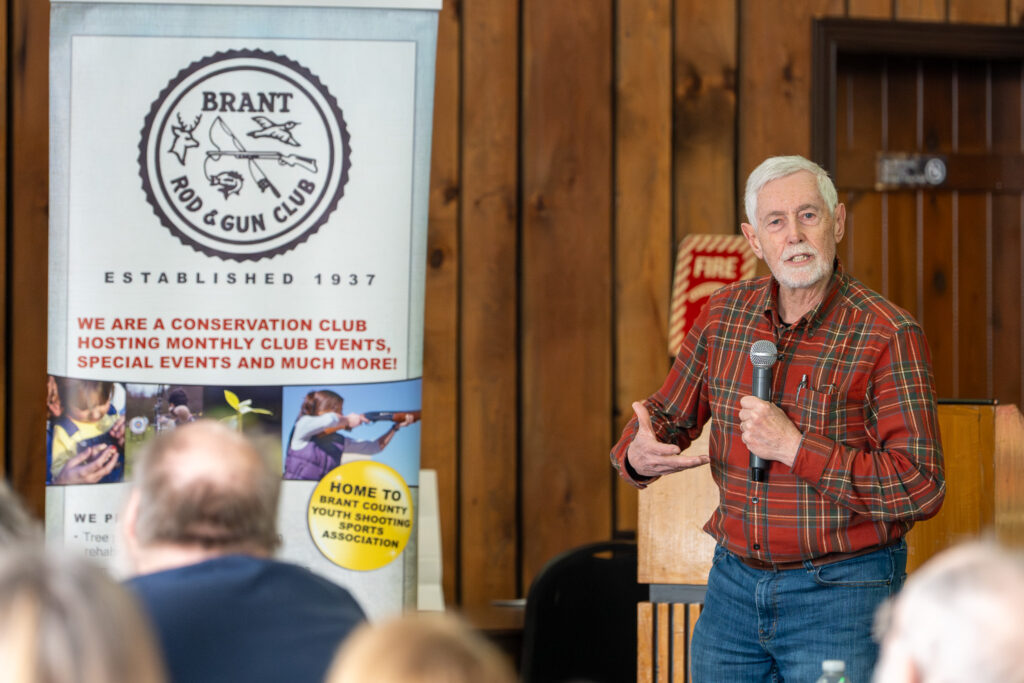
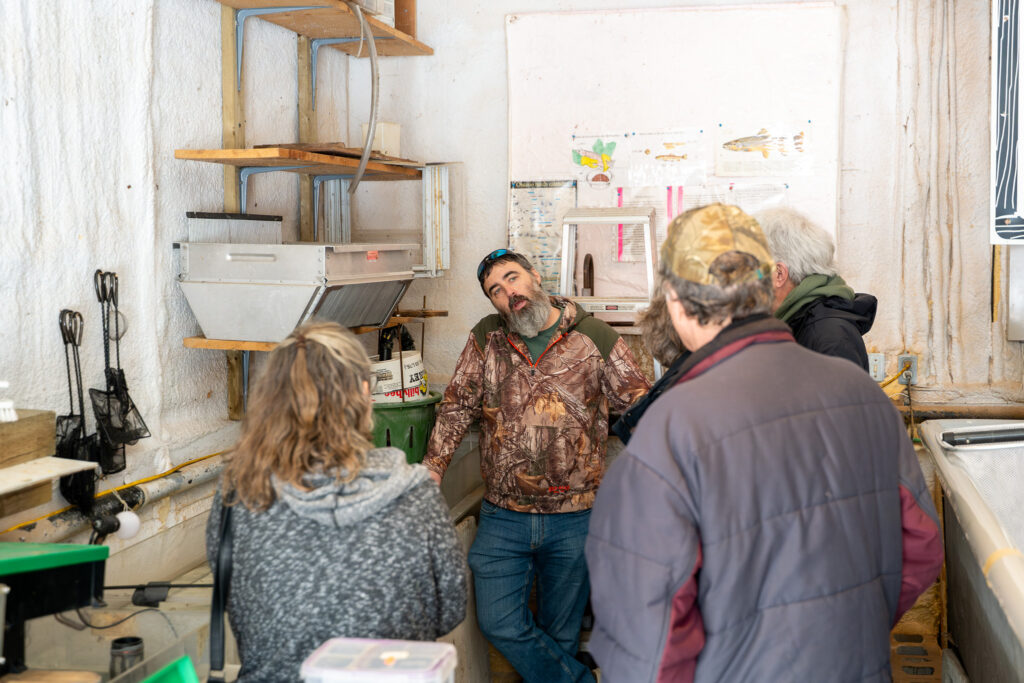
This year’s event featured three keynote speakers, a selection of representatives from about 11 conservation groups and organizations, and a tour of the club’s Paul Helm Memorial Hatchery, which raises and releases 10,000 brown trout a year.
Following the introduction and words from local dignitaries, the event’s first keynote speaker, Gerald Tetreault, a research scientist in the aquatic contaminant research division of Environment and Climate Change Canada began his talk on the cumulative effects of stressors in the Grand River watershed.
During a short break, attendees took the opportunity to chat with Tetreault, or to explore one of the organizations set up around the room.
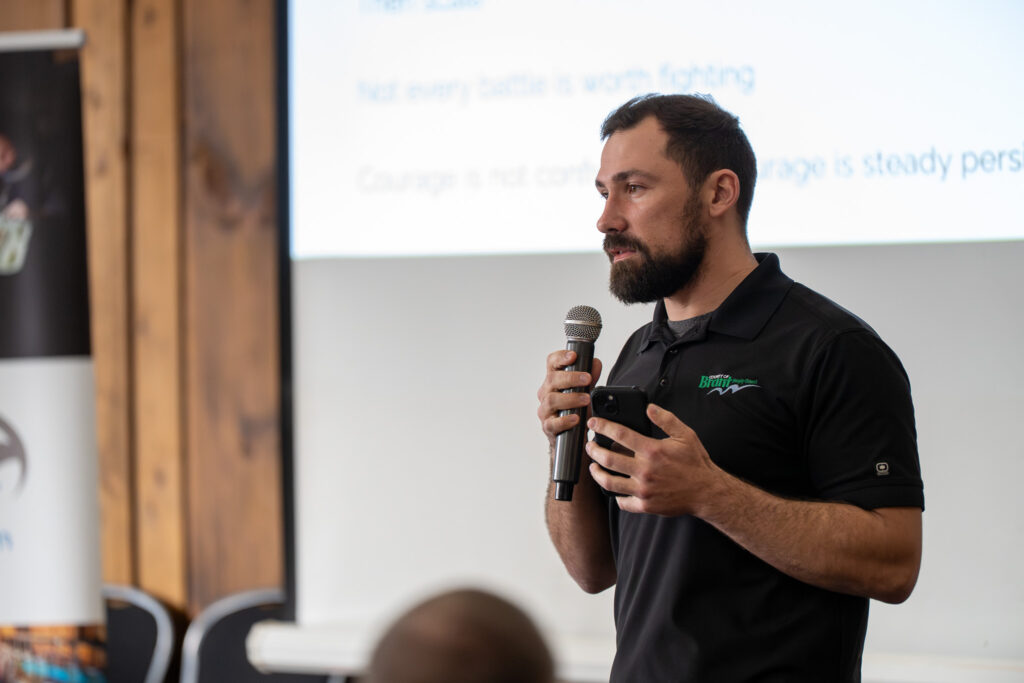
Up next on the program was Trent Meyers, the forestry supervisor for the County of Brant. During the presentation, he took the opportunity to not only discuss the work that goes into building and running a municipal forestry program, but the lessons he learned along the way and how to influence people to create real change through the municipal system.
“The first thing I’m going to say is, we all have good intentions, but good intentions aren’t enough. Passion is powerful, but systems require strategy. A lot of great environmental ideas fail for one reason; they never become executable. They’re not bad ideas but they don’t have alignment, they don’t have good timing, and they don’t really have a clear ask,” he said. “Passion matters, but strategy carries it across the finish line. Define those objectives clearly; know exactly what you’re asking for, and be specific.”
“Lead with the ‘why.’ People don’t resist change, they resist unclear benefit. …Why is this important? Well, if you want traction, translate that idea into the language of the decision makers. Councils and staff have to consider safety, costs, risk, maintenance and interference and I have to consider that too,” Meyers continued. “So lead with the outcomes; erosion reduction, flood mitigation, trail safety and habitat–give an example.. …Meaningful change requires a vision, it requires patience. Relationships are so important and strategic communication is so important. The system isn’t the enemy. It has rules; learn them, work with them, and you’ll be effective.”
After a short question and answer session, a few words and an introduction from some of the conservation groups, lunch and a tour of the hatchery, attendees settled in for the third and final keynote speaker.
Jack Imhof, the retired national biologist and director of conservation ecology for Trout Unlimited Canada (now Freshwater Conservation Canada, or FCC), spoke about the impact of urbanization on the health of aquatic systems.
During his talk, Imhof discussed watershed planning, understanding ecological systems, water and storm management systems, the need for collaboration and more.
“I just want to stress that ecology is not rocket science… It’s more complicated than that because rocket science is all physics and simple mathematical models. Ecology isn’t that simple because there are feedbacks, loops and interactions that occur that affect us; and if you affect one little element over here, it will have a fundamental impact elsewhere,” he said. “So we really need to have a certain level of understanding of those relationships, and we need to work together. When I say work together, I mean every different type of association and community group needs to be working with scientists that are biologists, engineers, physicists, and chemists. We need to talk to each other, because it’s all one system.”
After providing an in-depth explanation of how poor urban planning harms watersheds and the ecological systems within them, Imhof encouraged attendees to think about what they can do to encourage better planning.
“The ultimate responsibility for healthier watersheds for your kids lies with all of you, men and women,” he said. “Every individual has a voice and when you collectively demand better, the politicians will listen and they can use your push, to push back on bad designs. I have to finish off with a quote from Dr. Seuss’ The Lorax, ‘Unless someone like you cares a whole awful lot, nothing is going to get better, it’s not.’”
Kimberly De Jong’s reporting is funded by the Canadian government through its Local Journalism Initiative.The funding allows her to report rural and agricultural stories from Blandford-Blenheim and Brant County. Reach her at kimberly.dejong@brantbeacon.ca.


