
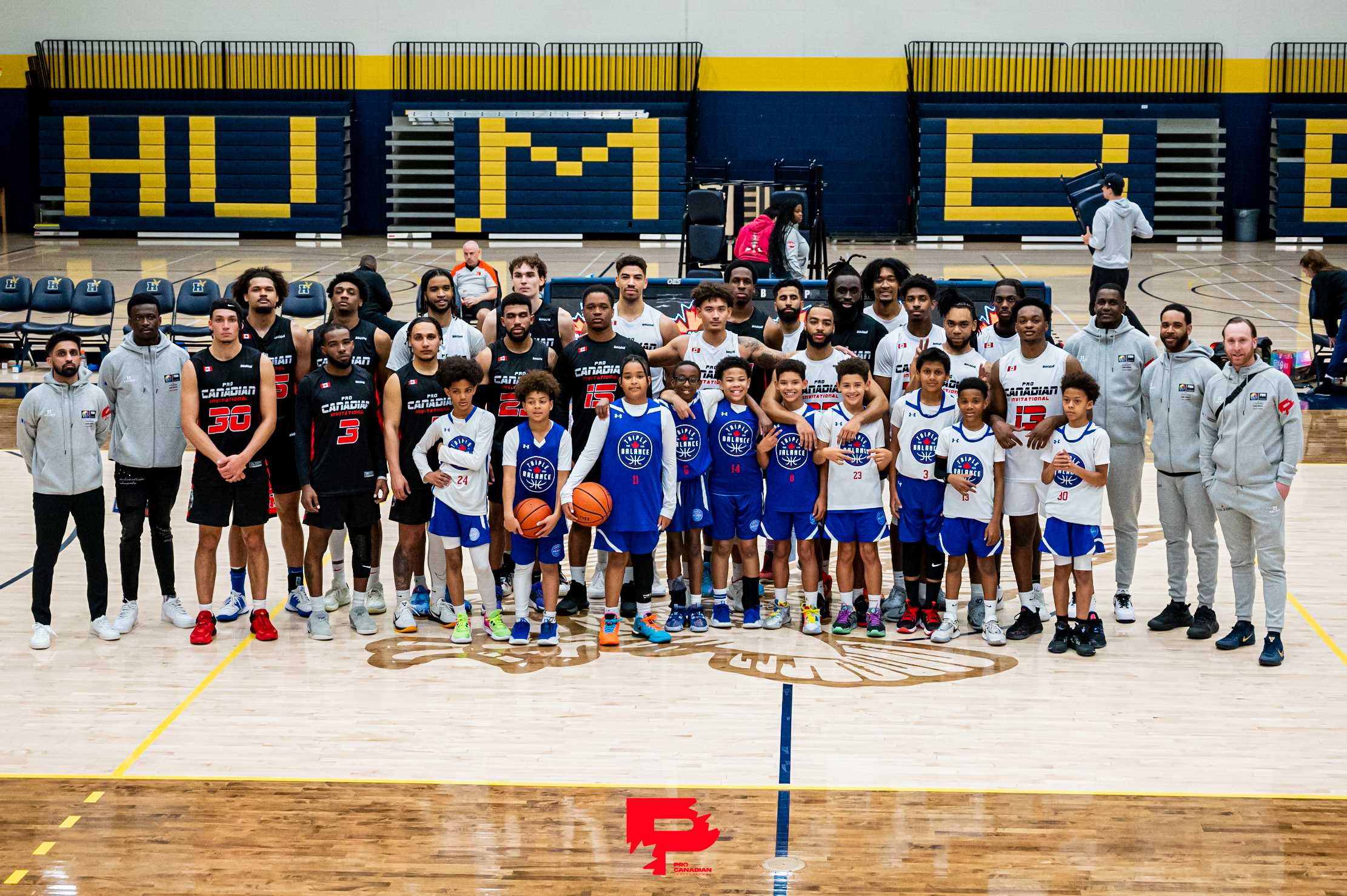
Kevin Barnes has always been passionate about sports, eventually becoming a respected basketball coach, and in the process, building an impressive resume over a 17-year coaching career.
Barnes, who has made Brantford his home for the last four years, explained his early start in sports including hockey while growing up in Belleville, Ontario.
“I was the youngest of three boys, so there was lots of competitiveness in the household…I started playing hockey when I was four years old…and really fell in love with the sport. I ended up playing junior hockey and college hockey as well, but also was able to play high school basketball, and was introduced to the game in the middle school ages, and kind of had a love for that too. So, I was a dual sport athlete,” he said. “I played competitively in high school, and then was also playing junior B hockey at the same time. Ultimately, I went to college to play hockey at Conestoga for a year [and] got my diploma. At that point, I was finished with playing the sport, and knew I wanted to get involved in coaching, whether it be hockey or basketball.”
Barnes, would get an opportunity to coach as an assistant with the Fleming College basketball program, becoming a player at the university level to gain a deeper insight about the sport.
“I ended up getting an assistant coaching job at Fleming College when I was 20 years old and fell in love with coaching. I worked with Bill Crowdis, who went on to become a great coach. It was at that time I realized I had to go play [as] Bill was a prolific player at Durham College, and he had had that [college-level] playing experience before going into coaching,” he noted. “I decided I better go play if I was going to be a coach. It’s just my personality and the way I viewed the game. I wanted to go through it as a player first. So, I went out to the University of Alberta and Augustana and played on the college level team out there while pursuing a degree in physical education…doing that for four years.”
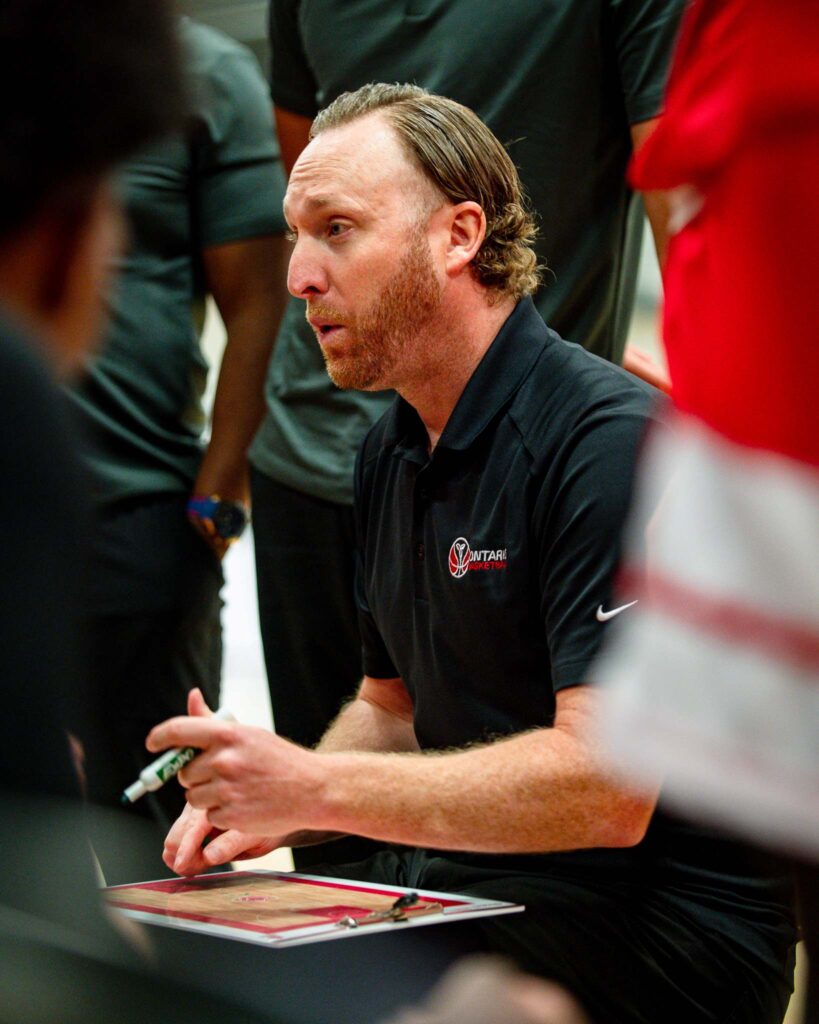
However, the veteran coach would continue to build upon his leadership experience at the University of Western Ontario after earning his degree.
“I moved to London and was there for five years. I was able to get an opportunity to work for Brad Campbell at University of Western Ontario with the men’s basketball program. My contract was for $0, which is unfortunately still fairly common in the university ranks so…I had to get a job and had to do what I had to do to make money [as I] just needed the opportunity to get my foot in the door coaching. And he was gracious enough to allow this young, energetic, and loud kid from Belleville, an opportunity to learn from him and be part of a university program,” he reflected.
After his stint at UWO, Barnes would co-found the Southwest Basketball Academy, running it for six years.
“That was at a time when Orangeville prep and Jamal Murray were trying to find a way to get competitive games locally instead of having to travel to the United States all the time. Jamal was really one of the first players that was able to stay in Canada and pursue a pathway through the PREP System to the NBA via D1 program. So, Orangeville had consulted Basketball Ontario, and they had created a league…In its first year, there were four or five teams, and then ultimately, a couple other teams were added for the second year of that League’s organization to become an eight-team league,” Barnes explained. “We would go on to represent Southwestern Ontario/London region along with my partner at academy the time, Rob Angione. Rob was ran the girl’s side [and] I ran the guy’s side of our program. It was a great experience and I was very fortunate to be part of developing talent at the academy.”
While Barnes continued to build the academy, he then took on a new opportunity, as an assistant coach with Team Ontario with Ontario Basketball, and being part of multiple winning teams.
“Basketball Ontario has been a huge part of my development as a coach, and ultimately being exposed to the highest level of talent that that our province has had to offer. And during those four years, I was able to fill each coaching role. I was an assistant coach…then a lead assistant coach. And I was also a manager with our group…[who won] gold medal at the Summer Games….I then got my opportunity to be head coach,” he noted. “I was able to be successful with a group of extremely talented young men who were dedicated to their sport. We went to Quebec, and were able to establish our team core, our values and got the outcome that we wanted at the end of the day. I was also part of a bronze and a silver medal team too. And then, with my head coaching opportunity, we’re able to win gold again.”
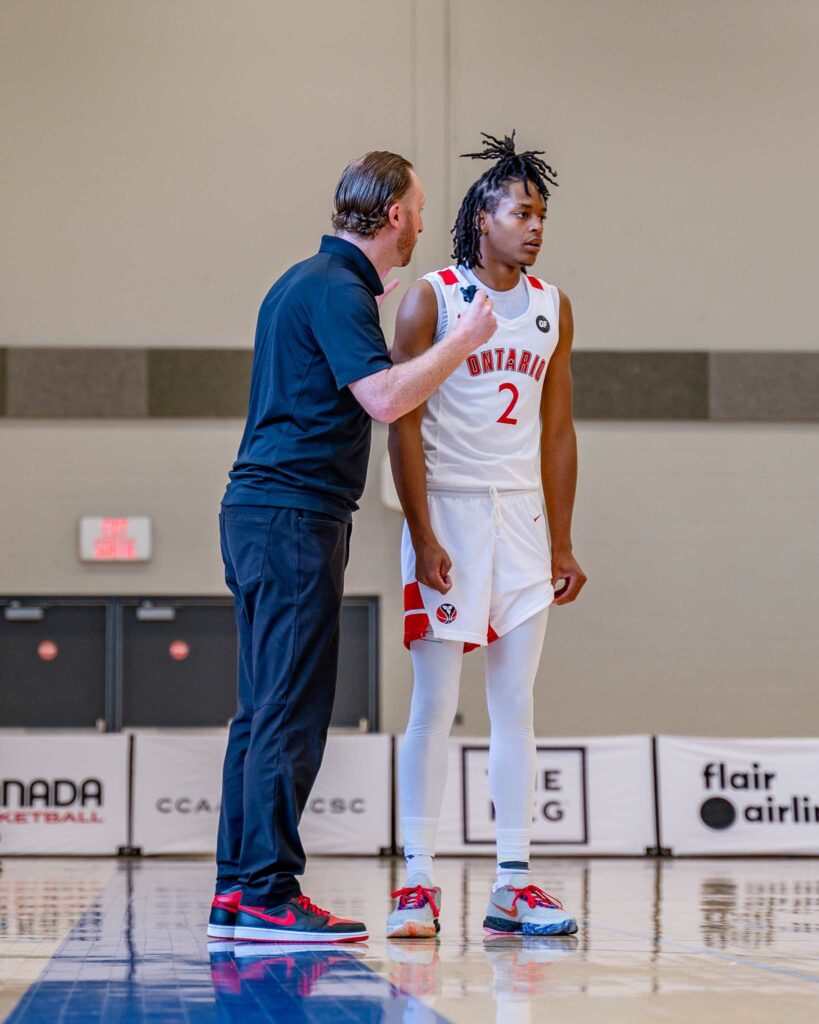
And for Barnes, it’s all about building young player’s skills and confidence across these types of tournaments.
“These tournaments and then putting together an all-star team…young people are playing and competing for other teams throughout the year. So, you get together a few times before your event, you’re able to hold weekend long training camps and you try to put some cohesion together with the group. And ultimately, when you get to the event, it’s the first time you’re really in complete control of your roster, and have the opportunity to try to build throughout that week. It’s a set up the same as an international FIBA tournament [and] it’s a great experience for young people who are starting to get into our national team stream and program,” he noted.
Nevertheless, during his career, Barnes has also worked in sales which helped him build a unique skillset in both business and sport.
“In Canada, it’s very hard to make a living as a coach, so I always had to supplement my income one way or another through sales…which I was told many times [that] you’re either going to be a teacher if you want to coach, or you’re going to have to have a flexible job. So, sales and business development were something that I did on the side to make a living. I was then able to combine the two when I got a job with the Playground Global…we were able to build seven multi-sport hardwood facilities in Ontario, right on the back end of COVID. I was also working as the lead assistant coach at Waterloo, which was the first time where I was able to combine my passion for basketball, sports and recreation with the business side of things,” Barnes recalled. “I then worked for a company called Total Sport Solutions. I had a great experience there, and was able to continue to learn about the business and the infrastructure of sports and facility development here in Canada.”
This led Barnes to becoming an entrepreneur, creating a new business called Courtship Sports which leads projects in building tennis and basketball courts and now with a focus on pickleball courts.
“At this time….we’re opening a facility here in Brantford on Henry Street called Pickleplex Social Club, where there’ll be seven and a half indoor, dedicated state-of-the-art pickleball courts, as well as some lounges and grab-and-go food area…we are building a great environment for people in the community to hang out and be active,” he said. “It’s a continuation for my passion for sports [and] my upbringing, and combining those…two jobs as a full-time coach and a full-time sales professional into one sort of common thread with a goal of building athletic facilities that support and promote recreation/sport development within our communities.”
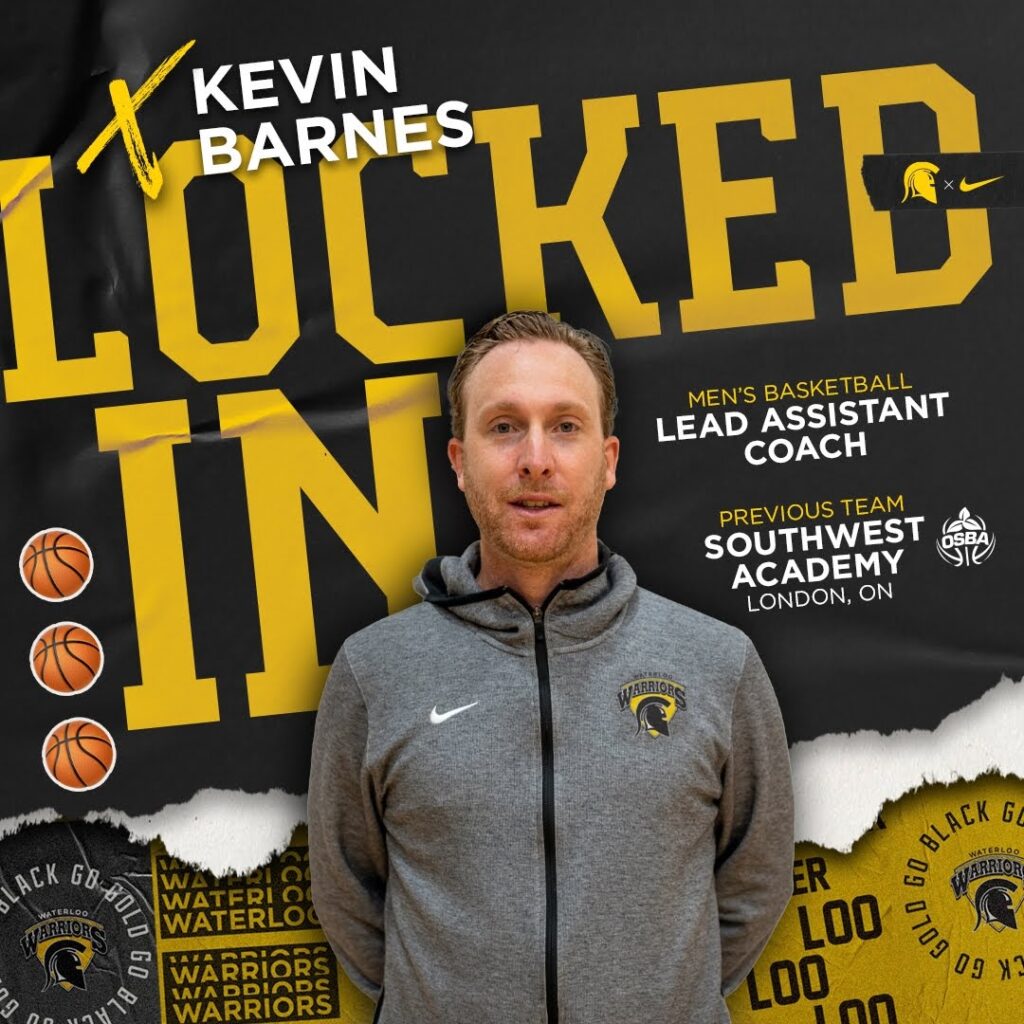
In 2021, Barnes accepted the lead assistant coach role for the University of Waterloo men’s basketball program, where he leveraged his coaching experience.
“It’s a chance to see behind the curtain of another program. Waterloo, Western, Queens, and U of T…these schools are world renowned academically, and they present unique challenges to their athletic faculties and their athletic programs. I had a chance to work with Troy Stevenson…during his first opportunity as a head coach, so a little different than being with a more seasoned veteran Brad was, and having so much experience on his side. So, I played more of a supporting role with Troy and getting a little bit more control over how we played offensively…it was fun just to see how other program operated and see how another program’s approached and experiencing the same challenges in travel and finances that a lot of universities in Canada, face [while] trying to deliver high performance athletic programs.”
Nevertheless, the coach has gotten a glimpse of how the United States system in regards to academics and athletics differs from Canada.
“It’s gone crazy, because there is really no academic component in the United States right now, NCAA D1 is professional basketball, and there’s opportunities to earn life changing amounts of money, albeit those are few and far between for Canadian players. The landscape has changed dramatically in the US…[yet] in Canada, it’s always been an-academic first system. There’s a number of players that have gone on to play professionally at various levels from Canada, but those opportunities are limited. If you’re not going to school to get a proper education, or at least start down the road of something you have an interest in, or a talent in, or a passion for, it’s going to be difficult. So, academics-first has always been my belief,” Barnes explained. “Certainly, if you’re able to handle the workload of a Canadian university academically while you’re a student athlete, you’re preparing yourself to succeed after that. Getting an undergraduate degree requires incredible time management skills…while overcoming various challenges as a student athlete on a daily basis in Canada. That’s quite impressive. It’s a huge commitment to play varsity athletics in Canada at the university level, and it is as well in the States, but you don’t seem to see as much of that academic responsibility there.”
Currently, Barnes is an assistant coach for U17 Canada Elite National Sports team (on the Under Armour circuit) while maintaining a positive influence as the Technical Director of the Brantford Basketball CYO organization, on the community level.
“To me it’s about collective effort and contribution…from myself, and Nick Esposito, who is our president [at the CYO] and there’s a number of people like…Mike Laracy, Josh Dawson, and Ted Leyzer [who all have] been in the community for a long time…giving so much back to basketball in Brantford. For me, it’s really about coming in and trying to share my experience. I’ve told so many people that….you work basically for free for 17 years in coaching in Canada [and] it would be a shame if you couldn’t share some of that experience or knowledge you acquired with others,” he stated. “It’s really important for me to give back and continue to grow myself and collaborate with other people and coaches and finding ways to helping youth develop. I’ve got young kids of my own now… and they’re starting their youth sports journeys with the CYO program. So, I wanted to learn more about the club and how I could not only help [build] a pathway for them, but help every kid that wants to play basketball or experience the sport at various levels here and around Brantford…and hopefully create and foster self-esteem, [and] help them overcome adversity…while providing them a positive experience for them.”


