For over 35 years, the Deafblind and Sensory Support Network of Canada (Sensity), a nonprofit organization and registered charity, has been lauded for providing important services for individuals who are deafblind or experiencing sensory loss and is becoming recognized for its exceptional intervenor services.
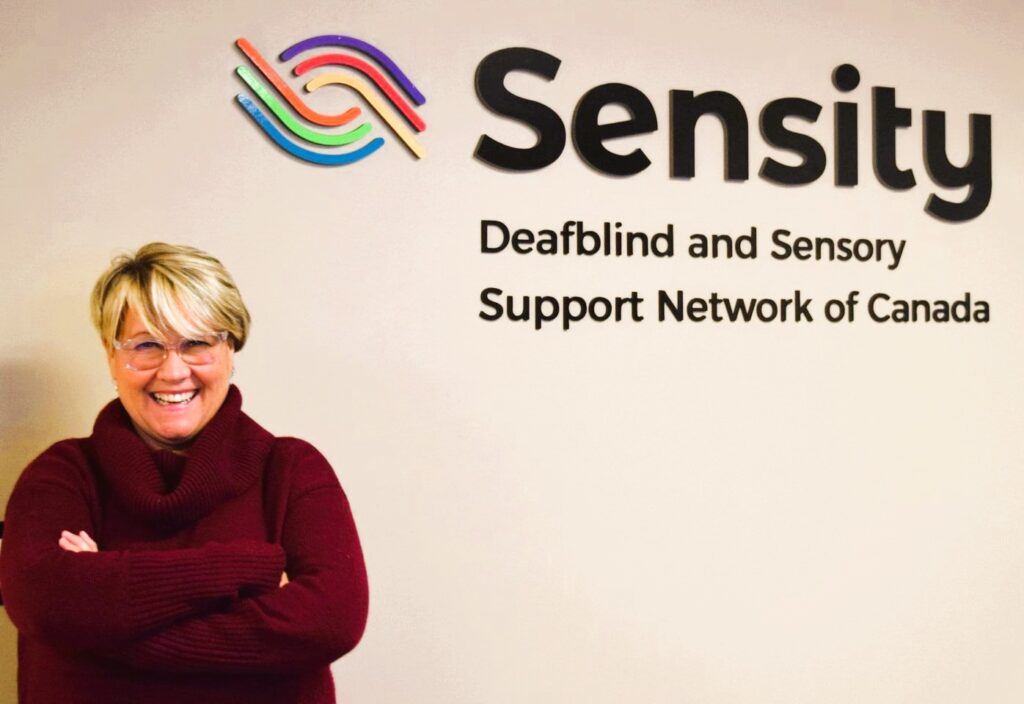
Cathy Proll, the organization’s CEO for the last three decades, discussed its history and growth through the years.
“The organization started as a grassroots initiative led by families and a few professionals. As their children with deaf blindness grew older, there were no services available for them once they finished school. Driven by these families, our initial focus was advocacy, but out of necessity, we transitioned into delivering direct services. Several strategic plans over the years have guided our growth and direction,” she explained. “About ten years ago, we expanded into housing to offer affordable and accessible accommodations for individuals receiving our services. We currently have a project underway in Brantford to build 11 affordable, accessible suites housing about 21 people, with ground breaking planned for the spring of 2027.”
However, the primary program Sensity has offered has been its intervenor services.
“Simply put, an intervener acts as the eyes and ears for a person who is deafblind. The individuals we serve have a combined loss of vision and hearing, meaning they cannot use either sense as their primary method for gathering information or communicating. Recently, we’ve expanded our reach to address broader sensory loss, such as individuals with isolated hearing loss, blindness, or specific communication challenges….because our techniques are highly transferable,” Proll said. “We serve roughly 90 to 100 people across the province in our adult services. While that may sound like a small number, deaf blindness is a low-incidence disability. We also support children’s services. For instance, if a child wants to attend summer camp with an intervener, we help cover those costs. Since we receive no government funding for children’s services outside of school, that program relies entirely on fundraising. We currently support about 45 families through that initiative.”
As a non-profit, it has always depended on fundraising initiatives to continue its important services.
“Historically, the lion’s share of our fundraising came from Nevada break-open tickets, alongside private donations. We also work closely with the Lions Home for Deaf, which has funded our sensory garden and children’s initiatives. In the past, we hosted golf tournaments that raised both funds and community awareness. We’re planning another golf tournament for Fall 2027 and are ramping up to launch a capital campaign to assist with our new housing build in Brantford. And a year ago, we hired a fund development specialist…helping us raise funds and community awareness,” she said.
As well, Sensity has been committed to leading training programs for interveners and consultants including the Sensity Leadership Institute.
“In Ontario, George Brown College in Toronto is the single community college that offers intervener training…[but] it was scaled back from a two-year diploma to a one-year certificate program. Because many graduates stay in the Toronto area, we receive few trained applicants at our door. Consequently, we developed our own internal curriculum and training programs [which] has been wildly successful. Every staff member, whether an intervener or a finance team member, completes portions of it to understand our core work,” she said. “Other agencies supporting a person with deaf blindness often ask us to train their staff, and we’ve even received international interest through our involvement with the Deafblind International Board of Directors. Our consultation team offers a targeted training program where they observe an individual and provide customized recommendations to the supporting agency. Separately, we created the Sensity Leadership Institute to provide general management training for staff advancing from frontline roles into leadership, regardless of whether their focus is specific to deaf blindness.”
The respected organization has also been a part of many conferences through the years.
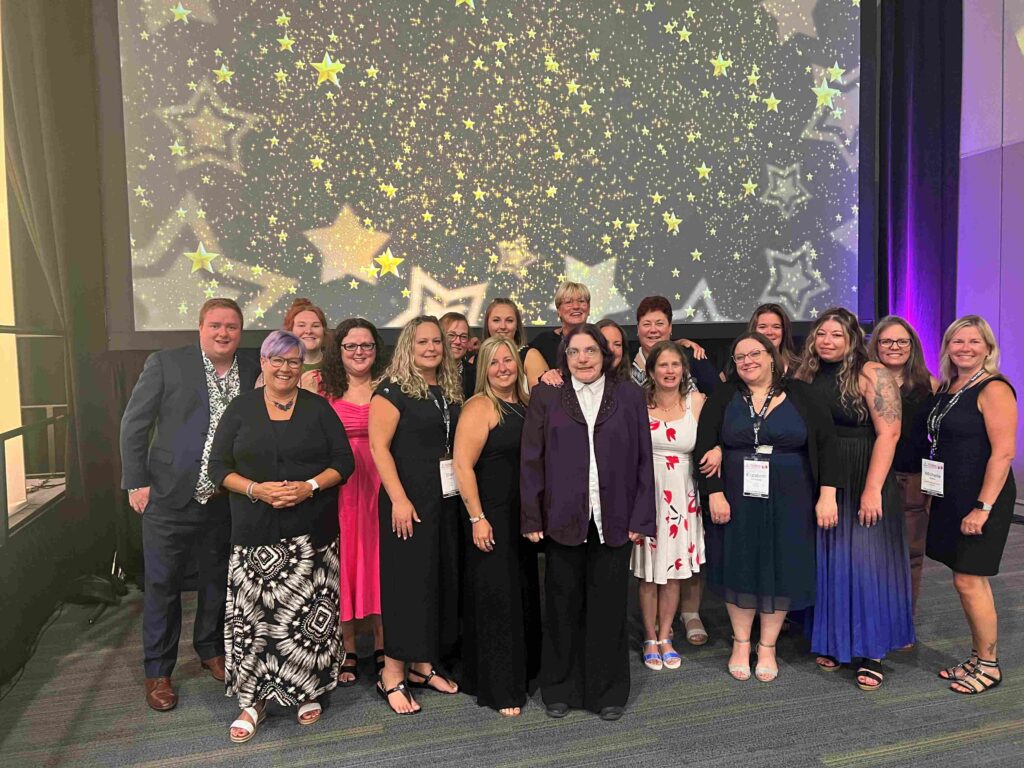
“We started small with intensive weekend conferences for about 40 of our own interveners. Seeing this, the Ministry offered to fund a sector-wide symposium…led to our first one which drew 100 interveners, and the initiative continued to grow. Most recently, in 2023, we co-hosted an international conference that brought together over 500 attendees worldwide. We had a scientific committee reviewing international abstracts, and individuals with deaf blindness presented. It was a massive success,” she noted.
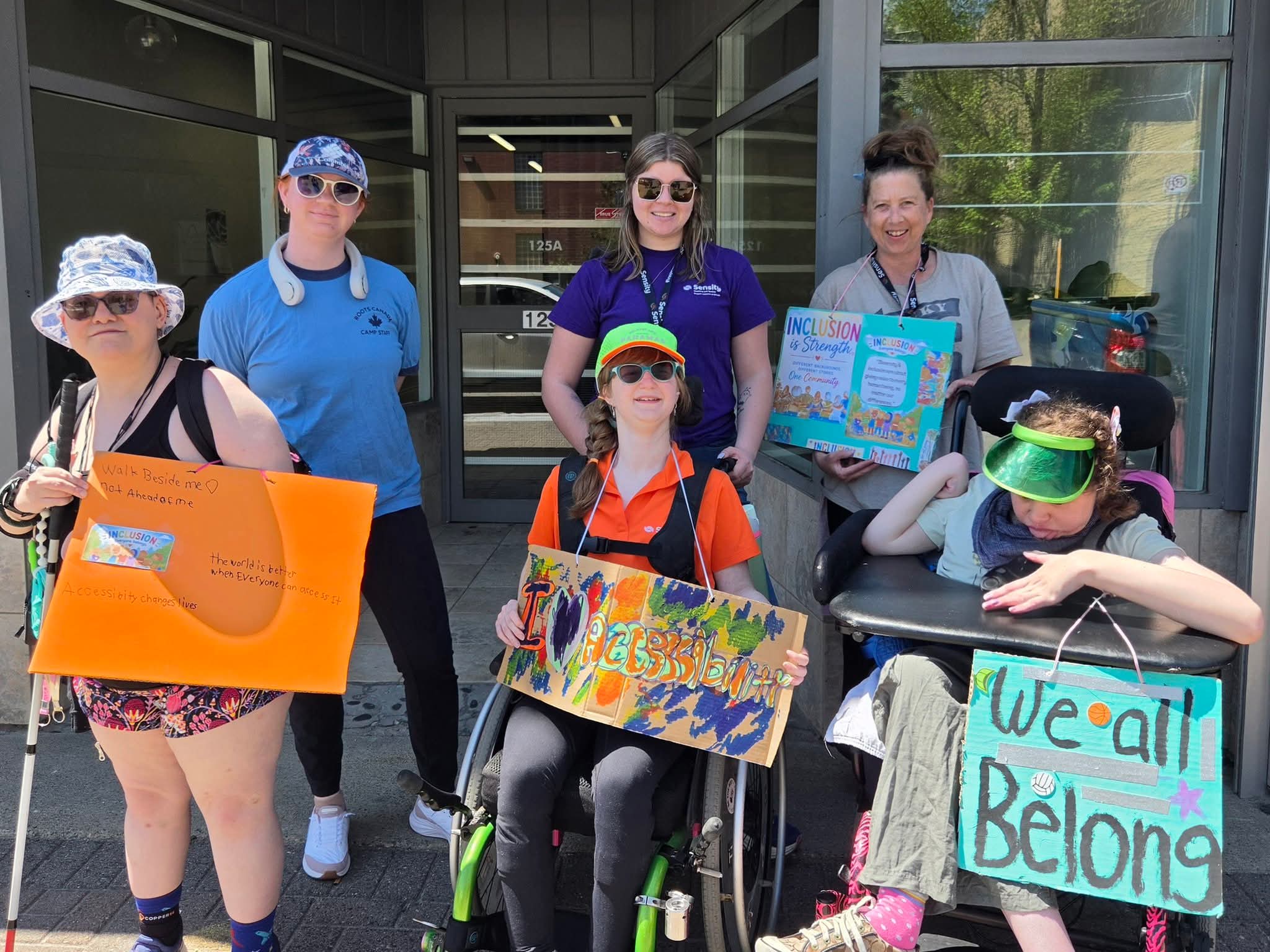
In June 2026, it was Deafblind Awareness Month, and Sensity looked to get people thinking about its mission as an organization, participating in various initiatives.
“Because deaf blindness is a low-incidence disability, many people have never met someone who is deafblind. Our regional structure allows us to build grassroots awareness directly within local communities. Over the years, we’ve led several major efforts [like] previously partnering with the Toronto Blue Jays, where a child with deaf blindness would throw out the ceremonial first pitch, bringing major media visibility. We also did Yarn Bombing…which is internationally known…we adopted the phrase “Create and Connect”. We created tactile displays on local landmarks, such as the London Children’s Museum and the Bell Homestead in Brantford, to serve as a tangible symbol of accessibility,” she recounted. “We also participated in local events like Pride festivals with information booths [and] hosted municipal flag-raising ceremonies in communities like Sudbury, Kingston, and Paris. We have also shared our accessibility expertise with other developers. For example, when Indwell planned new housing, we took their team for a tour through our resource center to demonstrate design features for sensory loss, such as tactile rails and specialized flooring designed by orientation and mobility specialists. Our Director of Housing Development also serves on municipal accessibility committees which helps in sharing our experience and knowledge.”
However, with its focus on empowering its participants as well as consistent community outreach, the community has been very receptive.
“We’ve been received warmly through the community. When we established our Resource Center in Paris in a former elementary school, former students would drop by to see what the building had become. We’d offer tours showing off the accessibility features, and people were routinely blown away by our center and what we have accomplished. Our outdoor Sensory Garden is open to the public. As I work late, I often see community members and their children enjoying the space. We’ve also hosted artisan open houses where local residents drop in, learn about our work, and buy products created by individuals with deaf blindness. Through our Artisans on Main storefront, 90% of sales proceeds go directly back to the creators across the province,” she explained. “Also, community integration is visible everywhere [as] individuals….we support work at local businesses, such as Mark’s Work Wearhouse and local pharmacies. I once had a heartwarming moment while grocery shopping after work. An individual we support was at the checkout with their intervener and having a difficult moment. When I stepped up to check out my own groceries, the cashier (not knowing who I was) said to me, ‘He must not be feeling well today, because he’s usually not like this.’ I loved seeing that personal connection; she knew him as a regular customer and cared about his well-being.”
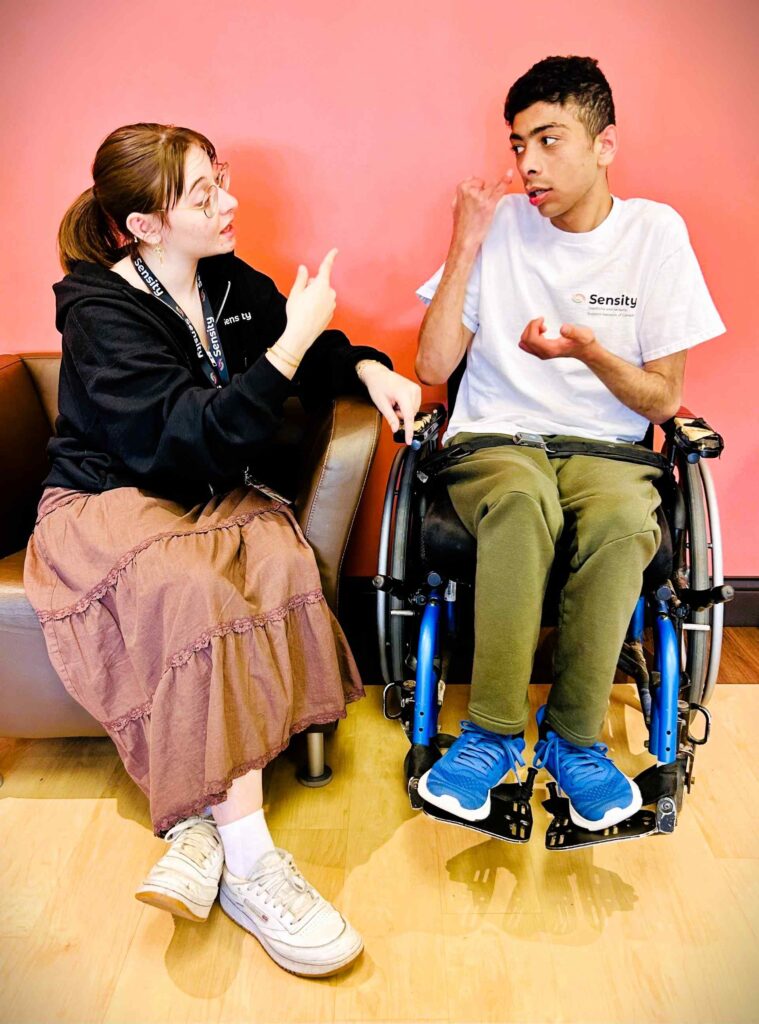
And the community outreach has yielded very positive connections.
“We have built so many wonderful connections…[which] isn’t isolated to just Brantford and Paris; we have fostered these connections across Ontario through our regional structure. Our model is deeply person-centered. We don’t impose rigid daily schedules; instead, we support individuals in setting their own goals for employment, recreation, or personal interests. Because every individual communicates differently, flexibility is a core value. Our purpose statement sums it up: ‘Your Journey. Our Supports. Endless Possibilities,’ Proll said.
As Proll celebrated 30 years with Sensity, there have been many special moments.
“A major highlight for me has always been calling a family to share that their government funding was approved. A main worry for parents of children with disabilities is what will happen to their child as they grow older, so securing those supports brings immense relief. Opening our Resource Center was another milestone because it gave us a true home base for training, direct services, finance, and HR. Similarly, opening our apartment complex to provide affordable, accessible housing was incredibly rewarding. Parents have come up to me in tears saying, ‘Thank you so much….you have no idea what peace of mind this gives us,’” she noted. “My general leadership philosophy has always been flexible. I joke with the staff that if I bought us all a T-shirt, it would say: ‘What we start off with is never what we end up with.’ We of course set a strategic plan, but the way we adapt along the journey almost always leads to an even better outcome.”