
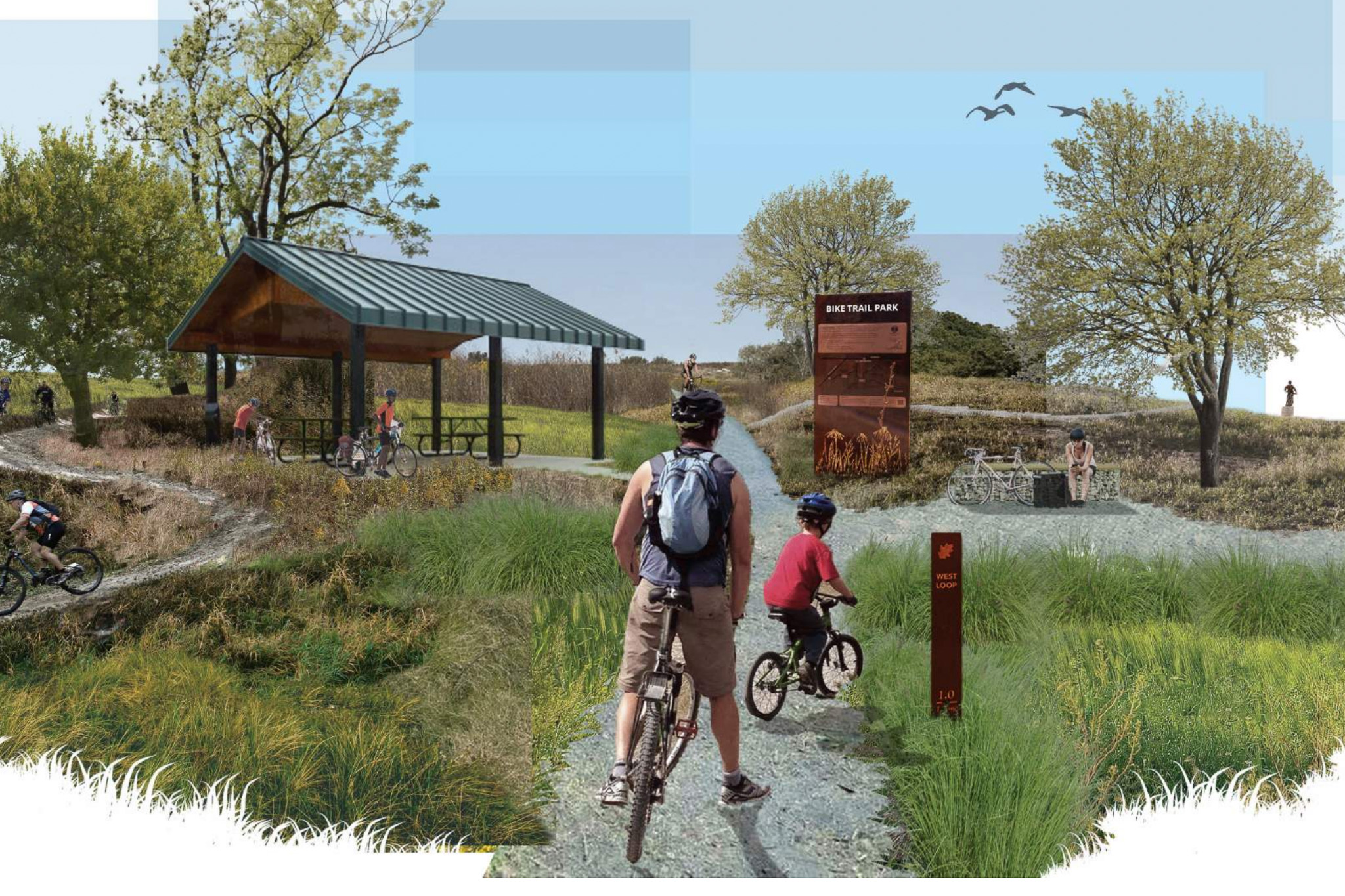
County of Brant Council approved the North of the Nith Trails and Open Spaces Master Plan during its regular meeting on Tuesday, February 24, 2026.
The North of the Nith Trails and Open Spaces Master Plan was designed to establish a sensible, long-term vision that guides the development of a connected, sustainable, and accessible trail network across the North of the Nith over the next 20 years.
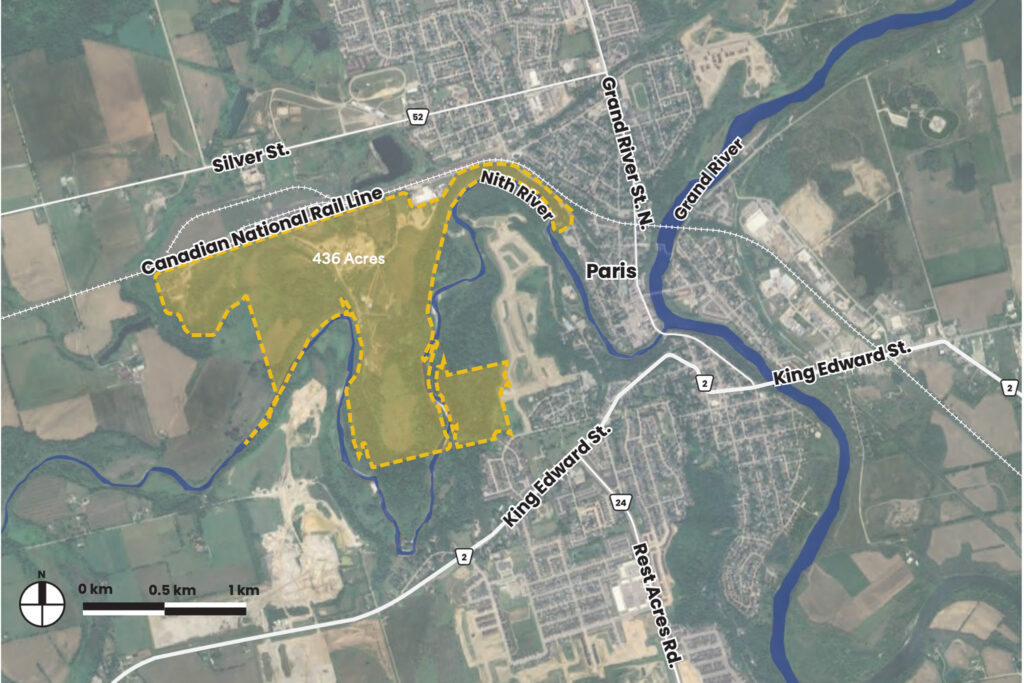
The North of the Nith is a roughly 344-acre area of land owned by the County of Brant and the Grand River Conservation Authority (GRCA), and is located along the north side of the Nith River near Paris and is largely forested with diverse natural features such as wetlands, floodplains and the Nith River, which supports at-risk species. Amrize (formerly Lafarge Canada Inc.) holds an active extraction licence within the study area.
According to a staff report prepared by Stacey Ellins, the County’s Director of Parks and Recreation, the property currently includes a “closed landfill, an operational waste transfer station, and operational lands owned by the County of Brant. Currently, there is no formal public access to the property beyond the Waste Transfer Station. Despite this, there are unauthorized trails, ATV and dirt bike uses throughout the site.”
During the February 17 Administrations and Operations meeting Ellins said that the plan has come together with the help of 12 First Nations and community partners.
“Through our engagement with the public and community partners, we heard that balancing recreation with conservation is a top priority,” she said. “Alongside a strong interest in seeing mountain bike mountain bike trails throughout the North of the Nith, the community also expressed a desire in having a variety of trail types and experiences. The majority of the primary trail network identified in the master plan already exists. The plan focuses on upgrading these trails to current sustainable trail standards so they can better support these shared goals.”
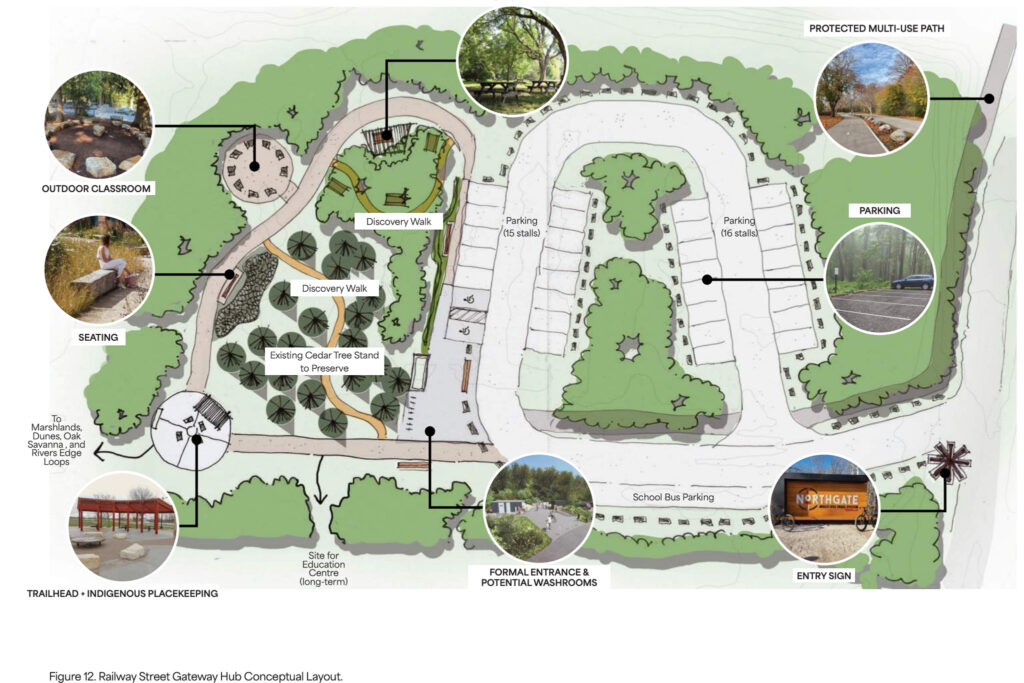
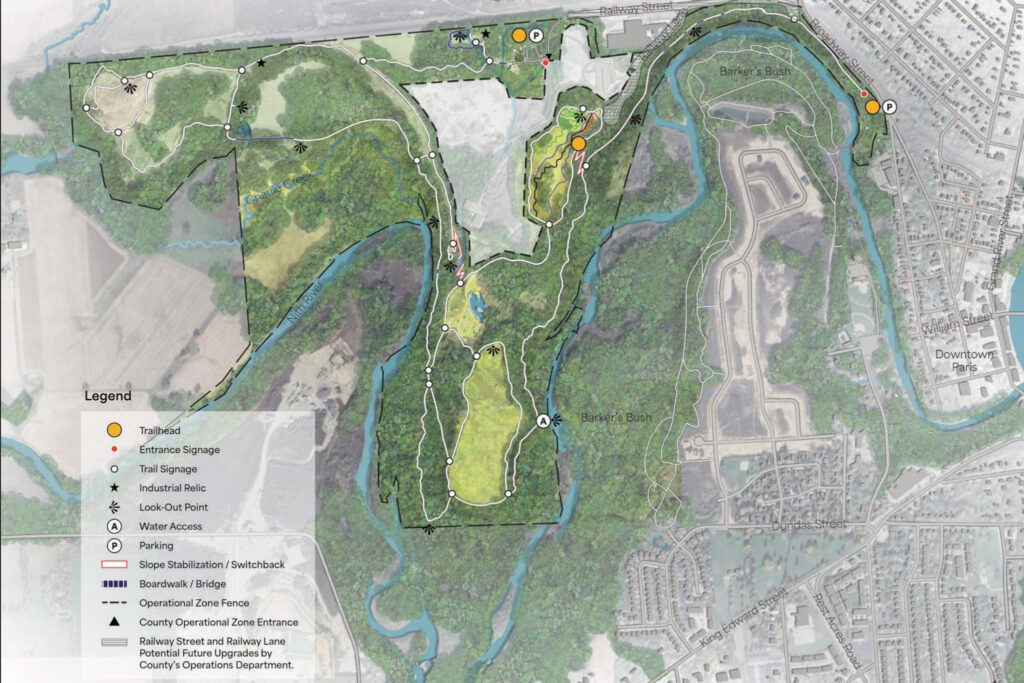
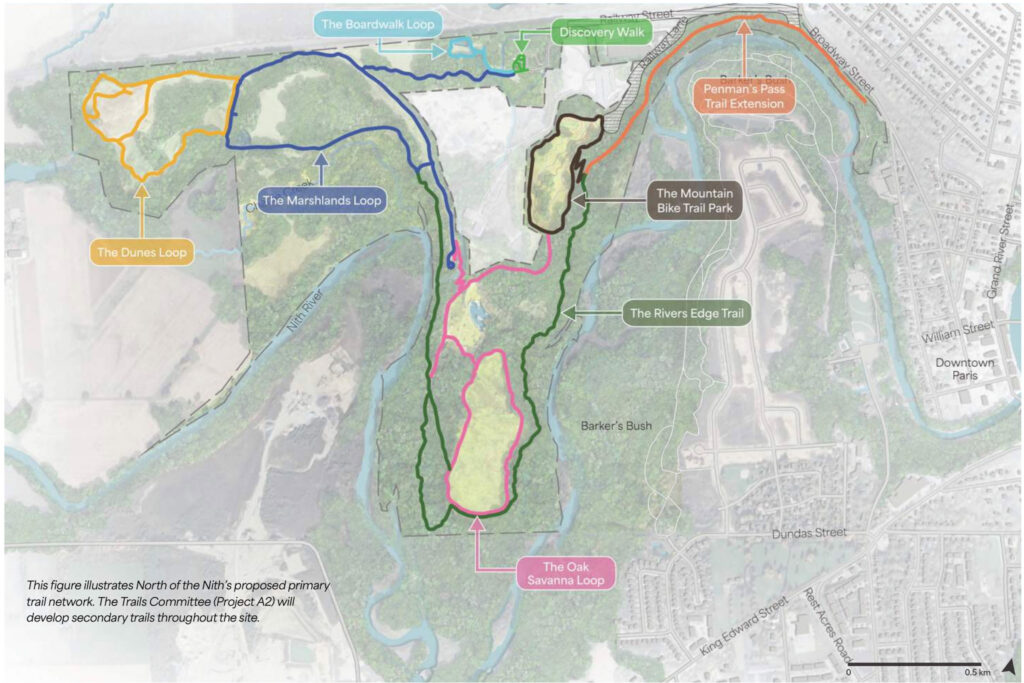
At that same meeting, Chris Veres, a principal landscape architect with Scatliff + Miller + Murray and the lead landscape architect consultant for the project, said the master plan itself is broken down into five recommendations, or “big moves:” Loops and Links, the Mountain Bike Trail Park, Environmental Restoration and Protection, Penman’s Pass Extension and Park Entrances/Gateway Hub.
“It is a big site, and the focus is on really improving the existing trails,” said Veres. “It’s not about building a new trail network. Those trails exist out there today in an unauthorized manner. It’s really about upgrading them to sustainable construction, maintenance, and rerouting some of them away from sensitive areas.”
As presented, the master plan currently recommends establishing 15 kilometres of primary trails, including 12 kilometres of shared trails for walking, running and biking, a 1 kilometre pedestrian-only trail, and a 2 kilometres of trails across ten acres for the Mountain Bike Park.
Veres said that with another five to seven kilometres of secondary trails, the cyclists will have access to between 19 to 21 kilometres of trails.
As far as implementing the master plan, there are 30 projects and initiatives outlined to be completed over three phases: short term (one to five years), medium term (six to ten years) and long term (11-plus years). The estimated improvements for all three phases could cost about $8.3-million, though it is still undetermined how much the County or its community partners would put into the project.
The creation of the master plan stems back to April of 2021, when the Brant Cycling Club (BCC) proposed a single-and double-track mountain bike trail network for the site through a Community Led Initiative (CLI). Council had initially approved the proposal, in principle, and authorized staff to work with the Cycling Club to research next steps including finalizing a location, reviewing the lease and stewardship agreements and undertaking community engagement.
Seeing how the plan has come together, now five years later, Duncan Ross of the BCC, said that the trails intended for mountain bikers were lacking.
“The vision for this project originated from the fact that there are no sanctioned mountain bike trails in Brant County for residents to enjoy, and this project was intended to address that,” he said. “But instead, the Draft Master Plan includes only 2.3 kilometres of single track, or approximately 10 minutes of riding time. …We find that this project doesn’t need to be so complicated, and we’re simply asking for some dirt trails.”
He encouraged Council to resort back to the originally proposed CLI and have staff report back in three months’ time. Dana Darnbrough of the Brant Waterways Foundation, supported Ross’ request.
Other delegations also spoke, some asked for more mountain bike trails, others supported the plan as is with some revisions.
Following the delegations and councillor comments, Alison Newton, the County’s CEO, reminded Council that just because they were talking about approving the master plan, didn’t mean they were approving the costs associated with it.
“One of the policies that we brought forward in terms of the Long Term Financial Plan is that when we approve master plans, we are not approving the budgetary pieces that may go out many years,” she said. “So those would each have to come forward individually. It’s a little bit different than what we’ve done in the past, and that affords a lot more discretion and flexibility.”
The item was then initially supported by a vote of seven to one, noting that Chambers voted against it and Councillor Lukas Oakley was not present.
The master plan was then brought forward for final approval during the February 24 meeting. There, JS Esposito of the BCC approached Council to dispel any misconceptions about usership groups, insisting that everyone could use them, not just cyclists, finances, and environmental aspects of a single-and double-track mountain bike trail network.
Esposito said that if the County opted for a more simple plan, something closer along the line of what the BCC had originally pitched, it would cost less and be completed in a shorter amount of time.
“We are a highly accomplished group of individuals who can handle this project. I believe that trails are not manicured experiences. They’re intentionally wild. They’re opportunities for individuals to get off their couches and phones and move in harmony with the real world,” he said. “Trail network should be a simple thing, a scratch of the soil, 22 to 24 inches wide that uses the suggestions from the topography and the environment as its engineer and guide. Let’s not spend $10 million, let’s not take 20 years.”
After some questions to the delegations, the item was then put on the table for discussion.
There, Councillor Robert Chambers explained that he felt that opting for something closer to what was originally proposed in 2021 would cost taxpayers far less and would allow local cyclists to start building and using trails sooner, using the Turkey Point Mountain Biking Club and their achievements as an example.
“There’s lessons to be learned about going off, hiring consultants and developing these elaborate, expensive plans when they’re not needed. That’s why I don’t approve of the master plan,” he said. “What I would like to see is staff meet with the mountain bikers and come up with some kind of agreement to allow them to use the park or the property on an interim basis to be looked at annually, and reviewed like Long Point does with the Turkey Point mountain bikers. As time goes on, we may be able to afford this kind of stuff, but at this point we can’t. That’s why I don’t support approving the master plan, there’s a simpler approach that would make everybody happy.”
On the contrary, Councillor John Bell said he would be supporting the plan, noting that it can change in time.
“Master plans are what they are–master plans,” he stated. “If we look at some other master plans that we’ve approved in my time on Council, the direction is approved but the individual projects can change in time and in scope, they can come in and can go out. …So in approving it, we’re not approving every individual item in it, we’re approving the direction of travel.
While Councillors Jennifer Kyle and John MacAlpine said they would also be supporting the plan, Councillor David Miller said he wouldn’t.
“If we go with the mountain bike trails that were originally envisioned, this is actually a game changer for the County. It would actually be an attraction for mountain bikers far and wide. …The nice part is that if we let the Brant Cycling Club design it and do all the work on it, and we can get it done with mostly private funds, I think it’d be a lot better for our rate payers. …So with all respect to all the work that Community Services has done on it, I will not support the master plan, and I will respect the 2021 council decision.”
Chambers later said that if the argument was that they should approve the plan because things can still be changed like Bell suggested, they should just receive it as information.
“I’m hearing that if we approve the master plan, we’re really not approving it because we can change it. So if we’re not ‘approving’ it, then don’t approve it. But don’t approve it, and then say ‘we really didn’t approve it, and we can do this.’ That doesn’t make sense,” Chambers said. “You can receive it and use it as a guideline to do things, but to approve that plan with all the trails, the costs, the time frames and the phases associated with that, it’s pretty prescriptive. …So I’m saying, don’t approve it but receive it, and in the interim, as you work on some of the things that are in the master plan, allow the mountain bikers to use it, knowing that you can have an agreement telling them what they can and can’t do and can end it at any time. To me, that’s a win-win situation.”
After some more discussions surrounding what it means to approve a master plan, the vote to receive and approve the North of the Nith Trails and Open Spaces Master Plan was carried 6 to 3, with Councillors Chambers, Miller and Coleman opposed.
Kimberly De Jong’s reporting is funded by the Canadian government through its Local Journalism Initiative.The funding allows her to report rural and agricultural stories from Blandford-Blenheim and Brant County. Reach her at kimberly.dejong@brantbeacon.ca.


