
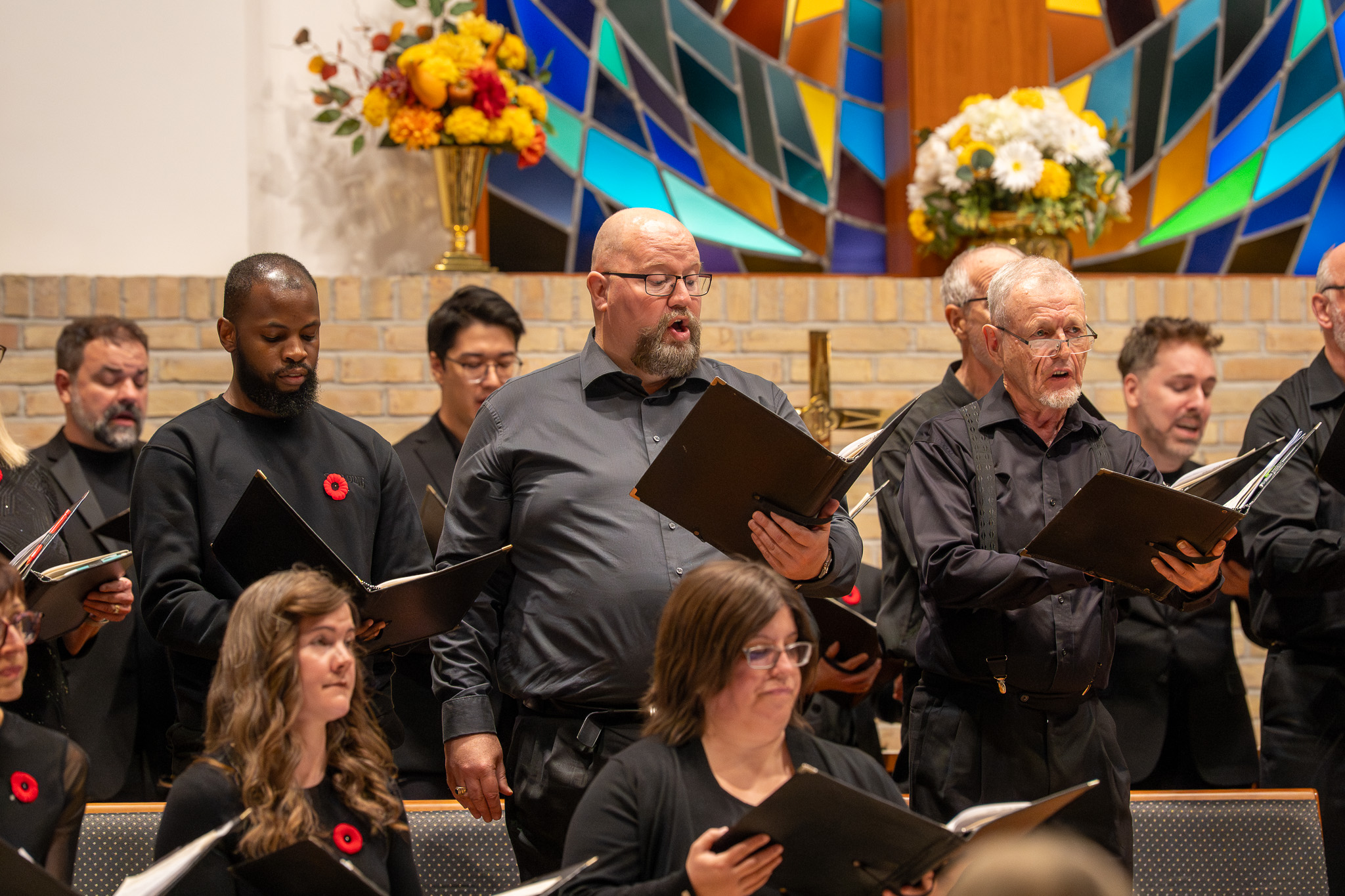
Grand River Chorus teamed up with the Edison Singers for their Canadian Remembrance concert on Sunday, November 8, 2026.
Taking place at St. Andrew’s United Church, the concert honoured Remembrance Day and those who have served and continue to serve their country.
“It’s the season of remembrance, the time between All Saints’ Day and Remembrance Day. The Program is a tribute to those who gave their lives in the service of freedom and peace, and to loved ones who are no longer with us,” said Stuart Bergstra, master of ceremonies. “The music in our program, the composers, the arrangers, poets, are Canadian. Canadian remembrance is a celebration of Canada, our heritage, our culture, our country and our land. Choral music is music, and choral work is music and poetry. Poetry that enhances, informs, and illustrates the music. Music that informs, enhances, and illustrates the meaning of the text; poetry.”
The performance which featured over 40 singers across the two groups, then kicked off with Mishaal Surti’s “We Shall Remember,” Paul Aitken’s “Flanders Fields” and Allister MacGillivray’s “Song for Peace.”
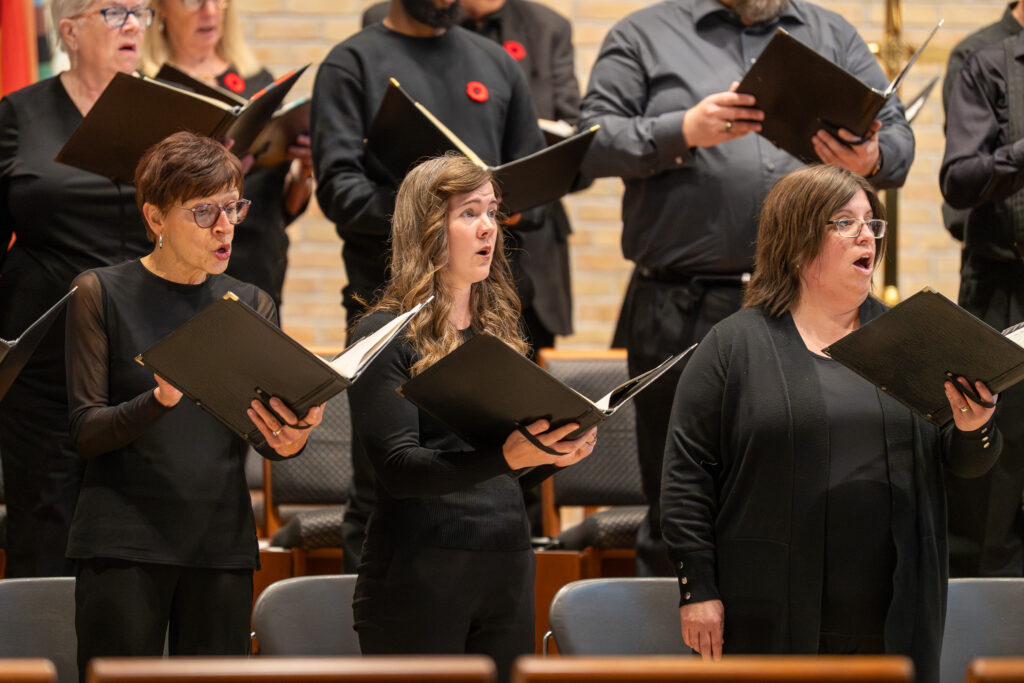
Before breaking for intermission the groups came together, for Eleanor Daley’s “Requiem.”
“Requiem is the first word of the opening prayer of the Mass of the Dead; ‘Requiem aeternam dona eis, Domine,’ or ‘Grant them eternal rest, O Lord.’ The text has been used in funeral liturgy since 500 CE,” said Bergstra. “The earliest complete musical settings for the Mass of the Dead date from the tenth century. There are a great many of them, at least 2,000 that have been sung countless times. The simple word “requiem” has come to mean a musical setting of the Mass of the Dead. While singing or listening to a requiem, we have a connection, a communion with the millions who have sung or spoken or listened to the words of the Mass of the Dead, and so these words have accumulated resonance.”
With solos from two Next Gen artists from Wilfrid Laurier University Faculty of Music, Sarah Storms and Emmanuel Dye, the profound choral work enveloped the room, keeping attendees completely absorbed in the performance and igniting many conversations during the intermission.
After returning for the second half of the show, the Grand River Chorus performed James Wright’s Three Canadian Landscapes. The choral trilogy features a collection of poems inspired by iconic Canadian paintings (Emily Carr’s Scorned as Timber, Beloved of the Sky, Arthur Lismer’s Bright Land and Lawren Harris’ Snow) and were written by youth who were between the ages of nine and 11 at the time.
The Edison Singers then took to the front of the church pews to perform their own set of upbeat, songs, including “Song for the Mira” and “Away from the Roll of the Sea,” both arranged by Allister MacGillvray, and “I’se the B’y,” arranged by Robert Swift.
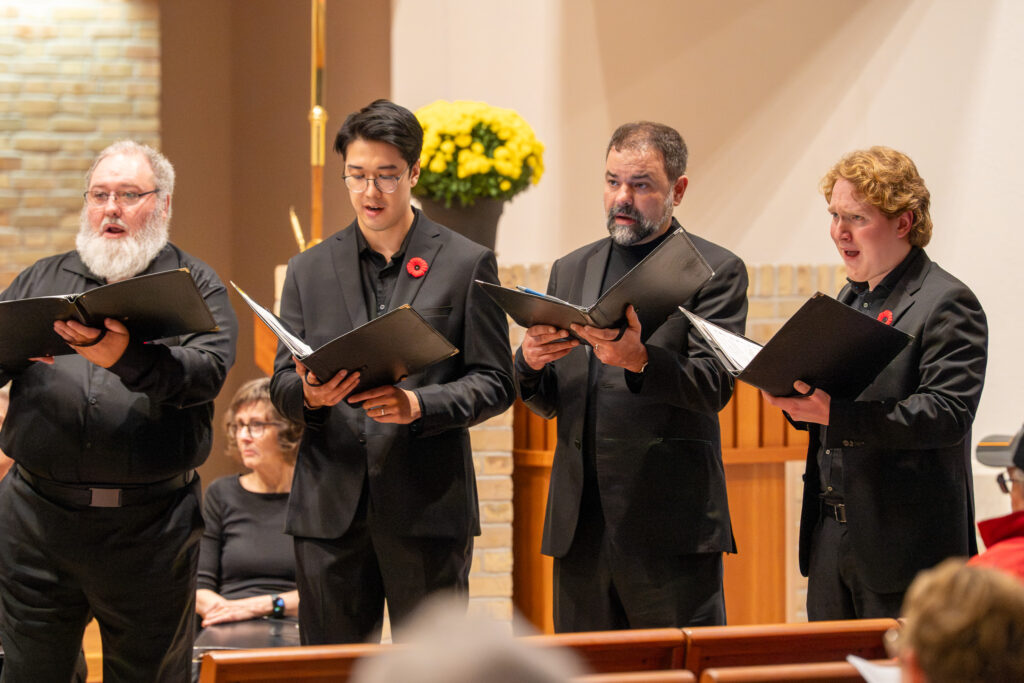
“To match up with the Canadian Remembrance Program, we’re going to take you on a tour of the Maritimes. We have three pieces from down east. The first two are from Allister MacGillivray from Nova Scotia. They’re wonderful folk- tune arrangements that the choir loves to sing, and we hope that we love to hear it,” explained Lanny Fleming. “We’ll finish with ‘I’se the B’y,’ which is a tune that perhaps is not quite as familiar now as it was a few years ago, but I think it’ll make a bit of a comeback.”
The concert later ended with the two groups coming together once again for a set of three final songs including, James Rankin’s “Fare Thee Well Love,” Mark Sirett’s arrangement of “Un Canadian Errant” and Leon Dubinsky’s “We Rise Again.”
Kimberly De Jong’s reporting is funded by the Canadian government through its Local Journalism Initiative.The funding allows her to report rural and agricultural stories from Blandford-Blenheim and Brant County. Reach her at kimberly.dejong@brantbeacon.ca.


