
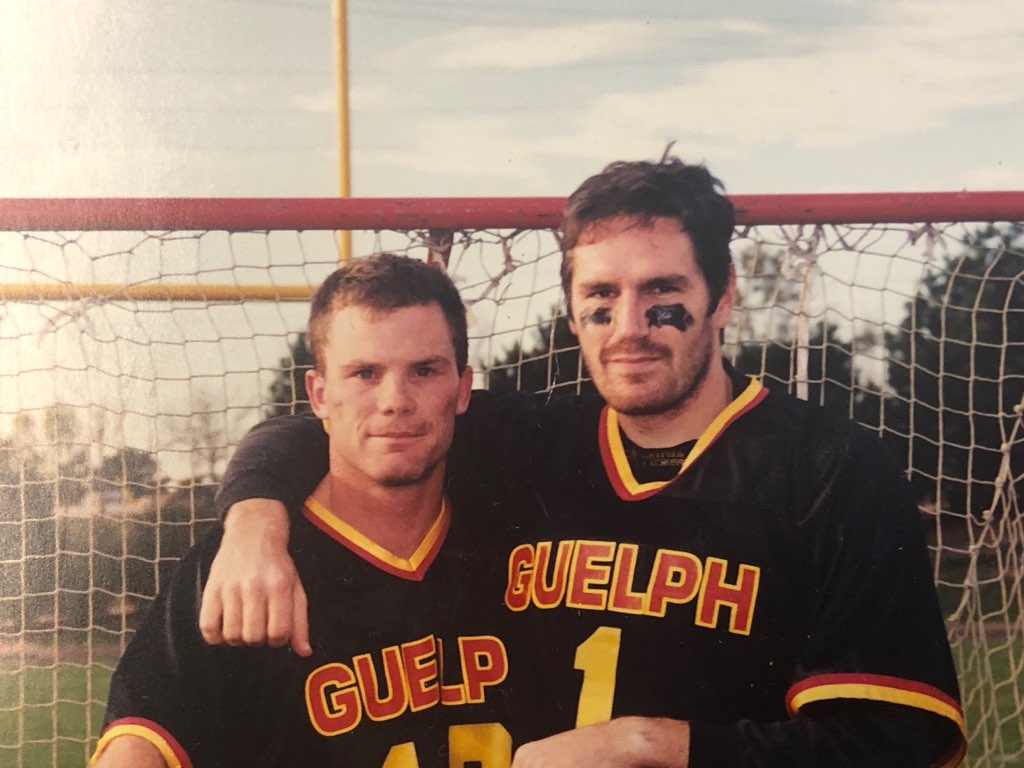
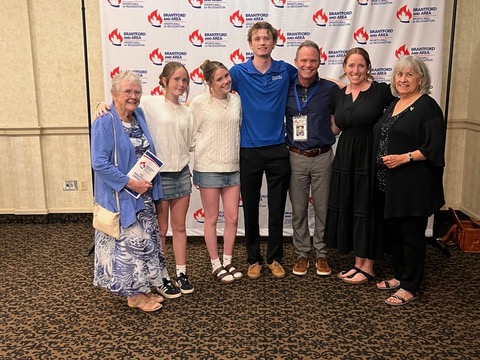
Across several decades, Tom Hawke has accomplished a storied career in lacrosse, capturing an array of championships, coaching several winning teams at Guelph University, and recently being inducted into Brantford and Area Sports Hall of Recognition in June 2026, while also leading a distinguished career as a professor and researcher at McMaster University.
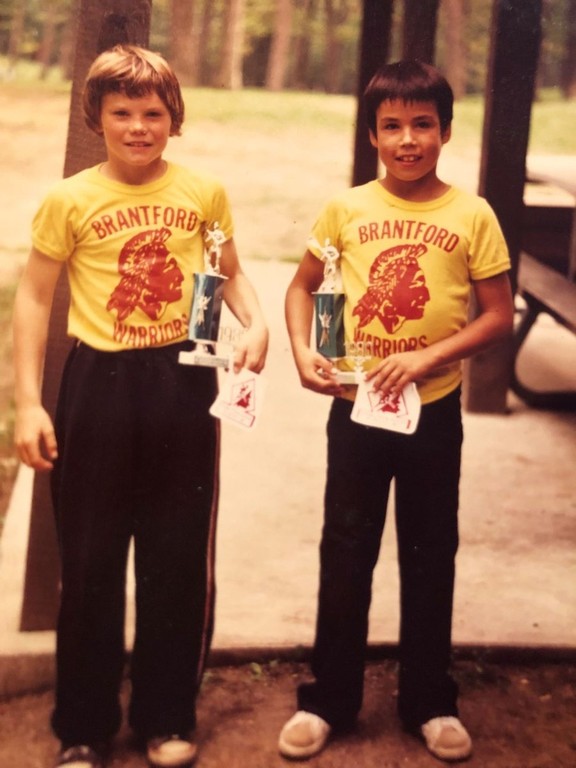
Hawke quickly took to lacrosse in his youth and blossomed into a dedicated player, developing his skills for the first ten years in Brantford.
“I grew up in Brantford and in the Cainsville area, and my parents were avid lacrosse fans. So, from a very early age…I had a lacrosse stick in my hands. By the age of six, I started playing lacrosse, and….early on…developed quite a long friendship with Scott Cavan, who was another kid from Brantford….and…on his mother’s side is the Powless family. So, I was coached by Gaylord Powless, and then a number of players from the 1971 Man Cup team including Brian Cavan and Vic Generoux,” he said. “Hanging out with Scott and his family, I was immersed in lacrosse all the time and we also made a lot of other friends through lacrosse. It was just a great experience to be able to grow up in an environment with people that loved the sport as much as I did. Even when we weren’t in the arena, we were out playing catch or road hockey, but we were always doing something that we loved.”
However, Hawke would go to build the foundation of his lacrosse in Brantford for close to a decade, and grow his strong ties with the Powless family.
“Once again, I attribute quite a bit of that to my friendship with Scott and his family. His mom was Gail Powless, Gaylord’s sister…and still to this day, is a very dear friend of mine. We communicate multiple times a week to this day. I became part of that family. I would spend much of my summer with them. I got to know the whole family really well, and that’s where you see an entire family of people who are all phenomenal lacrosse players…and have a rich history in the sport. I would then get to know others like Vic Generoux, who was great friends with the Powless family and Gail’s husband Brian Cavan. It was an environment where you were taught by people who were volunteering their time…they were really great lacrosse players and coaches…and always made you feel like family. I would also have a chance to play with Derek Graham, who was inducted into the Brantford and Area Sports Hall of Recognition a while back…it was a great group of people. We had really strong teams year after year. But again, for me personally, being part of the Cavan family and the Powless family was something that resonates with me to this day. That I was pretty fortunate to have them as part of my life and continue to have them in my life.”
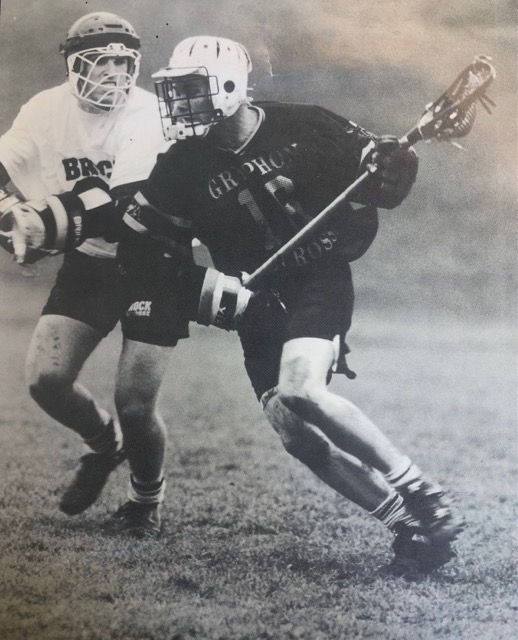
Hawke would then go to St. Catharine’s to play field lacrosse, opening his eyes to the next level of competition.
“At the age of 15, I was playing junior A field lacrosse in St. Catharine’s, and ended up playing with a bunch of players that I would end up playing with later in life….but just playing on a on a junior A team when you’re that young and seeing the quality of lacrosse that you’d never seen before. I had played batham and midget lacrosse…and then stepped into another realm here…that a simple pass to you would nearly take the stick out of your had. I was playing against men…and it made me realize I wasn’t anywhere near the best player on that team, it made me realize that I could do more. So, the next year I tried out for the Hamilton Bengals junior A team and made that team. It was again a huge learning curve….you weren’t the top of the food chain anymore. I had to work harder…and playing against really great players made you realize you needed to do more and work harder and learn more. I was then traded to St. Catharine’s. I was coached by Jim Brady there….and playing with that team taught me how to play the game with a mental side that I had never experienced before. I was also playing with phenomenal lacrosse players like Randy Mearns….Rich Kilgore and his brother Darris. I remember that you could have the best game of your life and you’d still be the second leading scorer on the team in that game. They were head and shoulders above everybody else. It was awesome to play with people like that and see how hard they worked and just how much natural talent they had. But playing under Jim…really changed how I played the game and what it let me see in the game.”
In 1986, the budding lacrosse star would be part of the Canadian Junior Championship.
“That was a very interesting experience because at 15 years old you’re still trying to figure out how much you actually know about the game…and by the time we got to the championship…we were playing against some great teams….and. for me….it was understanding my place on that team. It wasn’t only trying to play a physical game anymore….you were playing a mental game, and so I’d like to think that I played an important role on that team….my role as a guy who used my speed to get the loose balls…and then finding that open player and helping to play picks. So, it was a fundamentally different role than I’d ever played in minor lacrosse, where I was often….one of the top scorers on the team,” he said.
After playing two seasons with the Hamilton Bengals in the Ontario Jr. A Lacrosse League, he would go on to compete with the St. Catharines Athletics Jr. A, contributing to its winning culture.
“I didn’t realize at the time when I was going to St. Catharine’s that that team was as phenomenal as they were. When I got there, Jim Brady, told me I was going to love it there and that I was going to play with Jeff Snyder, who I competed against my entire minor career…we hated each other. And I couldn’t believe I would be suiting up with him, who was my greatest nemesis….But Jim created a great dynamic, getting players to get along…and I would end up being very close with Jeff,” he noted. “Jim also told me that I was traded because I could kill penalties. And was teamed up with Randy Mearns, an outstanding penalty killer. I never saw myself as a penalty killing specialist. But Jim already had an idea for me in his mind, and I would embrace this role. The team overall was so cohesive and always looking to help each other. Although it was Randy’s last year (he was also the captain), he continued to come out to the games the next year. He would talk to me after the game….about things that he saw on the floor that maybe I could do differently and improve on. I really had a lot of respect for these players….we were a very strong team. Earning 19 wins and a single loss. Our margin of victory was, on average, 21 to six. And another example of how good this team was: I was in the top 20 in scoring for the league, but I was eighth in my team in scoring!”
Nevertheless, Hawke would go on to help the team capture back-to-back Minto Cups in 1990 and 1991, while relishing the strong bond with his teammates. He would become captain for the 1992 season.
“We loved being around each other. And if we had a loss or an issue that came up…there was no fighting. There was nothing like that…we supported each other….we had such strong captains through the years too….and eventually becoming the captain of that team. I felt like I’d already learned so much about being captain and what the team wanted and what the team needed. I think players were already looking up to me and appreciating my leadership. Everyone was ready to practice hard and go for a third title,” he stated.
After Junior A, Hawke would go on to play six years at the Senior Major A level, including for the Six Nations Chiefs, helping the team win the Mann Cup in 1994.
“I grew up in Brantford….spending lots of time at Six Nations in Ohsweken with the Powless family, [and] the extended family. So, I was friends with a lot of those great players, like Cam Bomberry, Tim Bomberry and Miles General. And speaking from what I remember and what I understand…I think the owners of the Chiefs were trying to build a largely local team. And the challenge at that time was there was a really strong core….but you don’t win championships with just a core. There were a lot of other players who were in and out of our lineup throughout the year. And there was no [stability.] That’s when the owners realized if the team was to contend, that they had to do it right…and that meant recruiting strong talent including Paul Gait, John Travares, Duane Dewey Jacobs and a variety of other great players. That team went on to win multiple Mann Cups. I really loved playing with this group, but I realized I wanted to contribute more to a team….and that team at Six Nations was so strong that I could have had the best game of my life and maybe impacted the score by a couple of goals. We were just really that strong,” he recalled.
Despite the opportunity of winning another Mann Cup, Hawke approached the team’s coach, Les Wakeling, for a possible trade. He then went to the Fergus Thistles.
“That was a team where we made the playoffs for the first time in a number of years when I went there. So, I did really feel like I played a part in helping that team get back into the playoff. We played against Six Nation in the first round and lost four straight games. But it was at least good to get back into the playoffs. And Fergus is a great lacrosse city, and so I really enjoyed playing there. I wasn’t worried about winning another Mann Cup…It was all about going out there and working hard and trying to teach other players if I could while learning more about the game myself,” Hawke noted. “Then I played a year of pro (playing for the Rochester Knighthawks of the National Lacrosse League), and so it was after that year where just need something a little less intense in terms of the demands on me as a player….and then I had that moment where I was doing graduate school…I thought I just needed a break from lacrosse. So, I took a year off, and then the next year, the Brooklin Redmen’s owner reached out to me in showing his vision of the team he was trying to build. At the same time, I was very fortunate because another amazing lacrosse player named Peter Park…was doing a doctorate of veterinary medicine while I was doing my PhD. We were both at Guelph together, so we could commute to Whitby together to play in Brooklin. So, that was a great experience to play on a team with a tremendous history and with some really great players on it. It was a nice way to finish out my career. And then I graduated with my PhD and went down to Texas to work…[while] playing in playing field lacrosse in a Texas league, which was surprisingly competitive [as] a lot of guys who played NCAA went on to other paths, but still wanted to play lacrosse…and that was a lot of fun.”
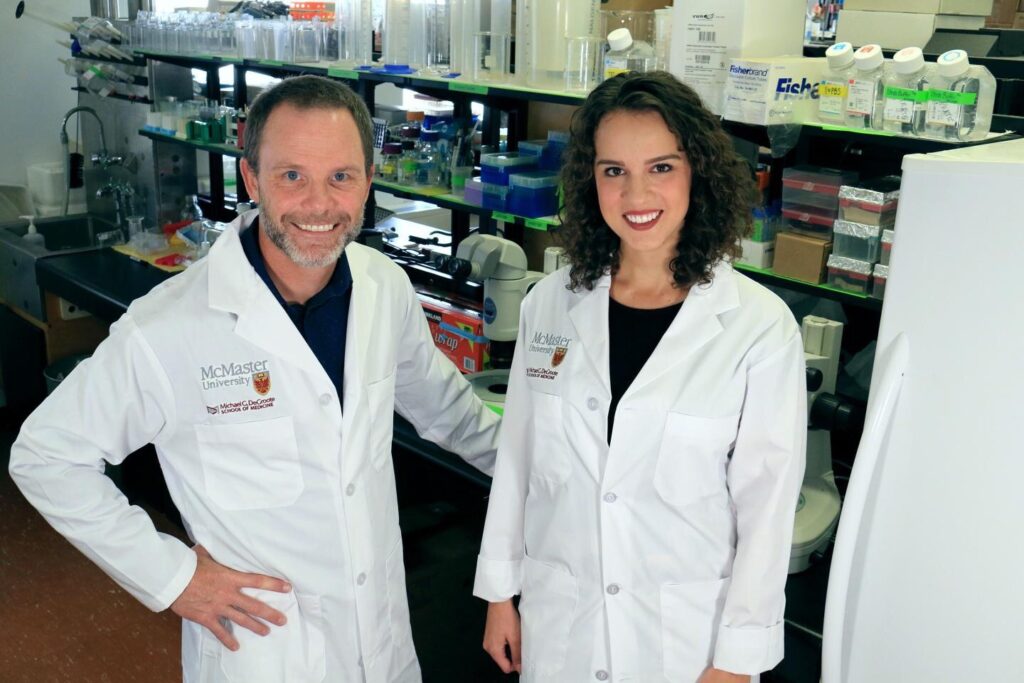
However, during his time at Guelph focusing on his studies, Hawke had a chance to play for the men’s lacrosse team, captaining them to a national championship in 1995 and then founding the women’s lacrosse team.
“We had an exceptionally strong team at Guelph. For a few years, we made it to the finals….and it was a very sweet moment to win that championship…while we were celebrating…I was also trying to build the women’s team. It’s hard to coach or do anything when you’re out on the field and also the women’s lacrosse game is very different from the men’s. So, I needed help…I recruited a good friend of mine to help be my assistant coach that first year. He had helped coach the men’s lacrosse team. We went to referee seminars and coaching seminars for women’s lacrosse,” he stated. “I loved coaching the women’s lacrosse team and it was one of the highlights of my lacrosse career. They just wanted to play lacrosse. They wanted to learn everything they could, and unlike anything I had ever done in my lacrosse career, at the end of every practice, they would all come up and thank me….for spending time to coach them. It was so rewarding to have that experience,” he reflected.
Hawke, as a student of the game, also made efforts to learn about lacrosse through other coaches and sports.
“There was a really amazing women’s rugby coach at the University of Guelph. His name is Jim Atkinson. He passed away a few years ago, but he was a legendary women’s rugby coach. In fact, he coached at least a few players that went on to play on the national team. But every week we’d have a media recap for all the sports teams, and the coaches had to go up and do a spiel and the Guelph media would sit in the sit in the room and you know write up little stories about each of the teams, and so I would always sit with this with Jim, and we would just talk about things because rugby was a lot like lacrosse in the sense that it wasn’t a basketball or you know soccer,” he explained. “It wasn’t a mainstream sport…And so he basically built that program much the same way I was trying to build the program. So, it was a great experience to work with Jim, as well as Sam Kosakowski….who built the men’s program up from the ground up, and then on top of all of that, we had to fundraise ourselves as well because those programs didn’t receive any money to help do the things like getting transportation. So, the men’s lacrosse team and the women’s lacrosse team would run fundraisers together, and with the help of Sam and that, we were able to really organize some pretty special things. That was a really great moment in my life to take on a new experience that I hadn’t done before, and it was a ton of work. But I loved doing it.”
Hawke continued balancing academics and playing as well as coaching lacrosse at Guelph, culminating in various team honours including a men’s OUA championship in 1995 and silver and gold for the women’s team as well as earning his Masters and then his PhD in Biophysics and Electrolyte Physiology.
“To be honest, becoming a professor wasn’t one of the career goals I had in mind. But in my early academics, I was very interested in sports performance. There were some great professors like Dr. Lawrence Spriet, who had taught me some exercise physiology… and I would take a course which involved an independent study where you worked with a professor and learned more on a particular topic. So, I met with Dr. Michael Lindinger… he was very interested in having somebody come and work with them on the topics, and we were looking at caffeine and how that might enhance performance, which was something that was of interest to me,” he said. “He would then ask me if I would be interested in being part of doing research at the lab with his graduate students. I ended up spending a lot of my free time there as an undergraduate…if I wasn’t studying or doing lacrosse, I was in the research lab. When it was time to do a master’s, he offered me a position. I looked at a few other places, but decided to stay at Guelph, in part because I liked working with him, and also because I wanted to stay…playing lacrosse and end up coaching the women’s team.”
After a postdoc in Australia didn’t come into fruition, Hawke was referred to what is now the University of Texas Southwestern Medical Center. He would eventually do research at York University until another offer that he couldn’t refuse.
“I got recruited back to work at York University in 2003. It was a great young department there with really outstanding researchers. Dr. Mike Riddell, who I met there, was a very influential person in my life and also from Brantford. He was a young faculty member at York University at the time, and we quickly became friends….and that really led me into diabetes research, which is one of the primary areas that I do right now, because of his influence and our collaborations together. So, as a scientist, I’d done a lot of molecular biology and cell biology when I was in Texas, and that’s really what I started to do when I was at York. But I realized pretty quickly that the things that I really loved to do were to understand how that translated to humans….so, it’s one thing to dive deep into molecular pathways, but it’s another thing to go to study diabetes….And for me, I really wanted to know that things that I’m looking at, from the molecular level, could really impact someone’s life,” he said. “A friend of mine, Jim Potts, assistant coach when I started coaching the women’s team…was at McMaster…sent me a job advertisement for a faculty member for the anatomy program there. At the time, my wife was pregnant with our first child and just bought a house in Toronto. I also had tenure at York University and had it pretty good. But I thought the opportunity at McMaster would allow me to do more translational research with the hospital there [where] I could do more human-based research. I ended up applying for the role and maybe a month later I got a call from the blue from the director of the anatomy department saying that they wanted me there. My wife wasn’t immediately excited about the prospect of moving….I had the interview and I was offered the role.”
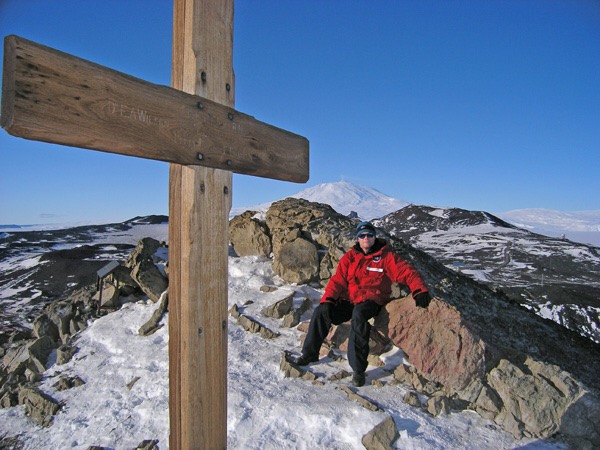
In 2009, Hawke and his young family moved to Hamilton to start the next chapter of his career.
“At the time, McMaster was transitioning to a pediatric hospital as well, so my wife was able to go from Sick Kids to what became McMaster Children’s Hospital. So, she’s been a nurse there…and it’s been a phenomenal experience for us both. For me, being at McMaster has allowed me to do a lot more translational research. We do a lot of clinical work in people with type one diabetes…looking at the health of their muscle, and looking at ways that we can improve the health of muscle of people with diabetes to improve their resilience against complications, improve their longevity…and ability to continue to live independently, which is an important matter…as those with diabetes, who they age, they become more frail and are more likely to be institutionalized at a younger age. And that’s when my lab really focuses on….why these changes are happening, and then how we can understand more about these changes,” he said.
But now, in 2026, you were inducted in the Branford and Area Sports Hall of Recognition. Now, tell me a little bit about you know getting that recognition in your hometown
“I have to start right at the beginning [in regards to the] nomination…Gail Ayers (Gaylord Powless’ sister)…who I’d known for many years, and was a very close friend of the family. I knew that she had struggled with some health issues. But despite this, she would still make it to my daughters’ hockey games in Brantford. One day she texted me and asked to meet up. And immediately my mind was thinking that her illness was back. I was saddened. I was distraught. I considered her my second mom after all. So, I already had the bad news in my mind…. And then we sat down after the girls’ game, and she said, ‘I just wanted to let you know that I’ve nominated you for induction into the Brantford and Area Sports Hall of Recognition.’ It took me some time to wrap my mind around that…I found out that Gail had dug up a lot of information about me and my career to make a strong case for the hall…even talking with my wife and family…asking for newspaper clips and stories,” he recalled. “Also, I was going through kidney failure at the time [and] to have somebody do something like that was very special. I had already been thinking about my own mortality and my health waning. I couldn’t thank Gail enough for providing a little light into what I had done, and I never reflected back on my lacrosse career as an individual because I was inducted as a member of a team at the Brantford Hall as well as other ones too.”
While Hawke was part of various lacrosse halls when it came to team honours, being inducted as an individual was humbling.
“I’d spend a lot of time walking through the hall…waiting an hour or so before my children’s games at the Wayne Gretzky Centre…and seeing all those people that were there…and I sometimes reflected…asking myself if I belonged there. So, I was honored that the selection committee saw what I accomplished. It was very humbling to be nominated and then to make it there. I was also humbled in finding out the lengths that people would go to help you get this recognition,” he said. “And then in April of 2025….a friend of mine, Joel Cote, had donated his kidney to me. It was another experience in my life where somebody just put themselves out to help someone else…in a very selfless act. And along with Gail for putting my name in consideration…it’s really humbling to think that someone would put all that effort in….I’m honored to be nominated. I’m honored to be in that hall of recognition. But to have somebody put that effort in to say that: ‘I think that you’re worth it.’ I think even if I didn’t get in…I would be forever grateful for even being nominated. To me, just the thought that somebody would put that effort in still brings tears to my eyes, and it’s something very special for me.”


