
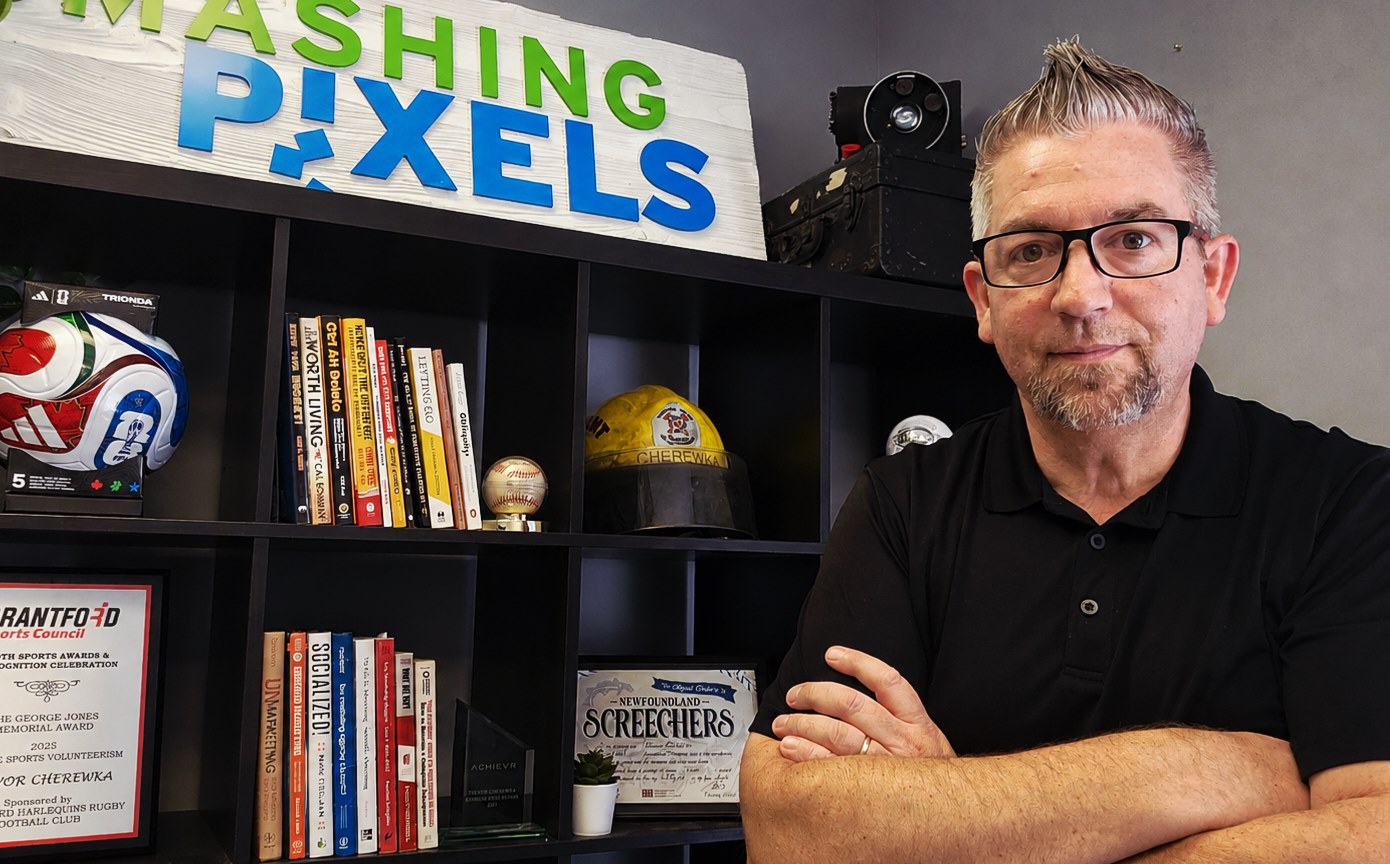
Across a career spanning concert promotion, retail sales, and digital entrepreneurship, Trevor Cherewka has always embraced and implemented new technologies to stay at the forefront of a competitive consumer landscape.
Born in Brantford, Cherewka moved to Alberta with his family at an early age before returning to the local community in his teenage years.
“When we moved back here, it was because my parents had divorced…I came from a long line of mechanics. Both my father and my grandfather were mechanics. Everyone we grew up around was a mechanic…[but] I was more interested in following another career path…and I had a bit of an idea when I first saw a gentleman who sold my mom insurance. His name was Joe Jones, and he used to come around in a suit and a fancy car. After seeing him, I thought to myself that I wanted to have those things too. So, I started reading sales books by authors like Zig Ziglar, Tom Hopkins, and Brian Tracy,” he said. “At this point, I was in high school where everyone was figuring out what they wanted to be. I had no inclination of what I wanted to do, other than wearing a suit and driving a nice car, but I decided that hotel and restaurant management really spoke to me. In my second semester, I learned more about special events and weddings, which I really liked. Doing events was my entry point for selling.”
However, he soon dropped hotel management and turned his attention directly to managing events, more specifically, concert promotion, launching his career.
“At the time I fell in love with event management…Brantford was having a drought when it came to providing entertainment for young people, so I thought it would be a great idea to book some bands. I had a little bit of experience playing in a band myself, hustling, and getting us gigs in the Brantford, Hamilton, and Toronto areas….calling around to these managers to see if I could get some bigger acts to come play in Brantford. This was in the 1990s. Everyone was buying CDs, and I started looking through them, realizing they had information for their management teams and booking agents,” he noted. “I started reaching out to bands like The Tea Party, I Mother Earth, Junkhouse, 13 Engines, and a bunch of other acts well known in the Canadian scene. Next was figuring out where these shows were going to be held and decided on the Branlyn Community School because it had a triple gym. I was very successful in getting these bands to play here. I spent years doing that, and it was incredibly beneficial for me.”
Despite Cherewka’s passion for running events in Brantford, the income was inconsistent.
“I realized that I could only put on a show every three months or so because it was such a big undertaking. I would put on a show and make a massive payday, which was great, but then I would have no money left for the next three months until the next big show came along. At that point, my wife suggested that I needed to find a more stable career. So, I went into retail sales for six years, which gave me a chance to hone my craft. From there, I went into B2B sales with a company called Ball Media, which got me back working within the music industry and with record companies. That was fantastic. At the end of those eight years, I felt the grasshopper had finally taken the pebbles out of the master’s hand, and it was time to go off on my own. I partnered up with a friend in a print company for three years until I sold the company to him when I had my sights on a big opportunity,” he recalled.
For the next step in his career, the focus shifted to the internet.
“Fearing that I was going to miss out on something big, I started hitting the ground running. I knew I could sell, and I had an unbelievable belief that I could do anything I set my mind to, except putting together websites. That was harder than I thought, but I was focused and stubborn, and I simply didn’t want to be proven wrong. It was a lot of trial and error seeing what worked and what didn’t. The result was that we never left anyone with a bad website,” he said.
That experience eventually led to an opportunity to develop a popular event called Tweetstock.
“The first couple of years were about figuring it out. At the same time, I connected with a couple of guys I worked with at Ball Media who had gone out on their own, Lucas Duguid and Joe Stevens. I realized everyone was talking about these tweetups. I’ve never even been to one, but I used to do rock shows that brought in 1,000 people. I thought that we could bring in signed bands and use our connections to make a really big show,’” Cherewka said. “We did about ten of those, bringing in speakers from all over North America to talk about how the Internet of Things was going to be the next big thing. Over five and a half years, it grew [and] enjoyed the experience.”
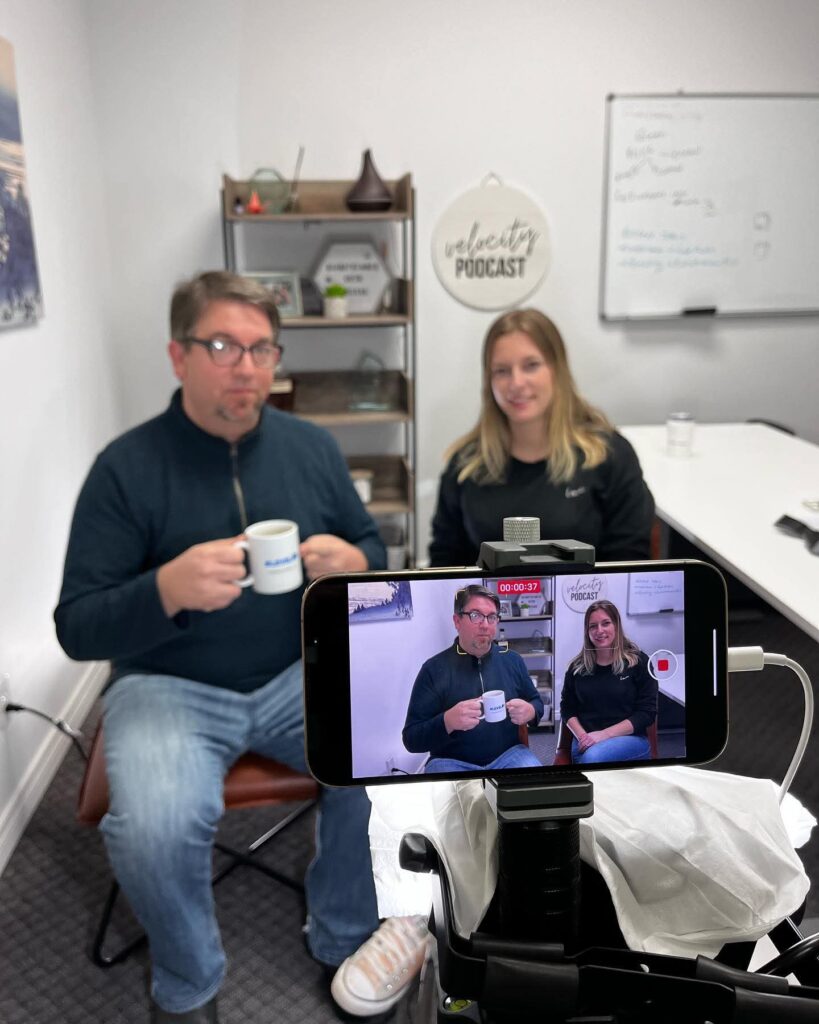
In 2011, Cherewka launched Smashing Pixels, and realized that SEO was becoming the next major shift.
“SEO was becoming very important because people were getting sites built, but had no idea how to get them ranked. So, I dove into the SEO space and picked up monthly clients through Tweetstock to manage their social media, since nobody wanted to do it. All the while, we were building websites, making them bigger, better, and stronger than before. Now, 15 years later, we’re in a good spot where clients come to us. We still knock on doors and follow up, but people recommend us all the time, which helps during the leaner months. That’s a testament to us keeping our nose clean, doing good work, following best practices, and taking zero shortcuts,” he said.
In recent years, Cherewka focused on AI (Artificial Intelligence), arranging a crash course with an AI specialist to quickly implement ways to help clients.
“We started talking to clients about AI and helping them out. A handful of customers asked us about agentic AI, like scanning QR codes in-store to ask questions about a location, products or services. As a salesman, I told them we could do it and knew that we would figure it all out later. We kept refining it, and we’ve done about a dozen great AI jobs. Two were in the same industry through a referral, but everyone else was in completely different industries wanting to utilize AI to grow their customer base through in-store activations,” he said. “When I started around 1999, we were traditionally sending stuff in on film with acetate, using a pen to color in little dots so light wouldn’t shine through. From there, we moved online, then to social media, then SEO, and now AI. We’ve lived through six or seven iterations in 26 short years. I’m proud to say that most of my team has been with me for the long journey, one guy has been with me for almost the entire time. Meanwhile, we’ve seen competitors open, go bankrupt, and close down, with most not surviving COVID.”
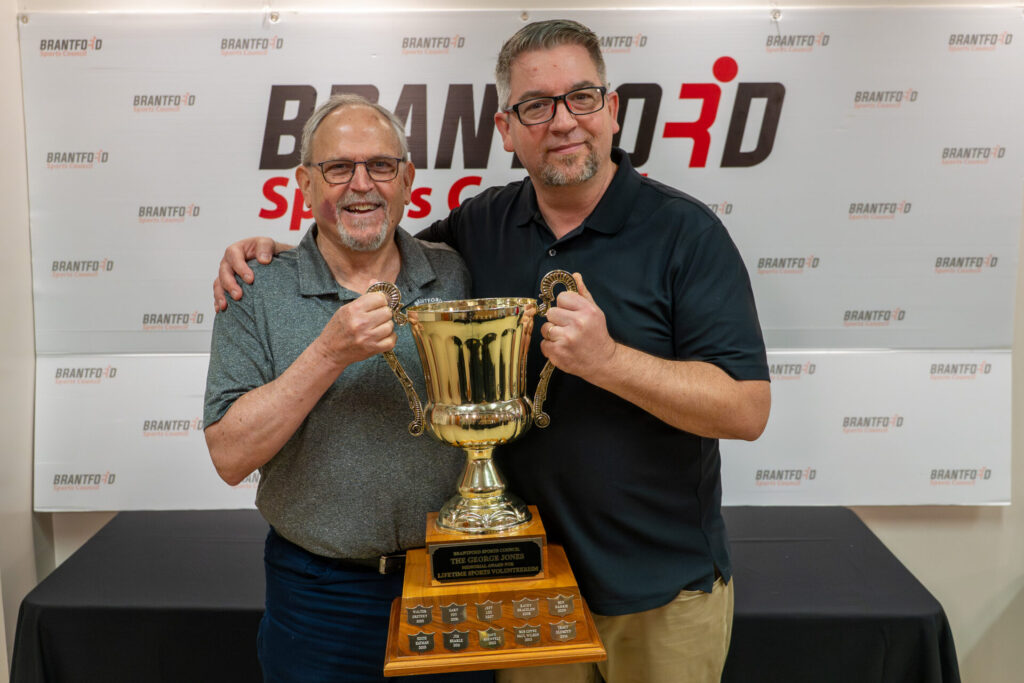
After leading Smashing Pixels for the last 15 years, Cherewka has remained heavily involved in the community, particularly youth sports, earning the George Jones Award for his life-time of volunteerism.
“I was involved with the Brantford Sports Council for about a decade. My kids were athletes, and having them thrive and enjoy sports in the community…made me realize how sports are a key fabric of the city. Helping out and lending a hand for youth sports really meant a lot to me. I have done a lot of videotaping for youth sports, for example, because I believe we have to give young kids the tools to succeed,” he explained. “I show up to volunteer because it’s in my blood. I have a servant mentality and enjoy helping people. To be recognized for it blew me away, because I seriously do not volunteer just to get accolades.”
Cherewka has also supported local homeless outreach efforts, having felt the effects of poverty early in life.
“A lot of the other work I do is helping the homeless in our community. We have an unseen, invisible class of people in Brantford, and we simply need to know they are there…and are seen, recognized, and valued. Being in downtown Brantford, we keep water and snack packs at our office to give out. We also distribute about 60 donated winter jackets every year. The community has to rally together, and that includes businesses and individuals alike,” he stated. “Another big thing is the support from my family. Growing up, my mom made us volunteer, which taught me the value of giving back which has shaped my belief system today. We are very blessed to be where we are. I grew up incredibly poor after my parents split in the late 1970s, a time when some dads didn’t pay alimony, including mine. We went from middle class to lower-class, and my siblings and I had to work incredibly hard. We feel blessed that we made it out when others didn’t, so we try to give back whenever we can.”
Over time, the Brantford community has grown and become more diverse as Cherewka explained.
“Growing up, my family was a big part of the cultural villages here in Brantford. And over the years, it has expanded from traditional European villages to many different ethnicities where you can experience many diverse foods, cultures, and traditions. It’s become a mixed potpourri of people coming together to create the fabric of Brantford. I love that I can eat at ten different ethnic restaurants in a single week. A lot has changed since I was a kid,” he noted.
Through it all, the entrepreneur has learned a few key lessons along with a desire to pass along his experience to the next generation.
“When you’re young, you think success should be immediate, but it takes time [which is] the one thing you can’t rush. I have also learned…that because we are a bedroom community…it is very important to network and be part of the community….so people talk about you. It’s a big enough city that outside companies want to come in and compete, but still small enough that everyone knows everyone here. Early on, I joined a business group called Brant Business Builders….and I’ve always been part of the Chamber of Commerce….so, it’s crucial to show up, be involved, and pay attention to the conversation,” he said. “I think my next role is mentoring, which will be an easy transition. Anytime a young person or a friend’s kid wants to start a business, I gladly invite them over to chat. And I find that a one hour chat often turns into two and a half hours of sharing information. I look at it…as I’ve already put the jacket down over the puddle and set up the ladder so it’s easier for them to climb.”