
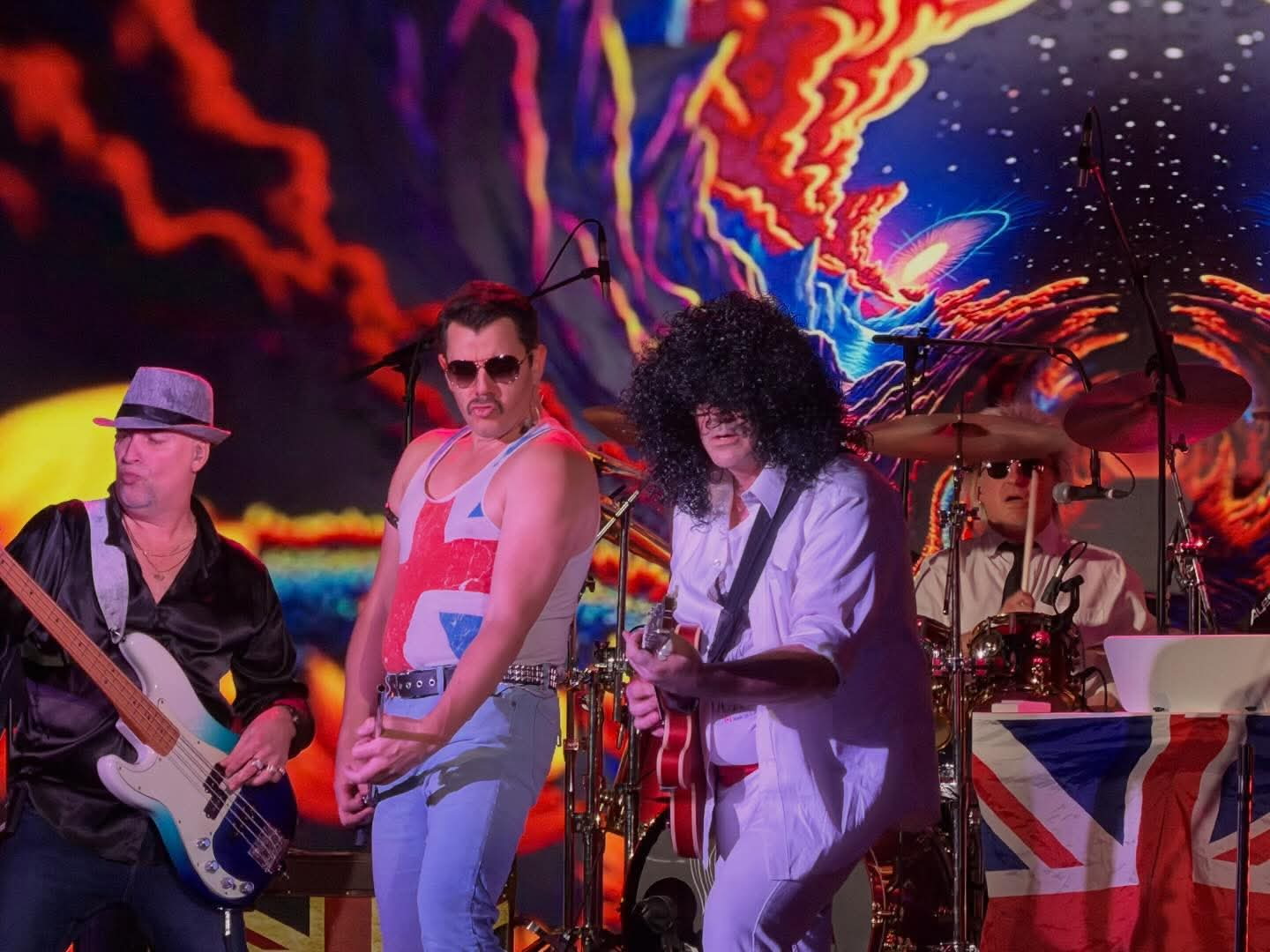
Randy Solski has always been passionate about music, and over the years he has excelled as a talented multi-instrumentalist, live performer, songwriter and music producer/engineer.
Solski, who grew up in the Brier Park area of Brantford, explained his early musical beginnings.
“I was very lucky to have very supportive parents who could afford, both financially and in patience, someone who wanted to start as a drummer. I’ve lived in Brant County all my life, mostly in Briar Park. My folks bought me a set of drums, and I banged away on them all through my public-school years. Into high school, I got a little bit more serious and started taking some formal drum lessons. I entered a competition with the American Guild of Music, where I won first place in two different categories. From that point on, my folks thought there might be a little bit more to this,” he said. “They bought me a better kit, and I joined my very first band, which was After Hours. Going back to the 1990s, we started playing everything that parents would want to hear, which in turn started getting us gigs. We were doing ’50s and ’60s music and started getting wedding gigs. We were not playing much in the bars at that point in time, being 16-year-old kids doing the Beatles, Elvis, and Del Shannon….then we started venturing into a little bit more of the Top 40 music that we had at the time, and we eventually did start acquiring some bar gigs. I don’t know if the bars knew how old we were or if they cared, but we started getting bar gigs in the Brantford scene.”
Still in his teens, Solski started to seriously believe his passion could turn into a career.
“At that point…were playing a few bars here and there, and as high school kids, we were sometimes playing five nights a week, Wednesday night at one bar, Thursday, Friday, Saturday at another, and sometimes Sundays….there was a point where my mother said, ‘You know, you’re bringing home more money than me and your father,’ and I was in grade 12,” he noted. “I told her I wanted to try singing, but I couldn’t go up there with the cheap little electric guitar I had at the time; I wanted a real SG. I woke up one day, and my mother’s Visa was sitting on the kitchen table. She said, ‘Well, go get you an SG.’ So, I did, and from that point on, I started playing guitar and doing some singing in the band.”
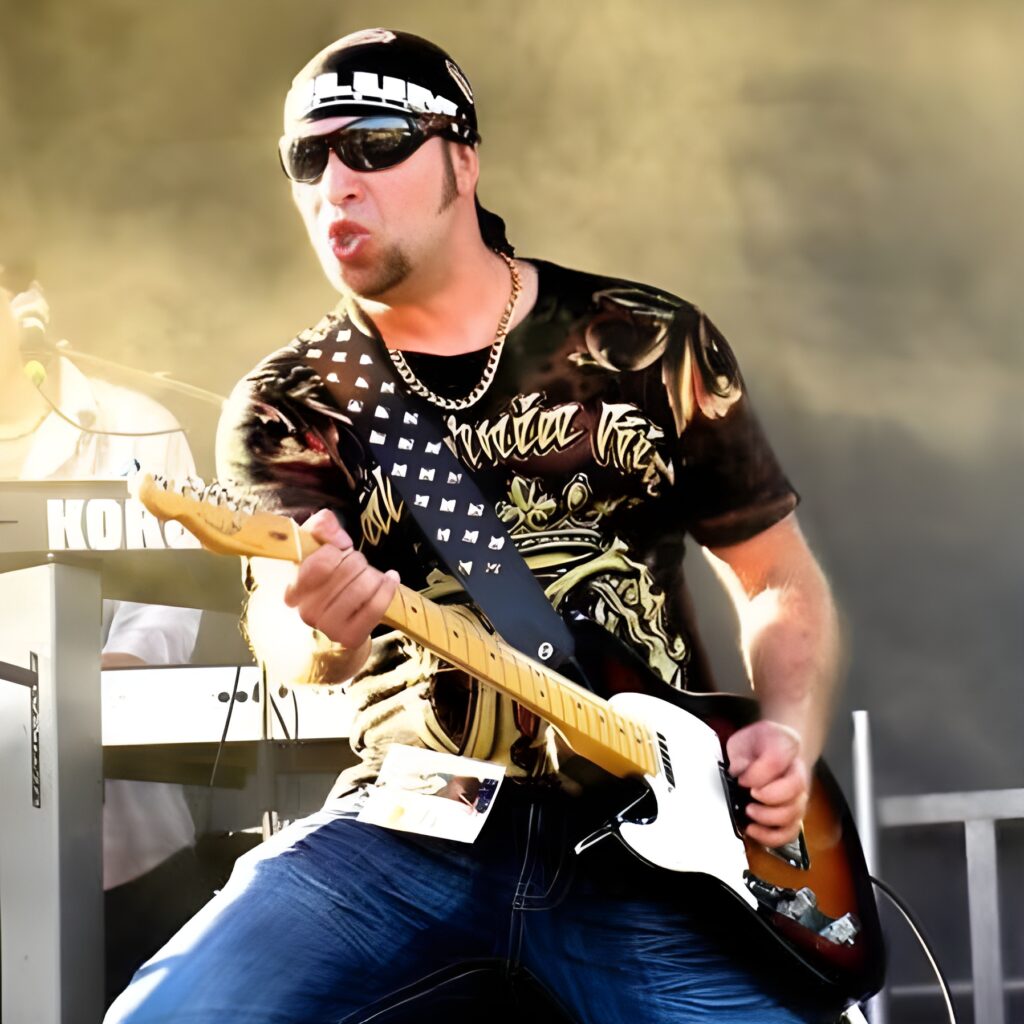
However, he then was off to do Fanshawe College’s Music Industry Arts Program in 1996, and maintaining his musical ambitions and meeting a life-long collaborator.
“While I was in college, I was drumming for both a No Doubt tribute band and a Tool tribute band. The No Doubt tribute was doing pretty well because they were the flavor of the week….the Tool tribute band was more of an indie, underground scene sort of thing. Every musician in the city would come to the show wherever we played, but there was not much of the general public at that time. They had an underground following, but it was a musician’s band….I was playing drums in that and doing the best I could at doing most of what Danny Carey did, which is not an easy seat to fill,” he said. “After I finished the three years, of doing this (and school), Jeff Gallagher came to me. I had been working with him since he was maybe 15, but along the way, he got cancer as a young man, and it didn’t look good. One thing he said was, ‘Well, you know, I wouldn’t mind doing a country album.’ I said, ‘Well, let’s try one.’ What was supposed to be a novelty project with one of his brothers (he had some comedy in his country back then), turned out to be a little bit more than just a gag. I got some guys together and said, ‘Hey, take a listen to this. This might be some good stuff.’ I got Don Laframboise, one of the guys from After Hours, and he joined. Then Dry County was born.”
With Dry County’s line-up set, Solski and the band were ready to get serious.
“At first, I was the drummer of the band…when we did our first record, we brought in a session player to do all the lead guitar and tricky chicken picking stuff. I was just an AC/DC player, so the chicken picking stuff wasn’t going to work for a country band. We tried to chase the proverbial dream…through my education, which was fresh out of college at that point, and through a little bit of self-research and experience, I learned what you need to do if you want to have any shot at major market radio. We thought we would do everything right to chase that dream,” Solski noted. “I’ll never forget bringing the record into KX 96 in London. The program director’s name was Chris Harding, and he listened to the whole record in his office. Don and I went there, and once it was done, he said, ‘Well, guys, I got to tell you, this is Class A hit radio. But I can’t spin it.’ We were beside ourselves. Almost right on cue, in comes a rep from Sony with a stack of CDs and swag. He said, ‘Okay, here’s our latest guy that we’re pushing right now..oh, and by the way, we appreciate you spinning him because here’s the new Shania Twain.’ He was basically saying if you don’t spin this guy, we’re not going to let you have whoever the latest big star was. Right then and there, we found out how the industry works.”
However, Dry County stuck to their guns, and were set on recording their second album Waiting on Hank.
“We thought…the heck with trying to chase radio and country; we found out we were against all odds, so let’s just do another CD and do what we want, how we want. I was schooled under Jack Richardson, God bless his soul, who was a really good production teacher. I learned a lot from him, and I decided to use that knowledge to just be us, let the chips fall where they may, and make the album we wanted to make, right, wrong, or indifferent. That’s when Waiting on Hank was born. Jeff has always been the risk-taker of the band, and still is to this day. There was a club in Cambridge that was a very popular country spot called Little Bighorn. Jeff went to Jerry Carroll there, who had given us a couple of opportunities to do showcases. They started getting really good feedback about Dry County, so finally, Jerry said, “Okay, I’ll give you guys a shot.” I think he had Trooper playing there once and had us open. It was a sold-out house, and we went over very well. To that, Jeff said, ‘I’ll tell you what, give us our own night. Give us a Friday. Give us a fighting chance. If we don’t do well at the bar, don’t pay us a nickel, and we won’t bother you anymore.’ It turned out that when we did that, we brought three school buses full of fans…aside the people who had seen us with Trooper and the word of mouth from Jerry,” he said. “That place was packed. From that point on, whenever we went on the marquee for anything Jerry and Cliff did at Little Bighorn (which eventually turned into Jackhammers in Brantford) we were the biggest ticket around, whether people liked us or not. We were happy, and in our young minds, we were rock stars. But we knew we had to follow up the ‘Waiting on Hank’ album with our next record.”
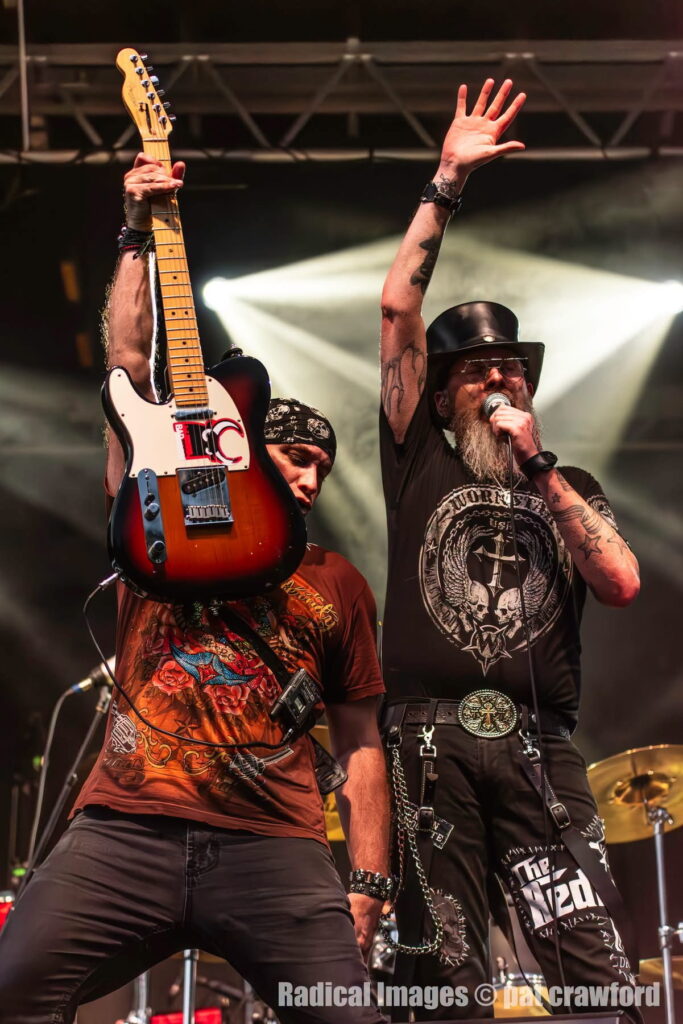
Now the onus was on both Solski and Gallagher to one-up ‘Waiting on Hank’, which was a hit with fans.
“Jeff is the primary writer, and I co-write with him to some degree, but I am the producer for Dry County. We sat there trying to figure out how we were going to beat this album. I had this one riff that I was using for a rock band I was doing some work with, and I thought it might be a cool song for us. I played it to Jeff on a really snowy February weekday afternoon when cars were getting stuck in the streets, and that became ‘Cowboy Up’. We made the demo and took it to Little Bighorn that night, and Jerry spun it. From that point on, we knew we had something pretty good. We started working on the Cowboy Up album. We recorded probably 20 to 25 demos, narrowed it down to what we thought would be the best 11 songs for the record, and then had the CD release party at Jackhammers. You never know how records are going to go until you throw them to the lions to see if they eat it or not. When we did our release at Jackhammers, there were over 1,100 people in a club that was licensed for 740,” he explained.
However, with the third album, the band started to gain some major traction.
“A manager who was working with us at the time cold-called Dana White, who runs the UFC. This manager was short-lived with us because he was a shady manager…but he could knock down doors and get people to take notice. But, you have to have a good product, [and] also have to catch a little lightning in a jar…And that’s what happened when he made that call. It just so happened that Dana was negotiating the fight for UFC 87 where Brock Lesnar fought Heath Herring. Heath was not originally supposed to be fighting Brock, but Brock’s opponent got hurt, and Heath was next in line. While he was on the phone with Dana White, Heath said, ‘I work out to those Dry County guys every day.’ Right then, Dana knew we had to be something real. That’s what I mean about catching lightning in a jar. “
From there, the UFC placement opened the door to more opportunities.
“That led to us headlining Vegas Bike Week. We were really a Southern rock band, not much country to us, and I knew there wasn’t a huge market for that in Canada compared to the United States…]because] when you’re doing a Southern rock-country thing, there’s not much South about Canada…in the States, that is where that music was founded and came from. We ended up getting quite a few shows all through Tennessee, Kentucky, Georgia, and Syracuse, New York. We had a pretty good run. We just finished playing in La Salle, Quebec, in July, where they had close to 7,000 people at the rodeo,” he said.
Nevertheless, after 30 years, Dry County was nearing the end.
“I knew Dry County was coming to an end when we lost our keyboardist, Claire. He had had enough, so he bowed out to retire from his day job and from everything else, bought a cottage, and moved away. That turned Dry County into a four-piece band. Losing him was losing a huge part of Dry County, and it was never really the same without him. We had to use backing tracks just to supplement what the keys did, so we were looking at winding things down,” he recounted.
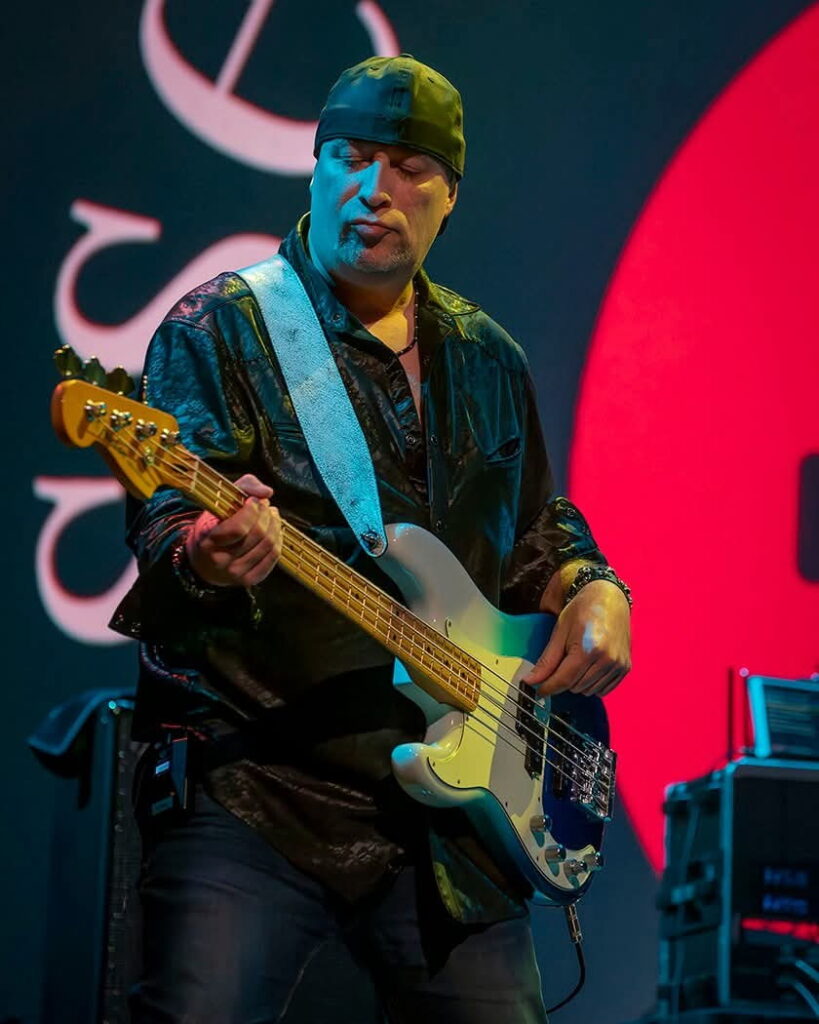
It was at that point that Solski was approached with a new opportunity.
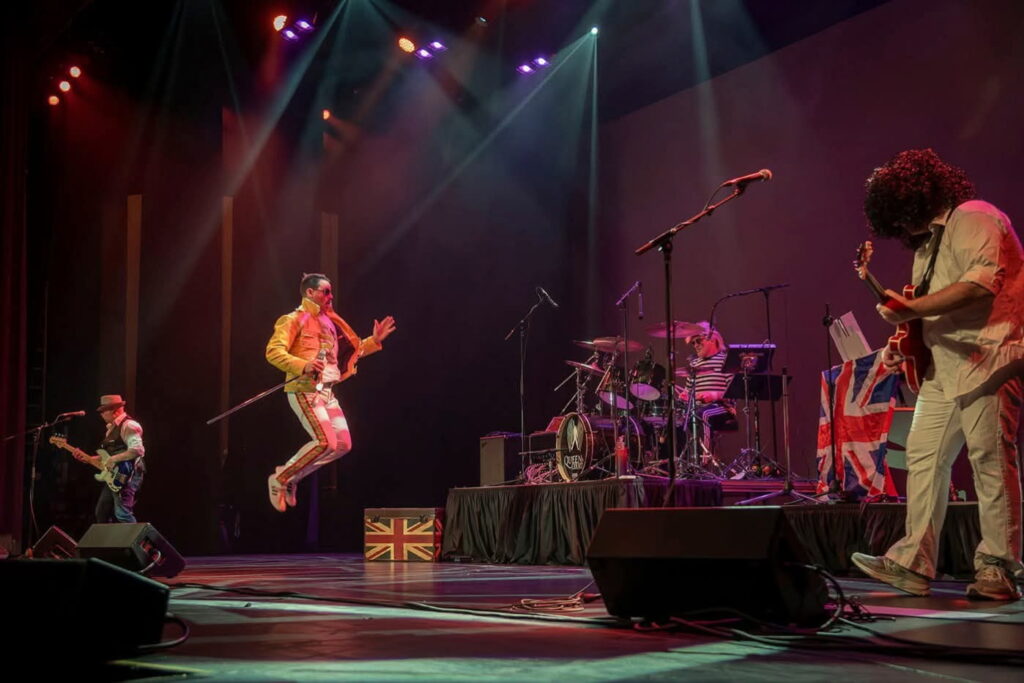
“Sean Hauk Sean and I met at karaoke one night when I was there with my wife. He did some Queen songs, and I did some AC/DC. When he sang Queen’s ‘Somebody to Love,’ I remember getting a drink at the bar and really liking it. He told me he wouldn’t mind doing a Queen tribute band, and I saw that he could dress and look pretty spot-on to Freddie Mercury, and he sounded like him. We then put together a unit for a Queen tribute band three years ago, and away we went. Originally, he asked me to be the drummer for the Queen tribute, but I already had a drummer. I play some bass and love playing bass,” Solski noted. “I learned a lot in the last number of years being in another tribute band for an iconic group like Queen, especially coming off that amazing experience with Dry County. Dry County was never a theater-type band; we always did festivals or played bars with north of 500-capacity clubs. During the festival season, if we weren’t in Canada, we were in the United States doing festivals in the summer. The Queen tribute versus Dry County are totally different animals. Dry County was a five-man unit where all five guys brought something to the table. Everybody looked like they were rocking out, getting in people’s faces, and sweating in the front row instead of just looking at their shoes.”
With Queen’s Court, as Solski explained, it was a completely different dynamic.
“People aren’t really rocking out in theater seats. In Dry County, Jeff was running the front, but everybody behind him was active, so he wasn’t driving the band alone. In the Queen tribute, Sean is largely driving that show. These theater gigs are what I call the perfect retirement gig. I absolutely love it. It is a bit lower pressure. I am the guy who takes care of all the technical stuff for the Queen show, handling all the tracks, making sure everyone’s in-ear monitors are working, and fixing things. I was just soldering in-ear receivers together the other day because Sean is pretty hard on the gear. I take care of all the technical stuff, which is the same role as band leader I had in Dry County. Once everything is rolling, the gear is set up in the theater, the sound is going, and everyone has their ears in, it is just about having fun. After doing the show for three years, it is very low pressure because all the pressure of driving the show is on Sean,” he said. “A major highlight for the Queen tribute is just playing with the guys, who are really great, just like the guys in Dry County were. It’s always great to share the same venture with people you get along with. Another big highlight has been playing some of the big theaters, namely the Sanderson Centre on New Year’s Eve. The City of Brantford hired us for that, and it has been a bucket list thing of mine, living in Brantford all my life, to play that stage. I had never played it until New Year’s Eve this past year.”
Along with his career as a musician, Solski has also owned and operated his own recording business since 1997.
“I started my own business, R.S. Sounds and Production, right after graduating college in 1997, and I operate it to this day out of my house. I’ve been lucky enough to have my name on albums with Sony, EMI, Warner, and Epic Records. I’ve done a lot of major label projects, but mostly, of course, independent products. I’ve recorded well over 2,500 indie artists,” he said. “One of my first big opportunities was working with a band that was being helped out by Mike Trebilcock from The Killjoys back in the late ’90s. He asked to come in and hear what we were doing. I grew up listening to him and covered his music in my cover bands, so I was worried he would think that my studio wouldn’t stack up. But he listened to the band and then asked if he could talk to me afterward. I thought he was going to say he needed to take the band to a real studio, but instead, he said, ‘Hey, I’m thinking of doing an album of my own. Would you be interested in doing it here with me?’ Having a guy of that profile want to work with me really helped my career.”
Nevertheless, Solski has continued to offer a strong variety of musical support along with recording and engineering services at his studio.
“I offer live drum tracks, bass playing, acoustic and electric guitars, and a little bit of keyboards. If clients want a specialized musician, we can easily bring in outside players. I’ve had the luxury of working on five records in my studio with Brent Mason, a legendary guitarist who played on records for Shania Twain, Alan Jackson, Brooks & Dunn, and Tim McGraw. For the most part, I cater my business to singer-songwriters rather than full bands because my studio layout is better built for it…I still do the odd band here and there, but if you are a singer-songwriter with just a song and an acoustic guitar or piano, I am the perfect fit to help you work that song and build up the entire production,” he said.
However, since starting his journal close to four decades ago, Solski reminisced on some of the highlights.
“With Dry County, playing the main stage at massive festivals before Boots and Hearts existed, like CMT Fest and Sarnia Bayfest with Rodney Atkins and Montgomery Gentry was incredible; it was a big highlight for me. Being a mid-afternoon main stage act, rather than a side stage act, is a big deal. I remember one festival where we were on the bill with Jason Aldean headlining. Luke Bryan played before we did, and standing about ten feet away watching our set were the members of Lady A (formerly Lady Antebellum), who were just breaking out at the time and scheduled to go on after us. You just shake hands, exchange pleasantries, and say you like their work, without realizing the scale of it at the moment. Another highlight has been working in the studio and seeing my name on major label products with Sony, EMI, Epic, Warner, and Universal,” he stated. “With the Queen’s tribute band, the biggest highlights have been the theaters we’ve played, particularly the Regent Theatre in Oshawa, which was a beautiful, sold-out show with a great sound crew. But the truth, from both a personal and technical standpoint, is that the Sanderson Centre in Brantford is one of the most class-act stages I have ever played…that was a great experience to play there in our hometown. [And] I’ve forgotten a lot of the accolades along the way, but Dry County did win the Hamilton Music Awards People’s Choice Award many years ago. That is the only music award I truly care about because it is chosen by the people, whereas anything else is just decided by an industry committee. Having the people behind you is what really matters to me.”


