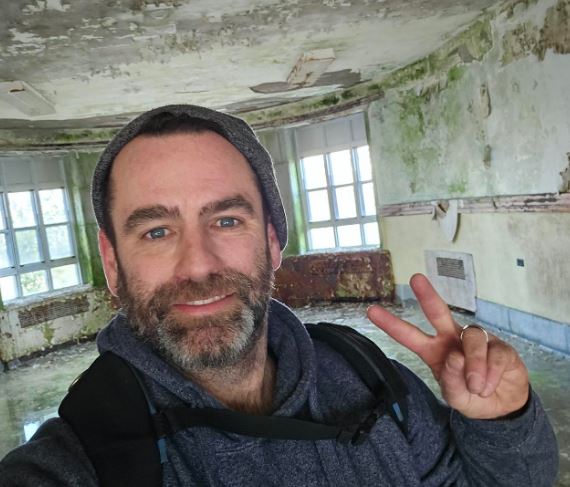
Since the late 2000s, Riddim Ryder has blended his passions for photography and urban exploration, detailing experiences throughout his work in abandoned and often forgotten buildings across Canada and the United States.
Ryder, who grew up in Mississauga and spent a decade living in Brantford before heading to Orillia around 2020, explained his start in photography while having a long-time fascination with exploring urban areas.
“The photography aspect of what I do came when a friend of mine, purchased a new DSLR, and he had no need for his old one…and that gave me a chance to use it….we then started to kind of wander around taking random photos one day in Toronto with him and I really enjoyed the experience,” he said. “But I have always been exploring…places like just that old farmhouse that you see way off in the distance of a field and maybe wondering what it would be like to looking into it. And, one day I was browsing the internet and saw that people were taking pictures of these abandoned places and that really made me think that I could bring those two elements together…exploring and photography.”
However, Ryder’s first really adventure with the camera came in Brantford the Massey Ferguson plant.
“That’s when I started taking my camera with me, and really digging into places, but e I’ve always done exploring…even as a little kid, I rode on my bike around the neighbourhood, fascinated by old buildings and who had lived there….but it’s when I moved to Brantford and went to the Massey Ferguson plant, that both photography and exploring came together. I had my backpack, my camera and tripod, and went with a friend I met in town,” he recalled. “There was obviously a little bit of risk involved with security with a place like that and of course the sheer size of the plant. It was just enormous. As soon as I got there, and started photographing the place, and exploring it and balancing the elements of danger…I got hooked, it was intoxicating.”
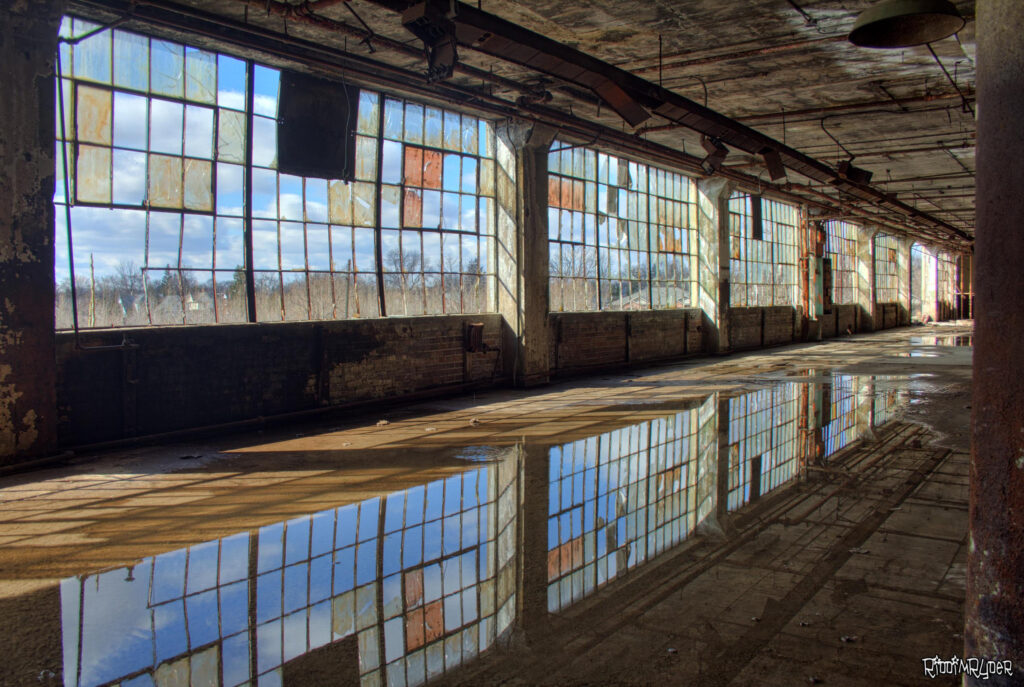
The factory has continued to draw the urban explorer over the years before it was torn down.
“I must have gone another 15 times over the years. And each time I would do some more research, and I knew the whole history. I also knew the history of the Cockshutt Plow Company that was just around the corner. One of things that really draws me to the hobby is…getting a chance to go into these places that a lot of the regular society doesn’t get to see because it’s related to manufacturing. And it’s interesting to see the personal touches from the people that worked there. I remember there was a wall where [an employee would] stick banana peel stickers on. And during one of the visits, I found an old-World War replica plane model, because during the war, the factory transitioned over to aircraft manufacturing, or at least part of it was dedicated to that,” the photographer noted. “Posting these photos of my exploration there…I realized the generations of people that have worked there [and] it was like a second home for them…and even finding many had worked there for 30 years. These factories really had a stronghold in the community because a lot of people either worked for them or knew someone that worked there. These kinds of companies were the backbones of communities like Brantford. There’s a lot of emotion in places like the Massey factory. And you do feel it…it’s not just an empty, or an old place. You do feel that people were in there.”
However, Ryder has continued to feel a strong presence from many of the buildings he has explored.
“For some of these places there’s not really much feeling to them…but then there’s places like factories, state hospitals, asylums or psychiatric hospitals where people made an impression there. I’m not huge on the whole paranormal thing, but I certainly have felt things that I couldn’t explain even to this day. I also know that when you’re in these places, your senses are working overtime because there is the element of the unknown. Although I’m always relaxed when doing my explorations, my sensitivity is heightened to everything around me,” he said. “You can feel the touch of the people and the presence of life that has existed in a lot of these places. Yet, on the other hand, some of the places are just so far gone that you can’t even really feel like there’s anything left inside, because it’s been decaying for 30 or 40 years.”
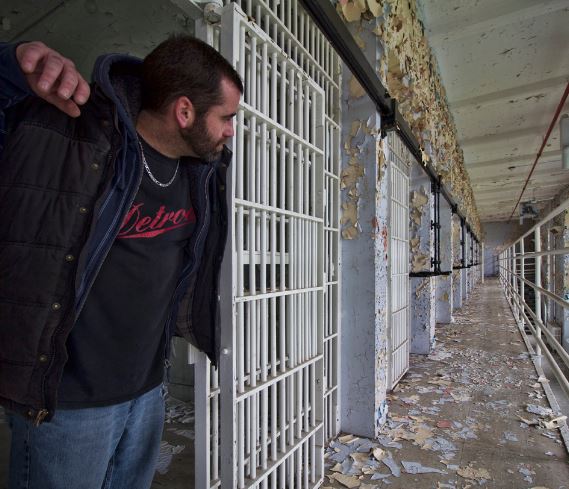
Nevertheless, there are always a palette of risks when exploring these abandoned buildings.
“There’s always the risk of getting in trouble, because essentially, it is trespassing in a lot of cases. The big thing though is you got to use common sense…there’s areas where you shouldn’t go period. With some places…there could be serious consequences especially if it’s government or military owned. You just don’t want to risk it. But then there’s other places that…[where] huge companies buy up acres and acres of land that end up having industrial farming….you could try to track down an owner, but chances are you won’t, because it’s a number company,” Ryder stated. “There’s always the element of the property owner or the risk of the property owner not wanting you there and getting upset. But nine times out of ten, I’ve had no issues. I have been ticketed before, but that was related to power plants…[and] that’s just because the police have had to respond to security and follow procedure.”
While Ryder has many stories about visiting abandoned places throughout the years, there is one particular time he and a friend decided to explore the Lampton power plant out by Sarnia, Ontario which was one of the most challenging and memorable adventures.
“My friend and I had just spent the night over at St. Thomas psychiatric hospital in the forensic assessment unit. We tied up hammocks in there and slept. And it was November, [and] it was cold. We didn’t sleep well, because every little noise obviously in a psych hospital is scary…we then ended up going to go over to this power plant that we’ve been to before, but we wanted to go again and get some pictures and video. We parked far off from the plant, and we cut through the field with all these very tall shrubs, but ended up going on the main road for the rest of the way…as we were exhausted battling with the brush…we finally got into one building…and found these big coal elevator and long conveyors. Just as we were going to explore the plant… I could see an SUV whipping by the building. Typically we would wait it out and see what happens. But in this case, we were panicking,” Ryder recalled. “We saw these two police officers in full tactical gear with assault rifles walking where our footprints were in the gravel. You could see that they said they were tracking us. After a few moments, we simply gave ourselves up and walked out of the building slowly. As we stepped out, we noticed the police had positioned themselves all around these concrete pillars with their guns drawn on us. They yelled that we had to stop where we were, and if we didn’t, they would take that as a threat. They started barking other orders at us, and we had our hands up in the air on a slanted catwalk, trying to come down without making moves to get shot.”
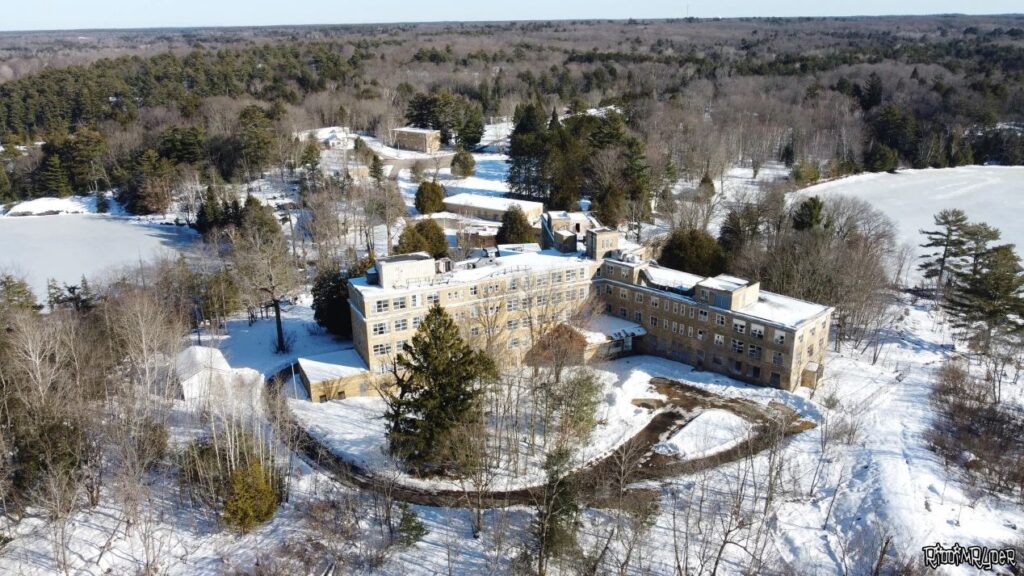
Thankfully, the ordeal was short-lived, and Ryder and his friend walked away with a memory they would never forget.
“They ended up putting us in handcuffs, and went through our bags realizing that we were there just to take photos, which they were blown away by as they got a report from the security that they saw us two dressed in black with backpacks and tripods…they thought we were up to no good…and were terrorists. We ended up getting a ticket for trespassing because they didn’t know what to do [and] because they had such a huge response. A police officer told me that it merited such a response because the plant was still technically connected to the power grid [and] it’s right on the border to the United States, really heightening the seriousness…. it’s a story that I will never forget,” he reminisced.
Nevertheless, one of the elements that has emerged has been the growth of Ryder’s You Tube channel, where it has swelled to over 63,000 subscribers.
“I didn’t really start YouTube off as my main way of sharing what I did. It was really more of an afterthought…and over the years it has been a work in process. For me, I really like the focus on the photography aspect…and editing videos for the channel takes time. But I’m trying to get into a groove as I continue to do this because the general feedback from viewers has been positive. Aside from the occasional negative comment or some property owners reaching out to me saying they don’t like what I do, people overall have been quite supportive. Many of them tell me they like what I do and find it interesting,” he stated. “I also learn a lot from people because their feedback gives me more ideas on what I can do and improve on. On one video, they heard me chewing gum. I didn’t even think about how that could be picked up on the camera. And apparently that was not something I should do. But for the most part, it’s been great to hear how people have enjoyed my videos and enjoy what I do.”
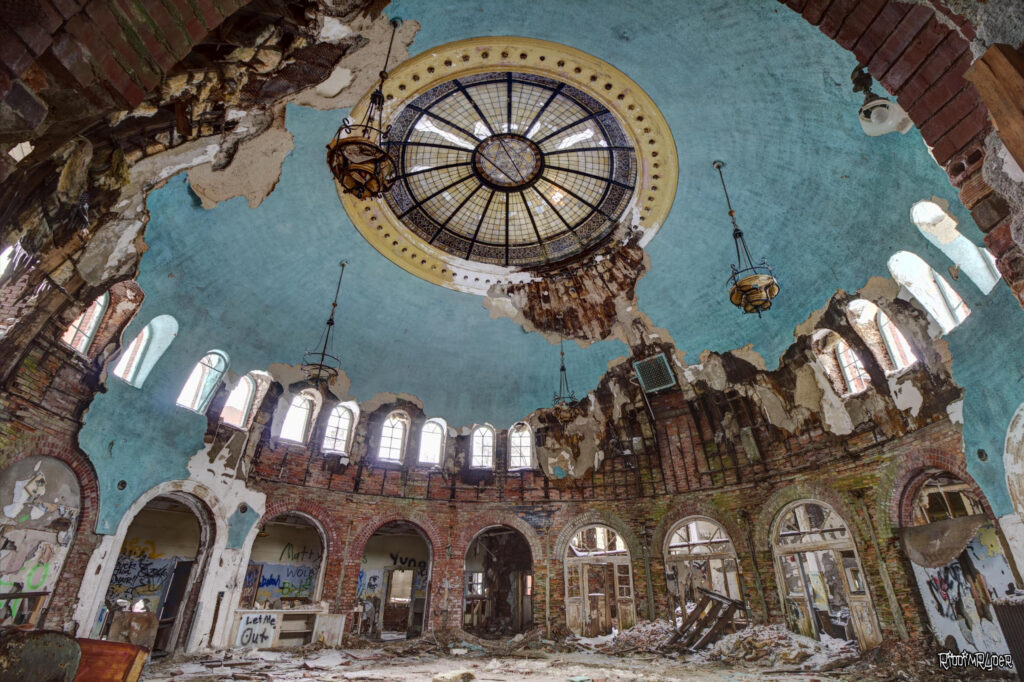
A highlight for Ryder was visiting the Hudson Valley State Hospital before the pandemic hit in 2020.
“My wife and I went to an asylum in New York state. It’s the Hudson Valley State Hospital. But it was one that I wanted to go to for the longest time, and when I finally went there, it was just everything I could have imagined. It’s massive, everything there….is decayed. It’s been burned in some places….but it’s still such a strong standing building up on a hill, and it’s a big, very gothic looking kind of building. So it was nice to hit that one because it was a bucket list one for me. And people may think I’m crazy, because it may not be one of the better ones, but it was one that I always saw as something I really wanted to see. It was definitely a highlight of one to go and visit for me,” recalled Ryder.
Overall, Ryder has maintained a good etiquette when out on his explorations, especially with some others giving the hobby a bad reputation.
“The hobby really exploded over the pandemic [when] many people had a lot of free time….they seemed a little more eager to find places so they would do things that drew attention…and unfortunately for the wrong reasons. There’s a lot of places that these people would just go and kick doors in. And if these properties are owned by a developer that plans on demolishing it, they would at some point see that that door has been kicked in…and quickly ramp up their security measures. And then they simply equate all explorers are the same. Well, that’s not the case. There’s been instances that I’ve gone to places over some time that I just can’t get in…. but eventually it does open up…[though] it takes time though,” Ryder noted. “I’ve seen people come to my defense because someone out of the blue will write that I shouldn’t be doing this. And then people counter [the nay-sayers], saying I am respectful. [However,] there is an unwritten rule to leave nothing but footprints. When I post my videos and photos there’s quite a few people commenting that they would love to take something out from the place…I tell them…number one, I’m not just going to steal anything. And number two, we’re already in a gray area what we’re doing….if you’re coming out of a building that you shouldn’t be in already, and you got…a backpack full of goods, [which] turns into burglary…[and if] that person wants to do something like that and they aren’t there for the for the enjoyment of the abandoned place…they aren’t explorers and instead are there for there for nefarious reasons.”
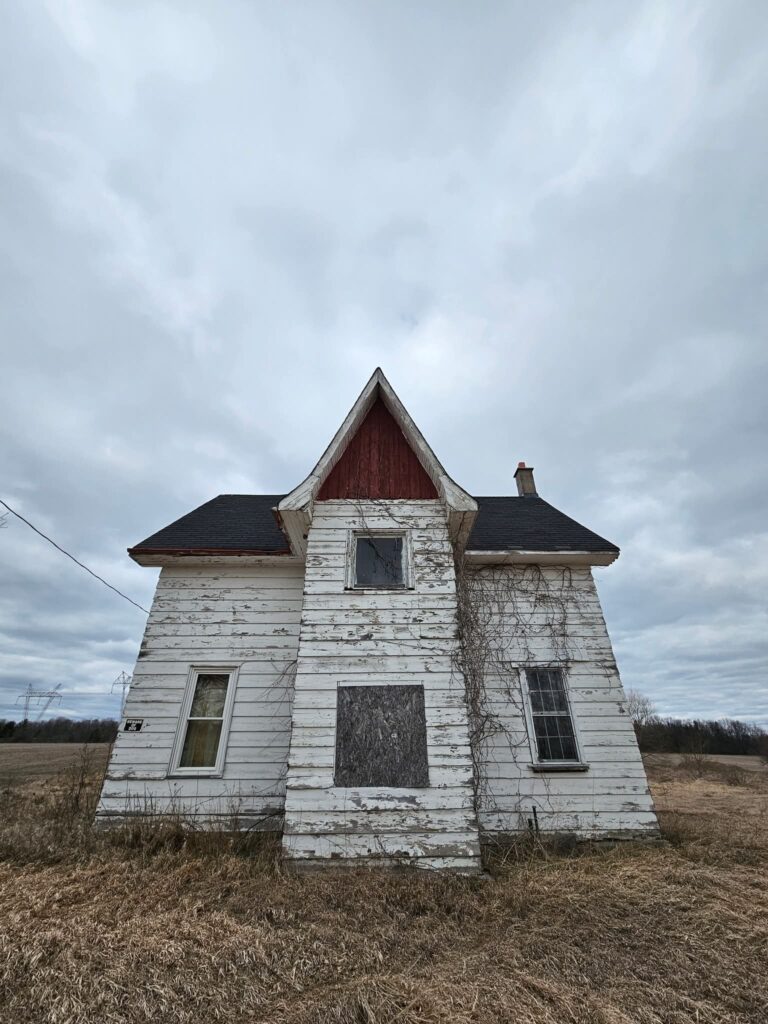
However, the veteran urban explorer has always been focused on improving his skills.
“As a photographer, I’m all self-taught on it all. I’ve been computer savvy for a long time. So, picking up new software has always been pretty easy for me and figuring out different ways to edit hasn’t been a problem. I’m always trying to figure out new ways to improve my processes or speed things up, because the workflow itself can be time consuming, and as well, I have shifted more from just having a single stand-alone photo of one location, to documenting the entire place,” he explained. “And of course, I’m always trying to just figure out ways to improve my overall skills….and right now I’m doing research on doing videos because I’m relatively new to this. When it’s editing photos, that’s very easy for me…but when it comes to video, that’s something I’m still learning right now. I’ve been kind of training myself and doing different techniques. I’m also tough on myself…I’ve edited several videos where I looked at them and just started from scratch…trying different methods to get it to look just right.”
Ryder has also travelled a lot, giving him a chance to experience new scenery especially in Canada.
“My wife and I…have gone out to the East Coast several times, just doing a road trip out there and spending…a week…sleeping in our car and just enjoying explore abandonments, as well as the scenery. I’m not 100% sure yet if we will be doing it, but we discussed going out to Newfoundland and spending some time out there, exploring and shooting for two weeks. Because typically each year we go, we go from a trip around April for my birthday, and this year we decided we’re going to go somewhere, then stay somewhere, more than likely in Canada, and do something that we really wanted to see. We have already tried to go to Newfoundland a couple years back, but wildfires prevented us. We were actually going to drive up the coast and then do the top end and ferry over, but we couldn’t because of the wildfires in Quebec,” he said.
Lastly, Ryder will continue doing what he loves to; exploring and photographing his adventures.
“It seems many people are interested in what I do…I have found that not everyone will necessarily like my photos online, but the exploration side fascinates them. Over the years, I’ve learned in this [urban exploration] community…it’s about doing your own thing. It always starts out by being inspired by somebody else and from there finding what interests you. Any hobby has drama, but I try my best to stay out of it and have fun [and] that’s the number one thing. And like I always say, exploring is a mission, it’s not a competition,” Ryder said.